Euphorbia piscidermis

BotanicalCollector

4.9 · Premium
In Stock · Ships in 48h
$ 35.00 / plant
Attribute Option
Quantity Qty
1
Sales Type Retail, Same Batch
Product Size W3-4cm
Weight 0.2 kg
Propagation Method Grafting
Genus Euphorbia

Description

Scientific Name: Euphorbia piscidermis M.G.Gilbert

Geographic & Climate

  • Geographic Coordinates: 8°05' N, 43°20' E (Type Locality: West of Degehabur, Ogaden, Harerge Province, Ethiopia).

  • Climate Classification: Hot Desert Climate (BWh) / Arid Afrotropical Zone.

  • Habitat Characteristics: Strictly restricted to narrow microhabitats at altitudes between 1000 and 1050 meters above sea level. It thrives exclusively on highly exposed, stony limestone ridges and white gypseous soils within very open deciduous bushland. The native environment features highly erratic, minimal seasonal rainfall, requiring a substrate with exceptional mineral drainage, high calcium carbonate levels, and virtually zero organic matter.

Botanical Morphology

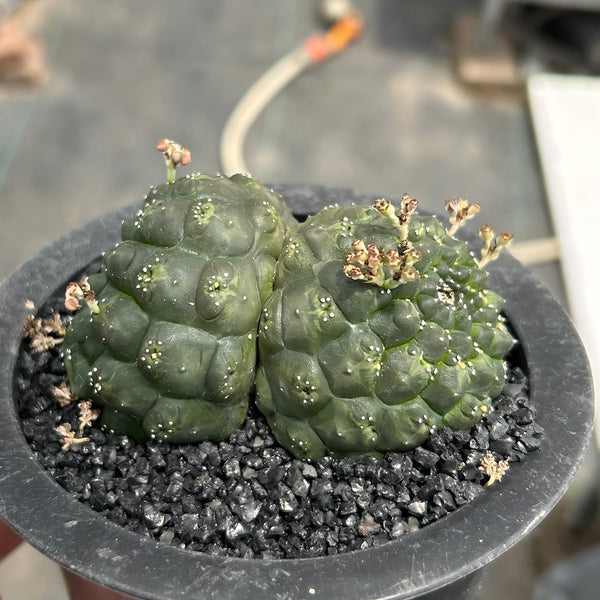
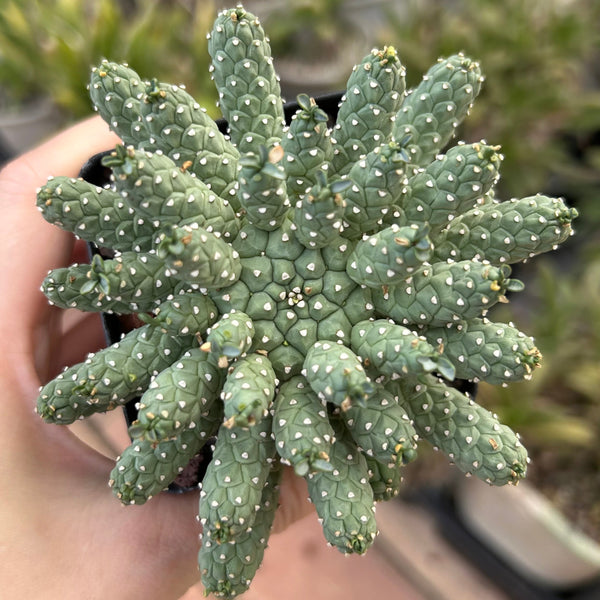
  • Diagnostic Features: A dwarf, highly specialized succulent distinguished by a subglobose to short cylindrical body completely devoid of spines, spine-shields, and functional leaves. The primary diagnostic feature is its chalky ash-grey to cream-white epidermis, which is tightly shingled with spirally arranged, overlapping scale-like structures (ordered in approximately 13 geometric spiral rows). These "scales" are structurally modified, truncate tubercles with upwards-produced, minutely fringed margins that perfectly mimic fish scales. Inflorescences form solitary cymes arranged in a dense ring near the apex, bearing small cyathia (2–3 mm in diameter) with 4–5 oblong, closely touching yellow-green nectar glands.

  • Growth Habit: Exceptionally slow-growing dwarf species. It exhibits strict opportunistic growth tied to rare moisture events and enters a profound dormancy state during extended dry, hot seasons or cold winter drops. Stems remain solitary throughout most of their lifespan, only rarely branching dichotomously or producing basal offsets if the primary apical meristem sustains physical damage. Ultimate mature dimensions reach up to 12 cm in height and 7 cm in diameter.

History & Etymology

  • Etymology: The genus name Euphorbia honors Euphorbus, the Greek physician to King Juba II of Numidia. The specific epithet piscidermis directly combines the Latin piscis (meaning "fish") and the Greek derma (meaning "skin"), referencing the plant's remarkable, fish-scale-like geometric appearance.

  • Historical Context: The type specimen was discovered and collected during field exploration by botanist Michael George Gilbert on June 27, 1971, in the remote and highly isolated Ogaden region of eastern Ethiopia. Gilbert published the official description in the Kew Bulletin (Volume 28, No. 3) in 1973 (published 1974). Due to the prolonged geopolitical instability of its native borderlands and its extreme vulnerability to root rot when grown on its own roots, it quickly gained an iconic "holy grail" status among specialist succulent collectors worldwide.

Care Guide

Essential Care Tips for Thriving Plants

Light

Provide partial to full sun. Most plants thrive on direct UV exposure. Avoid placing behind window glass, as it filters out the essential UV rays needed for healthy growth.

Water

Follow the "Soak and Dry" principle. Ensure the top 2–3 cm of soil is bone dry before watering (use the finger test). Reduce frequency in winter, but do not stop watering entirely.

Temperature

The ideal range is 18–35 °C. Maintain temperatures above 5 °C during winter. Please note that temperatures below 0 °C pose a significant risk of plant death.

Humidity

Best kept at 30–50% humidity. Note: High air humidity is not a substitute for root watering. Avoid overly damp areas to prevent root rot or leggy side shoots.

Soil

A loose, well-draining medium is ideal. A mix containing 50–70% grit or mineral soil is recommended for aeration. Outdoor ground planting is also a viable option.

Fertilizer

Fertilize during repotting using Osmocote A2 slow-release fertilizer. Apply sparingly twice a year, or adjust the fertilizer type based on your specific home environment.

Planting Guide

Start Your Green Journey in 4 Steps

01

Unbox & Inspect

Carefully unpack and inspect the plant’s body and roots. We recommend taking photos or videos immediately for your records. Place it in a shaded, well-ventilated spot for 1–2 days to acclimate to its new environment.

02

Potting & Placement

After 24 hours of rest, pot the plant using slightly moistened soil. Place it in a bright, airy location to encourage recovery. Keep away from AC vents or heaters to prevent damage from temperature fluctuations.

03

First Watering

Use water that has sat for at least 24 hours. If using the damp-potting method, wait 2–3 days before the first watering. Ensure a thorough soak until water drains freely from the bottom.

04

Daily Care

Monitor leaf condition and soil moisture daily. If the soil remains damp, increase ventilation rather than watering. Proper airflow is essential to prevent root rot and ensure lasting health.