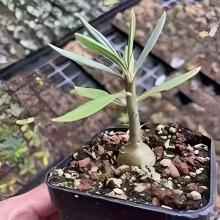
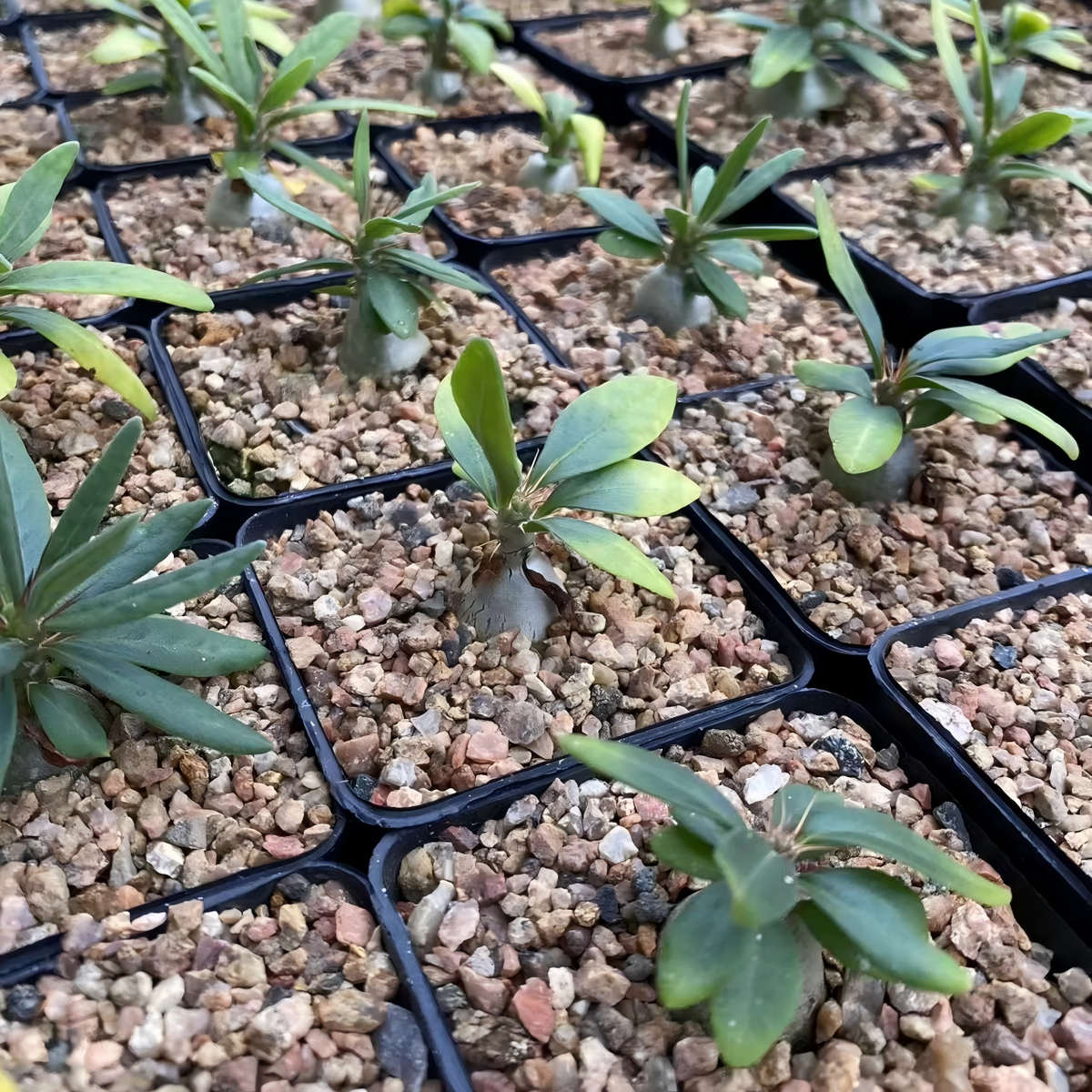
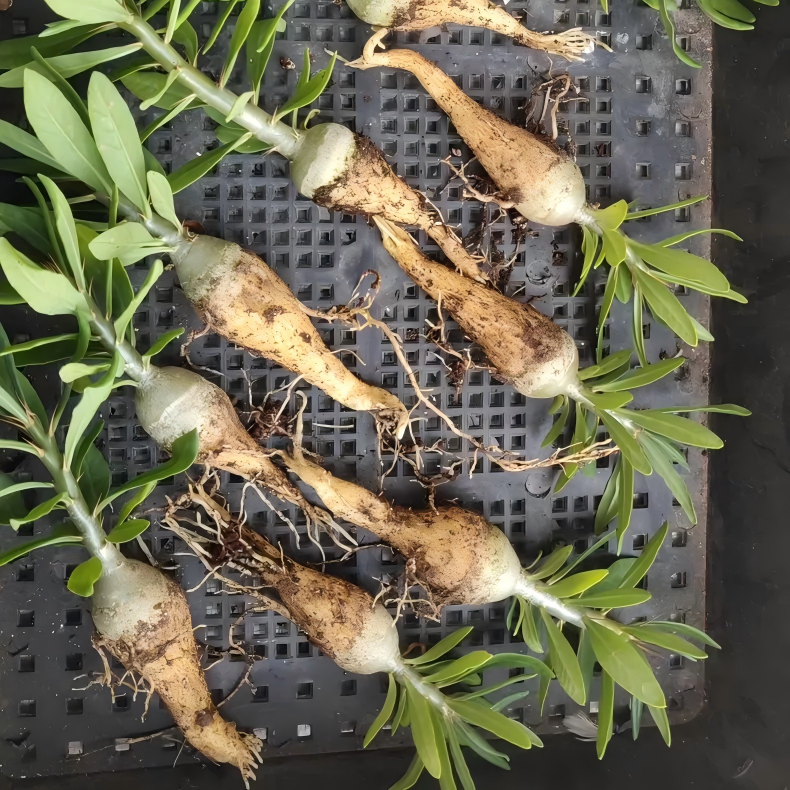
Pachypodium succulentum

BotanicalCollector

4.9 · Premium
In Stock · Ships in 48h
$ 25.00 / plant
Quantity Qty
1
Product Size W1.5cm
Weight 0.1 kg
Genus Pachypodium

Description

Origin
Pachypodium succulentum is native to South Africa, specifically widely distributed in the Cape Provinces and the Free State. It is found in the semi-arid regions of the Karoo and the Eastern Cape. It was officially described in 1830 by the botanist Alphonse Pyramus de Candolle.

Habitat
In its natural environment, this species thrives in stony, arid shrublands and rocky slopes. It is typically found growing in dry, well-drained soils, often tucked between rocks or under the protection of hardy bushes. The massive tuberous rootstock (caudex) usually remains buried underground in the wild to stay cool and protected from drought and bushfires. It is highly resilient, capable of enduring both high summer temperatures and light winter frosts.

Description
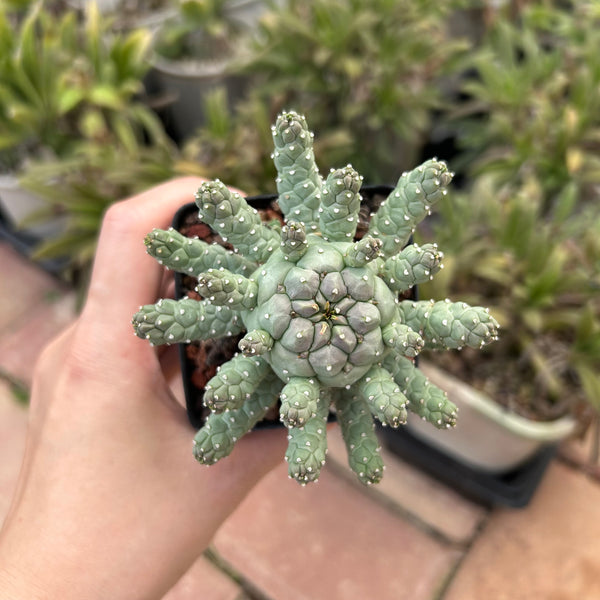
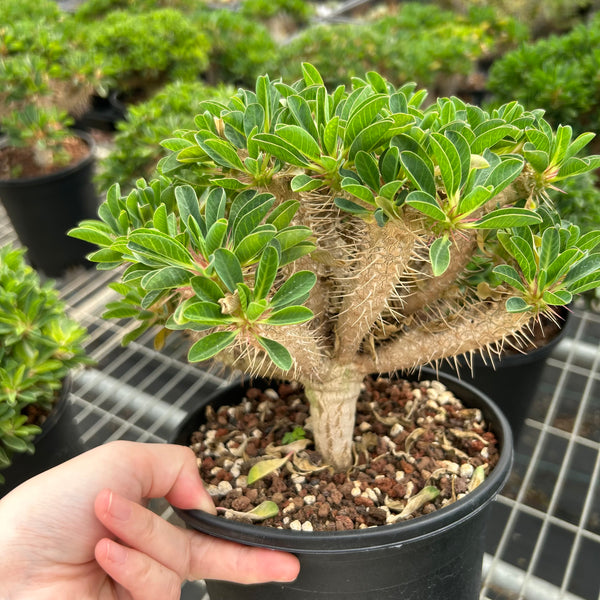
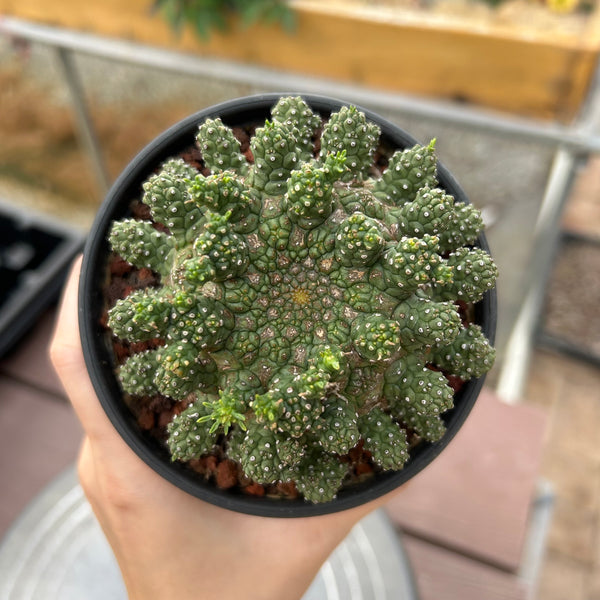
Pachypodium succulentum is a robust, slow-growing pachycaul succulent, famous for its impressive "caudex-style" base and beautiful floral display.

Caudex: It develops a massive, tuberous, and turnip-shaped rootstock that can grow up to 15–25 cm in diameter. In cultivation, this caudex is often raised above the soil level to showcase its rugged, woody bark and sculptural form.

Stems: Numerous thin, sprawling or upright branches emerge from the top of the caudex. These branches can grow up to 60 cm long and are armed with paired, needle-like spines (about 1–2 cm long) at the leaf bases.

Foliage: The leaves are narrow, lanceolate, and dark green with a prominent midrib. They are slightly pubescent (fuzzy) and grow in spirals along the younger branches. The plant is deciduous, losing its leaves during the dry winter dormancy.

Flowers: It is known for its spectacular bell-shaped flowers, which are usually white or pale pink with a distinct dark pink or crimson stripe down the center of each petal. The blooms are quite large (up to 4 cm in diameter) and appear in clusters during late spring or early summer.

Cultivation: This is one of the hardiest and easiest Pachypodium species to grow. It requires full sun to maintain compact branch growth and a well-draining mineral substrate. It is more tolerant of cold and dampness than many Madagascan species, making it an excellent choice for beginners.

Care Guide

Essential Care Tips for Thriving Plants

Light

Provide partial to full sun. Most plants thrive on direct UV exposure. Avoid placing behind window glass, as it filters out the essential UV rays needed for healthy growth.

Water

Follow the "Soak and Dry" principle. Ensure the top 2–3 cm of soil is bone dry before watering (use the finger test). Reduce frequency in winter, but do not stop watering entirely.

Temperature

The ideal range is 18–35 °C. Maintain temperatures above 5 °C during winter. Please note that temperatures below 0 °C pose a significant risk of plant death.

Humidity

Best kept at 30–50% humidity. Note: High air humidity is not a substitute for root watering. Avoid overly damp areas to prevent root rot or leggy side shoots.

Soil

A loose, well-draining medium is ideal. A mix containing 50–70% grit or mineral soil is recommended for aeration. Outdoor ground planting is also a viable option.

Fertilizer

Fertilize during repotting using Osmocote A2 slow-release fertilizer. Apply sparingly twice a year, or adjust the fertilizer type based on your specific home environment.

Planting Guide

Start Your Green Journey in 4 Steps

01

Unbox & Inspect

Carefully unpack and inspect the plant’s body and roots. We recommend taking photos or videos immediately for your records. Place it in a shaded, well-ventilated spot for 1–2 days to acclimate to its new environment.

02

Potting & Placement

After 24 hours of rest, pot the plant using slightly moistened soil. Place it in a bright, airy location to encourage recovery. Keep away from AC vents or heaters to prevent damage from temperature fluctuations.

03

First Watering

Use water that has sat for at least 24 hours. If using the damp-potting method, wait 2–3 days before the first watering. Ensure a thorough soak until water drains freely from the bottom.

04

Daily Care

Monitor leaf condition and soil moisture daily. If the soil remains damp, increase ventilation rather than watering. Proper airflow is essential to prevent root rot and ensure lasting health.