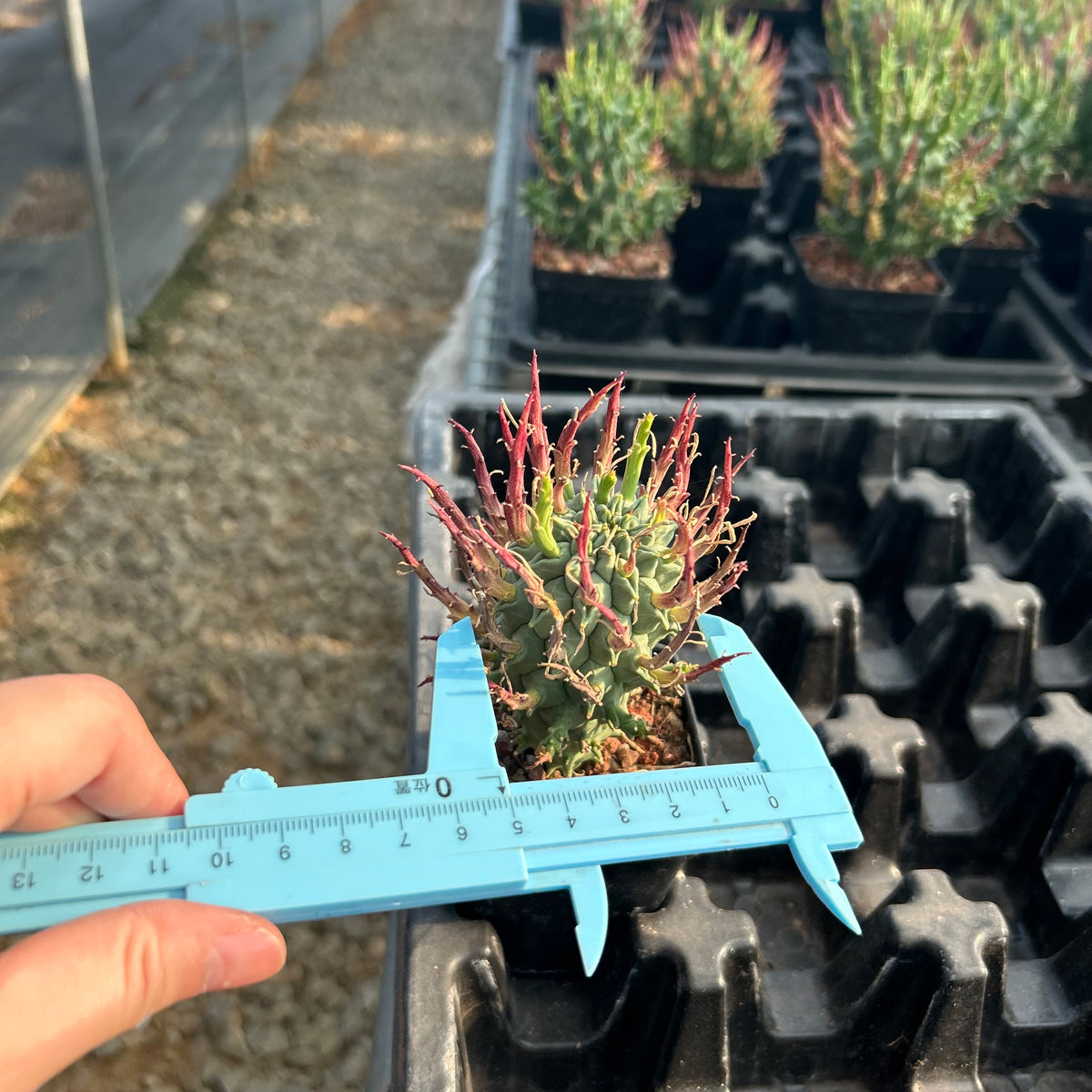
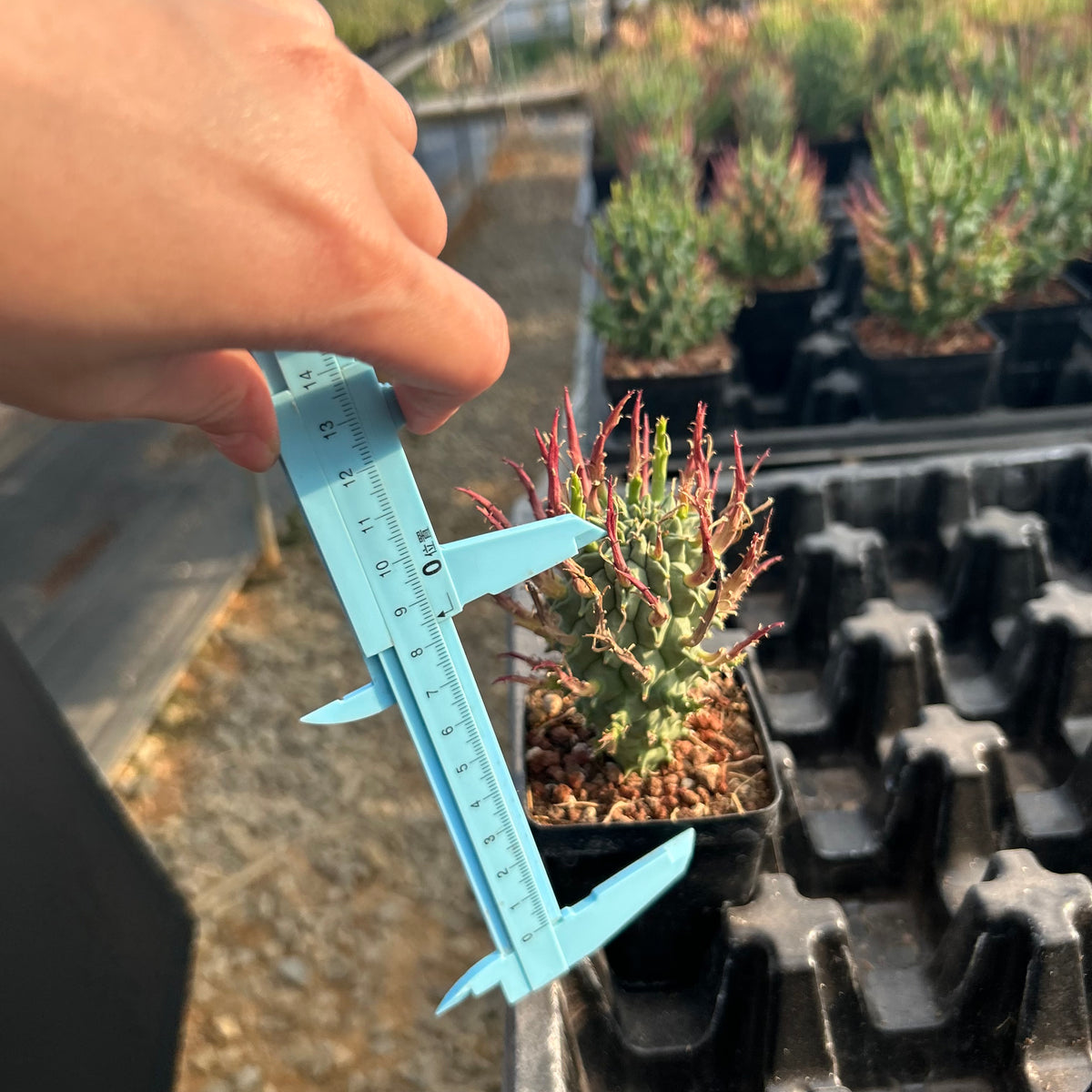
Euphorbia schoenlandii

BotanicalCollector

4.9 · Premium
In Stock · Ships in 48h
$ 75.00 / plant
Quantity Qty
1
International Logistics
Unbeatable Quality
All The Help You Need
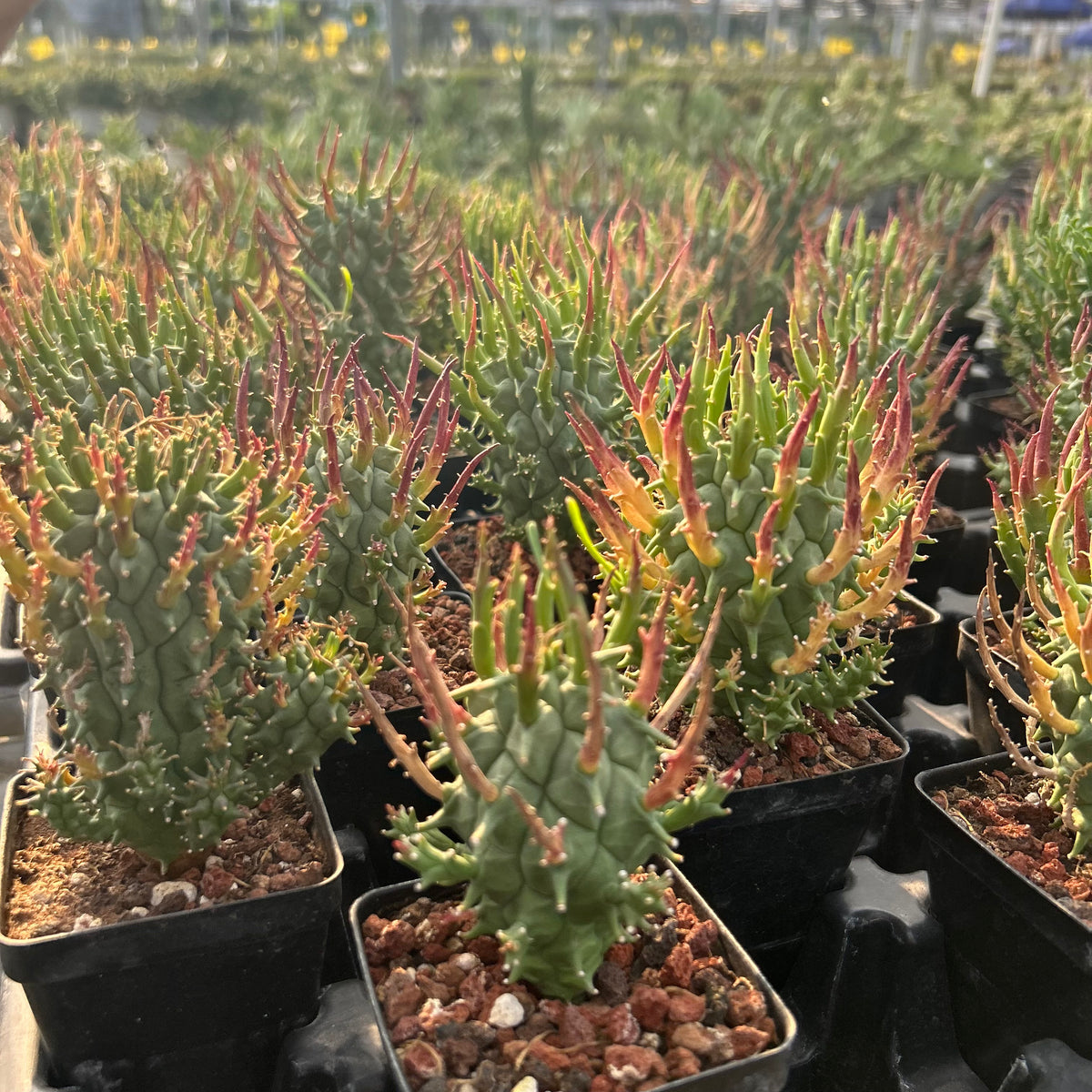
Sales Type Retail, Same Batch
Product Size H6-8cm
Propagation Method Seed-grown
Genus Euphorbia

Description

Origin

Euphorbia schoenlandii is native to the Western Cape Province of South Africa. Its distribution is primarily concentrated in the Namaqualand and Olifants River Valley regions. It is a highly specialized species belonging to the Euphorbia section Anthacanthae, named in honor of the German-born botanist Selmar Schönland. Due to its unique morphology and slow growth, it is a protected species under CITES Appendix II.

Habitat

In the wild, this species thrives in semi-arid, sandy, or stony plains and rocky hillslopes. It is a characteristic plant of the Succulent Karoo biome. It typically grows in well-drained, nutrient-poor soils, often in areas with winter rainfall and extremely dry summers. The plant's robust structure and "armored" exterior allow it to withstand intense solar radiation and deter herbivores in its harsh native environment.

Description

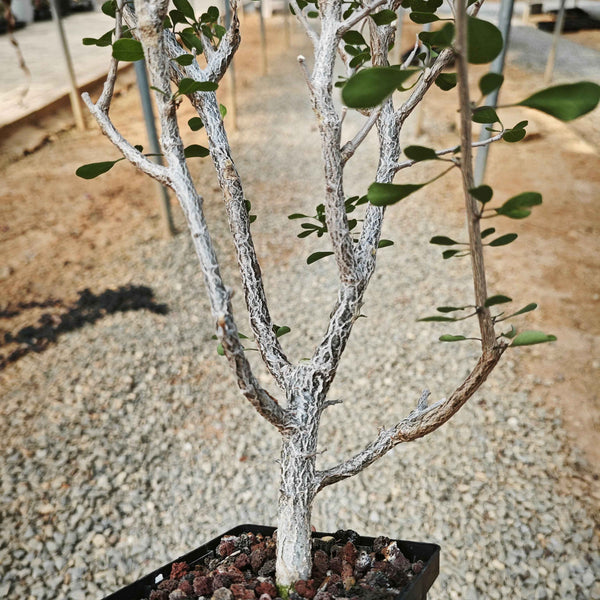
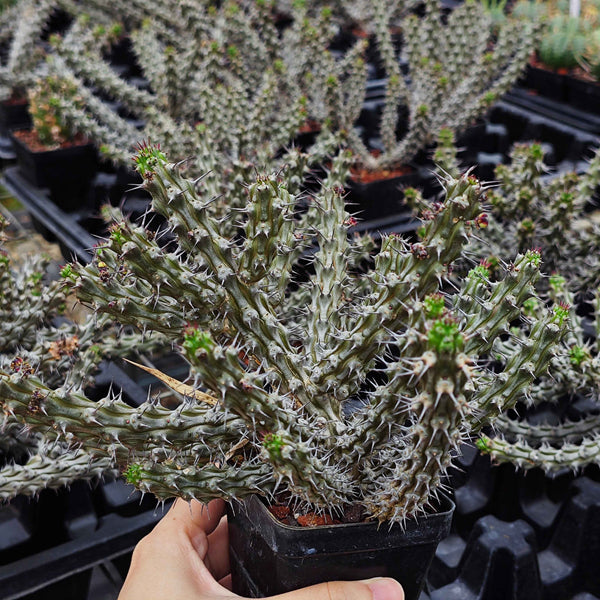
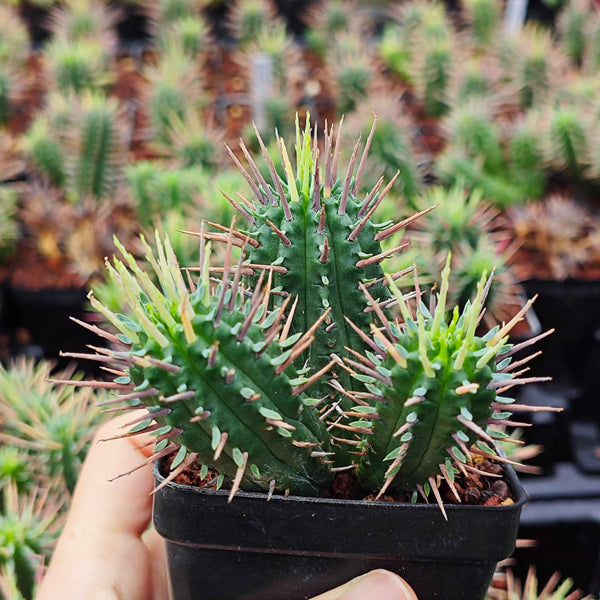
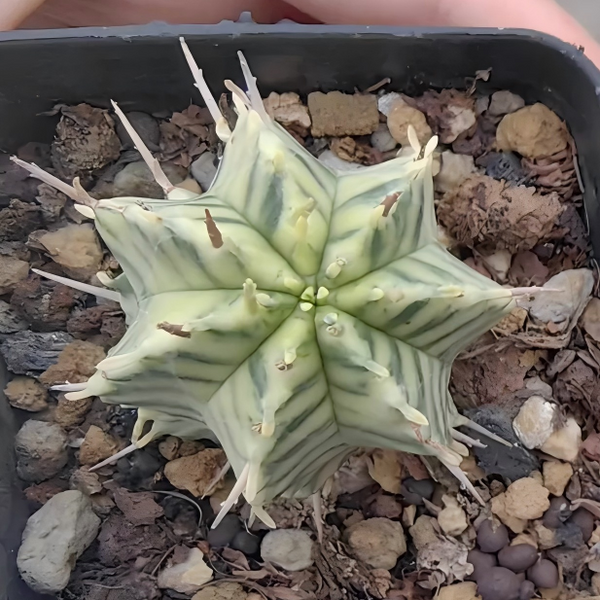
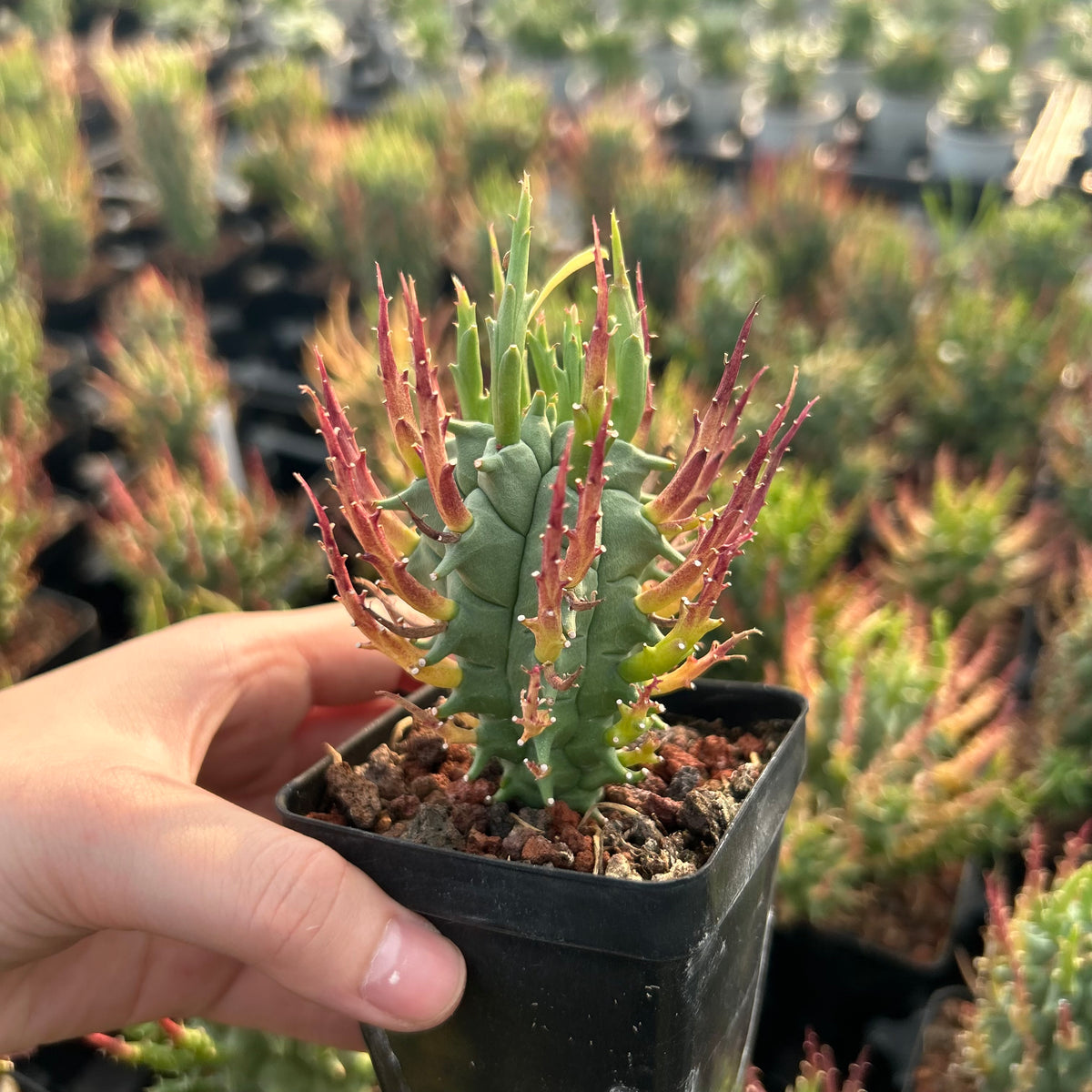
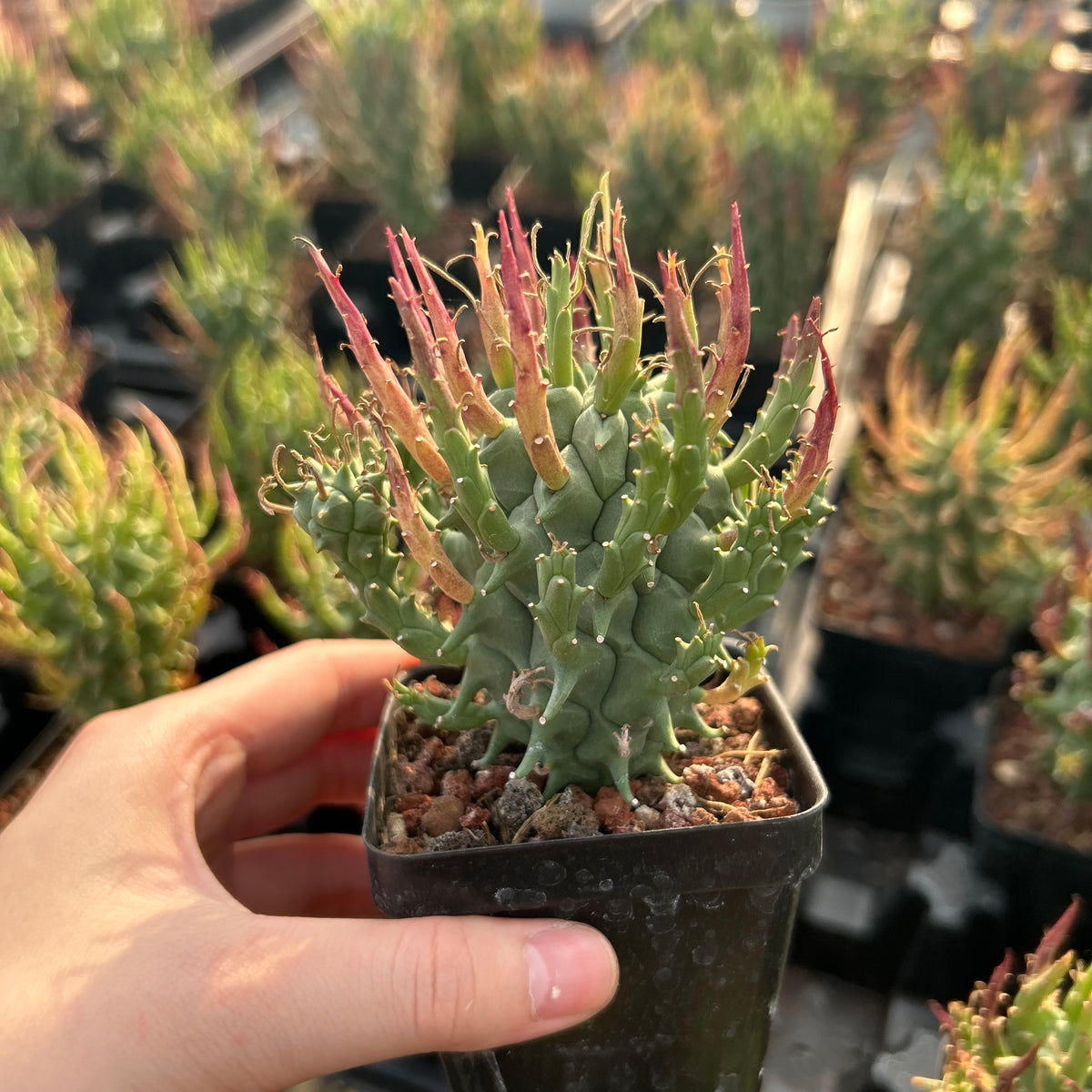
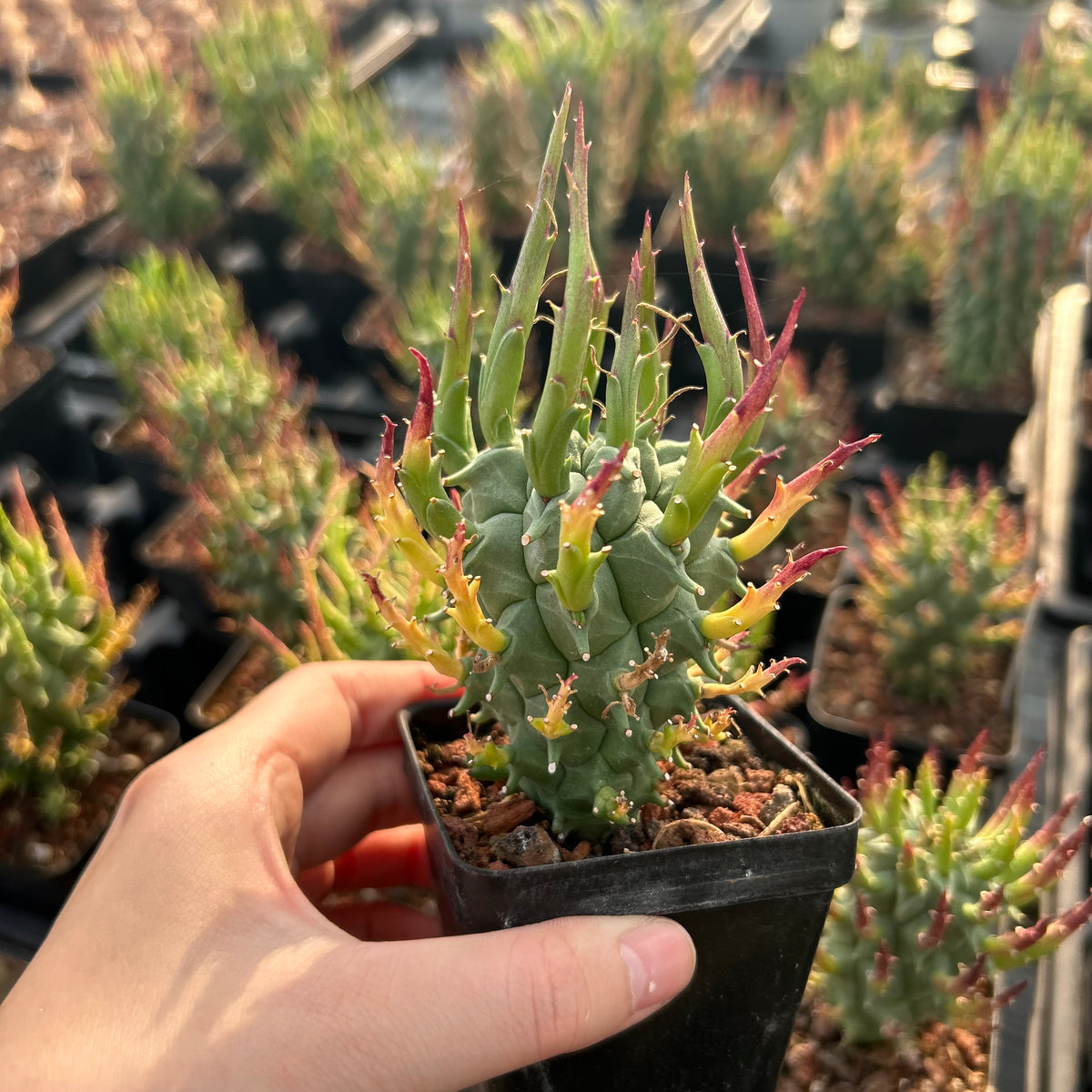
Euphorbia schoenlandii is a spectacular, slow-growing succulent prized for its prehistoric appearance and formidable spination.

  • Growth Habit: It grows as a solitary, unbranched columnar stem, although very old specimens may occasionally offset from the base. It can reach a height of 20–70 cm and a diameter of up to 20 cm.

  • Stem & Tubercles: The stem is bright green to grayish-green, covered in prominent, spirally arranged tubercles. These tubercles are large and conical, giving the plant a highly geometric and textured surface.

  • The "Spines" (Persistent Peduncles): Its most defining feature is the long, woody, and sharp persistent peduncles (flower stalks). These stalks remain on the plant after flowering, hardening into "spines" that can reach 2–5 cm in length. They are often slightly curved or upright, creating a "hedgehog" or "porcupine" effect that protects the growing apex.

  • Foliage: It produces small, inconspicuous, and ephemeral leaves at the stem tip during the growing season. These leaves drop quickly as the plant enters dormancy.

  • Flowers (Cyathia): The cyathia are solitary and emerge from the tips of the sturdy peduncles. They are relatively small and yellowish-green, appearing primarily in winter or early spring.

  • Cultivation: This is a connoisseur's plant that requires maximum light intensity to maintain its thick stem and produce the characteristic long "spines." It necessitates an extremely porous, mineral-rich substrate (70-80% grit/pumice). It is a winter grower in its native habitat, so watering should be careful and focused on the cooler months, with a very dry rest period in summer.

Care Guide

Essential Care Tips for Thriving Plants

Light

Provide partial to full sun. Most plants thrive on direct UV exposure. Avoid placing behind window glass, as it filters out the essential UV rays needed for healthy growth.

Water

Follow the "Soak and Dry" principle. Ensure the top 2–3 cm of soil is bone dry before watering (use the finger test). Reduce frequency in winter, but do not stop watering entirely.

Temperature

The ideal range is 18–35 °C. Maintain temperatures above 5 °C during winter. Please note that temperatures below 0 °C pose a significant risk of plant death.

Humidity

Best kept at 30–50% humidity. Note: High air humidity is not a substitute for root watering. Avoid overly damp areas to prevent root rot or leggy side shoots.

Soil

A loose, well-draining medium is ideal. A mix containing 50–70% grit or mineral soil is recommended for aeration. Outdoor ground planting is also a viable option.

Fertilizer

Fertilize during repotting using Osmocote A2 slow-release fertilizer. Apply sparingly twice a year, or adjust the fertilizer type based on your specific home environment.

Planting Guide

Start Your Green Journey in 4 Steps

01

Unbox & Inspect

Carefully unpack and inspect the plant’s body and roots. We recommend taking photos or videos immediately for your records. Place it in a shaded, well-ventilated spot for 1–2 days to acclimate to its new environment.

02

Potting & Placement

After 24 hours of rest, pot the plant using slightly moistened soil. Place it in a bright, airy location to encourage recovery. Keep away from AC vents or heaters to prevent damage from temperature fluctuations.

03

First Watering

Use water that has sat for at least 24 hours. If using the damp-potting method, wait 2–3 days before the first watering. Ensure a thorough soak until water drains freely from the bottom.

04

Daily Care

Monitor leaf condition and soil moisture daily. If the soil remains damp, increase ventilation rather than watering. Proper airflow is essential to prevent root rot and ensure lasting health.