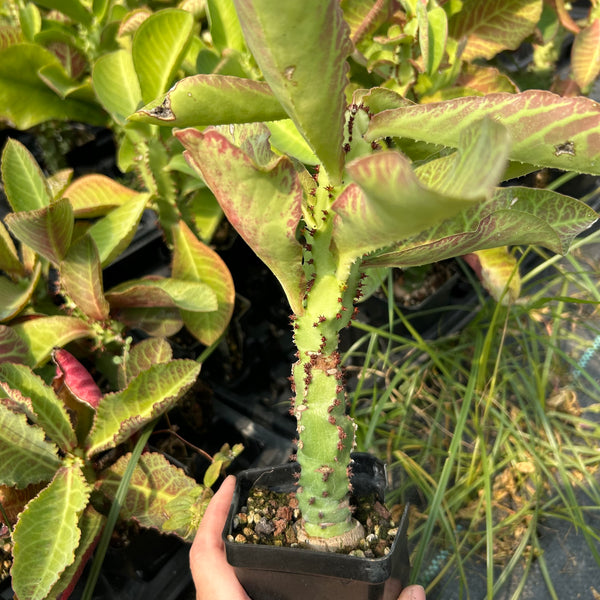
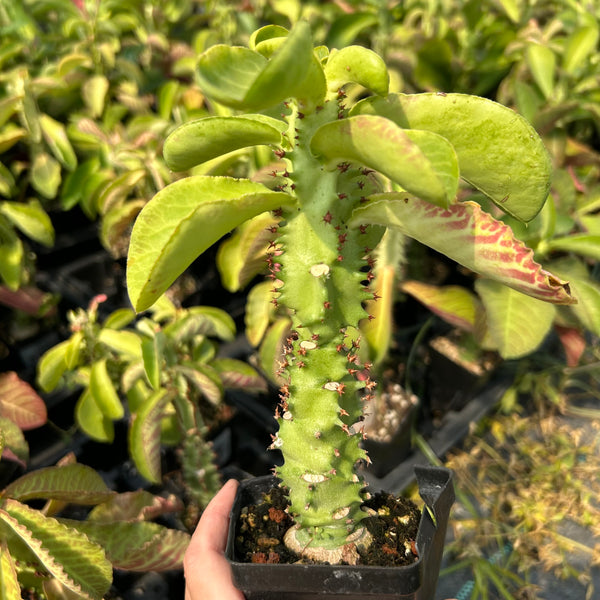
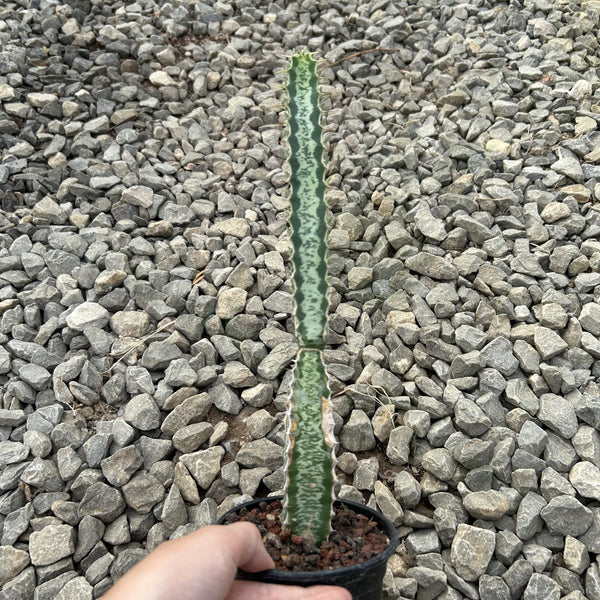
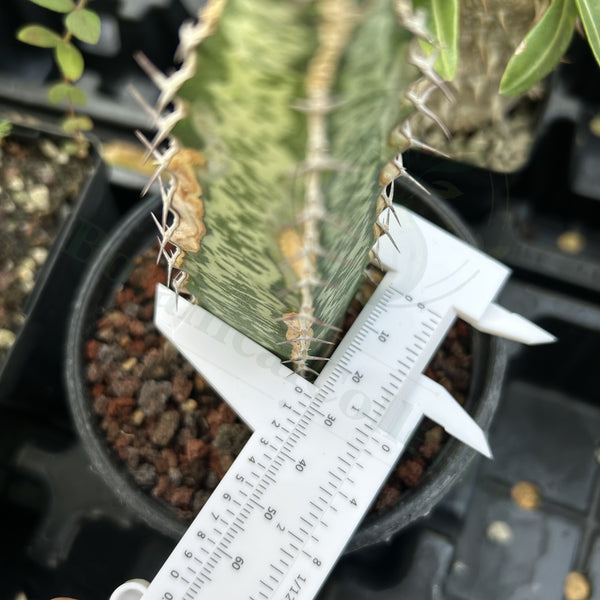
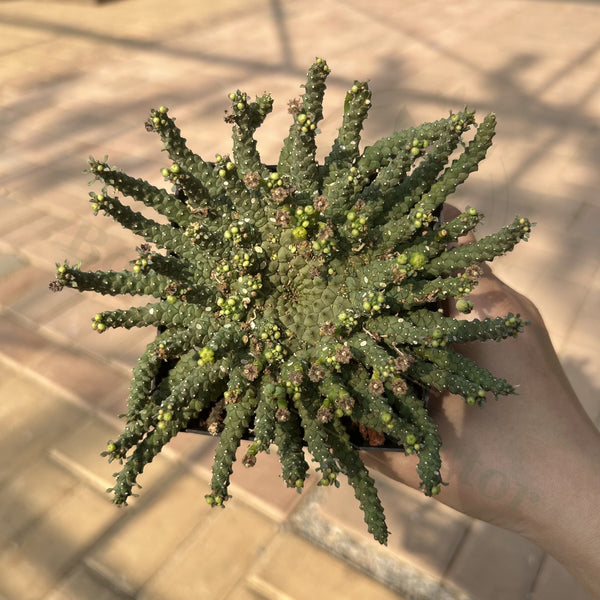
Euphorbia pulvinata 'Variegata' |Euphorbia meloformis 'Variegata'

BotanicalCollector

4.9 · Premium
In Stock · Ships in 48h
$ 30.00 / plant
Attribute Option
Quantity Qty
1
Sales Type Retail, Same Batch
Product Size W4cm
Weight 0.1 kg
Propagation Method Offset
Genus Euphorbia

Description

Origin

Euphorbia meloformis Aiton is endemic to a small section of the Eastern Cape of South Africa, with the type locality in the Albany Thicket between Grahamstown and the Great Fish River valley (Africa). It was described in the eighteenth century by the English botanist William Aiton from material collected in the karroid scrub of the region, and it is one of the more familiar globular Euphorbias of the South African flora. The variegated form offered here is a horticultural selection propagated by grafting or cutting, and it is treated here as a cultivar of Euphorbia meloformis, although the same Japanese trade name is sometimes applied to variegated specimens of the related Euphorbia pulvinata.

Habitat

In its natural environment, this species is a specialist of the Albany Thicket and Valley Bushveld, where it grows in shallow mineral soil over shale and dolerite outcrops at altitudes around 300–800 meters above sea level. The climate is strongly seasonal, with a warm, somewhat dry summer and most rainfall arriving in autumn and spring. Plants sit partly buried in the gritty substrate, with the green shoulders level with the soil and the ribs concealed beneath weathered bark-like tissue.

Description

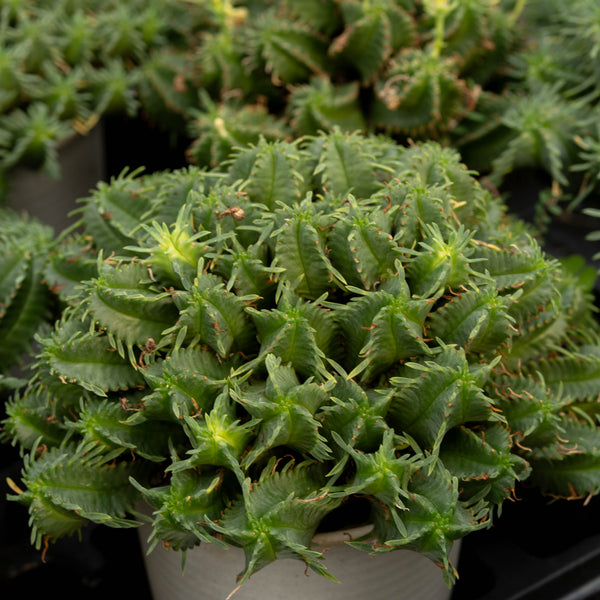
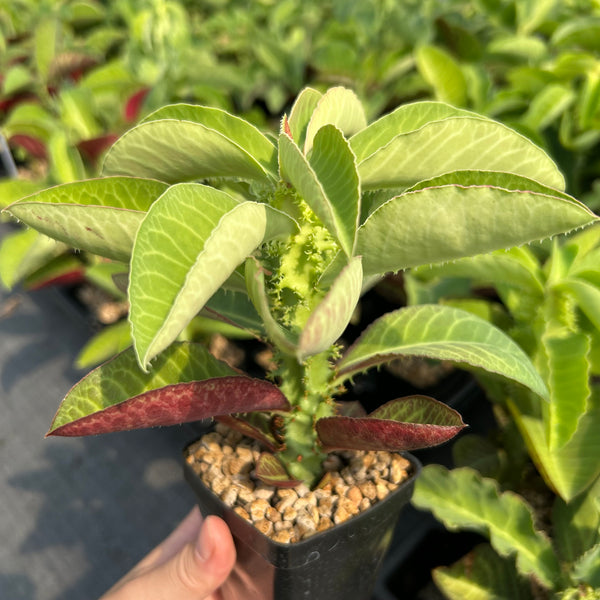
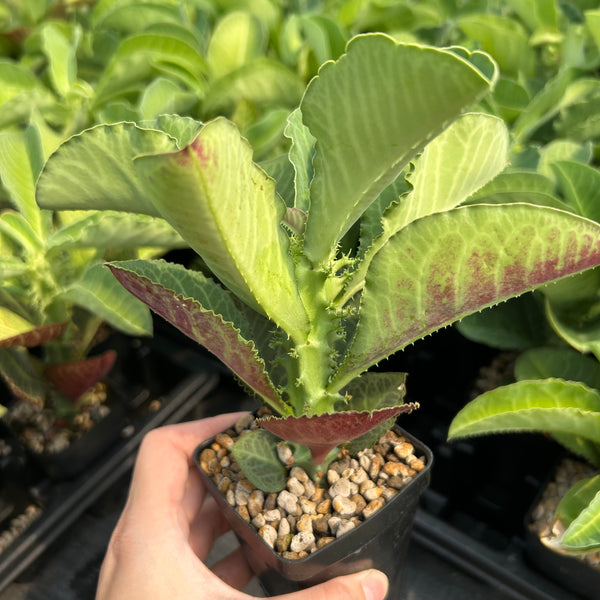
Euphorbia meloformis 'Variegata' is a globose South African Euphorbia whose combination of an almost spherical body, deeply ribbed epidermis, and bold cream-and-green variegation makes it one of the most photographed cultivars in serious succulent collections.

Size & Stem: The plant is a solitary, depressed-globose stem, reaching 8–15 cm across at maturity, with a flat top and a slightly sunken crown. The variegated form shows random sectors of cream, yellow, and green that vary from clone to clone.

Roots: A coarse, fibrous root system emerges from the base of the stem, with a short, woody taproot that anchors the body into the shale-derived substrate.

Ribs: The stem carries eight to twelve broad, low, vertical ribs separated by deep furrows, and the epidermis is often slightly rough or tuberculate between the ribs. The variegated sectors may be slower to grow and need to be propagated vegetatively to preserve the pattern.

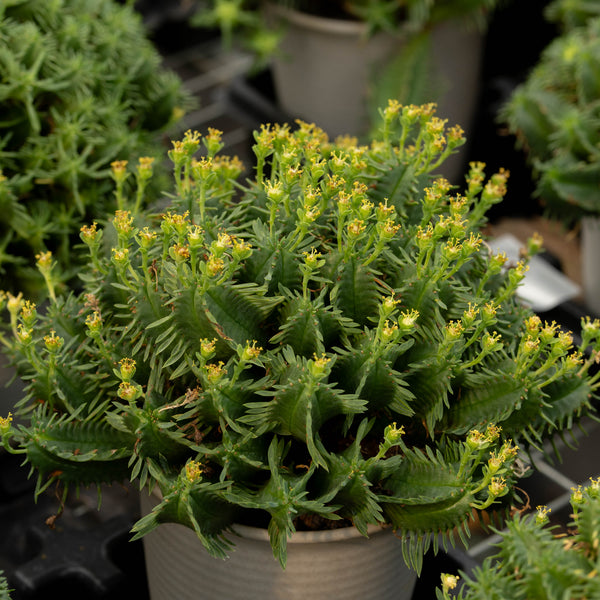
Flowers: The true flowers are the genus-typical small yellow-green cyathia, produced on short stalks from the crown in the warm months. They are modest compared with the body of the plant.

Cultivation: Grow in a sharply drained, mineral-rich mix with the stem at or just above soil level under bright light. Water moderately in the warm growing months and keep the plant dry in winter, with temperatures above about 5 °C. The variegated form is often grafted onto a hardy rootstock to maintain vigour, and care should be taken to keep the latex away from skin and eyes.

Care Guide

Essential Care Tips for Thriving Plants

Light

Provide partial to full sun. Most plants thrive on direct UV exposure. Avoid placing behind window glass, as it filters out the essential UV rays needed for healthy growth.

Water

Follow the "Soak and Dry" principle. Ensure the top 2–3 cm of soil is bone dry before watering (use the finger test). Reduce frequency in winter, but do not stop watering entirely.

Temperature

The ideal range is 18–35 °C. Maintain temperatures above 5 °C during winter. Please note that temperatures below 0 °C pose a significant risk of plant death.

Humidity

Best kept at 30–50% humidity. Note: High air humidity is not a substitute for root watering. Avoid overly damp areas to prevent root rot or leggy side shoots.

Soil

A loose, well-draining medium is ideal. A mix containing 50–70% grit or mineral soil is recommended for aeration. Outdoor ground planting is also a viable option.

Fertilizer

Fertilize during repotting using Osmocote A2 slow-release fertilizer. Apply sparingly twice a year, or adjust the fertilizer type based on your specific home environment.

Planting Guide

Start Your Green Journey in 4 Steps

01

Unbox & Inspect

Carefully unpack and inspect the plant’s body and roots. We recommend taking photos or videos immediately for your records. Place it in a shaded, well-ventilated spot for 1–2 days to acclimate to its new environment.

02

Potting & Placement

After 24 hours of rest, pot the plant using slightly moistened soil. Place it in a bright, airy location to encourage recovery. Keep away from AC vents or heaters to prevent damage from temperature fluctuations.

03

First Watering

Use water that has sat for at least 24 hours. If using the damp-potting method, wait 2–3 days before the first watering. Ensure a thorough soak until water drains freely from the bottom.

04

Daily Care

Monitor leaf condition and soil moisture daily. If the soil remains damp, increase ventilation rather than watering. Proper airflow is essential to prevent root rot and ensure lasting health.