Save 6% on Orders $500+

Dorstenia lancifolia

Dorstenia lancifolia

Dorstenia
$ 25.00 / plant
Plant selection
Quantity Qty
1
Sales Type Retail, Same Batch
Product Size W2.5-3cm
Propagation Method Seed-grown

Cataloged as

Description

Geographic & Climate

Geographic Coordinates: Native to East Africa and the Arabian Peninsula (specifically tracked across regions of Ethiopia, Somalia, Kenya, Tanzania, Saudi Arabia, Yemen, and Oman; precise sub-variety type locality data for lancifolia is aggregated under the broader Dorstenia foetida complex)

Climate Classification: Arid to semi-arid tropical and subtropical desert/savannah climates (BWh / BSh)

Habitat Characteristics: Found at elevations ranging from 100 to 2,100 meters. Inhabits deciduous and succulent bushlands, open rocky areas, and vertical rock outcrops, growing in mineral-rich, highly porous, gritty, and well-drained sandy-loam soils with moderate seasonal rainfall and high air humidity during active growth phases.

Botanical Morphology

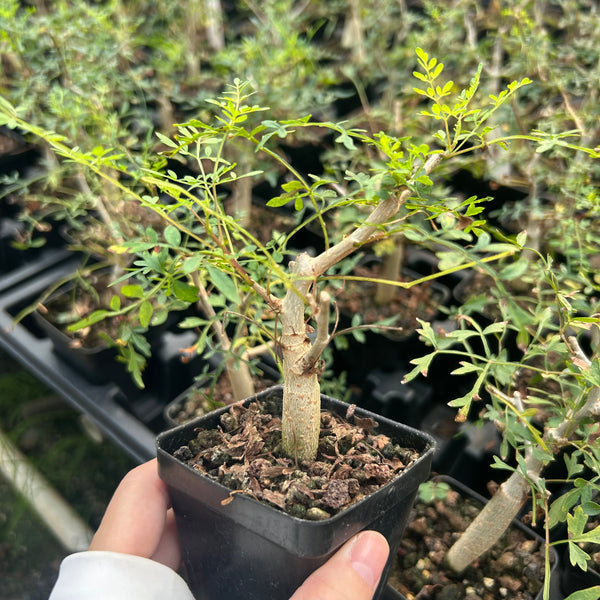
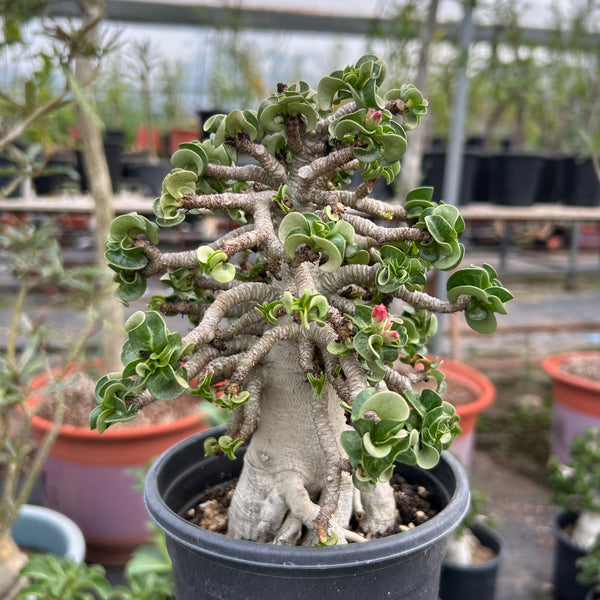
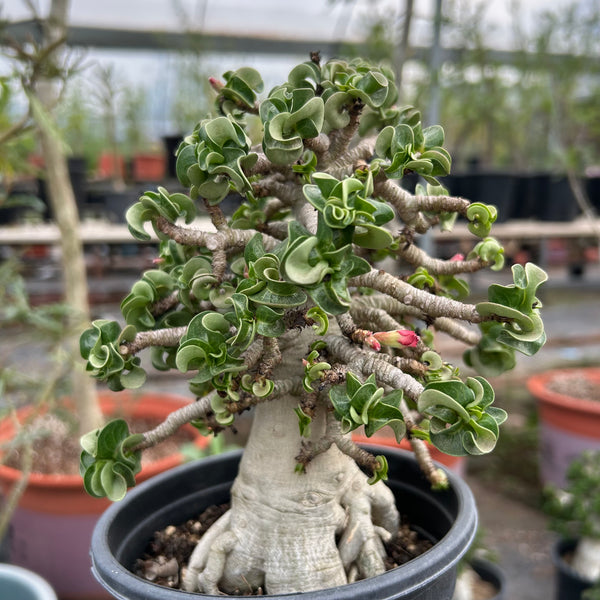
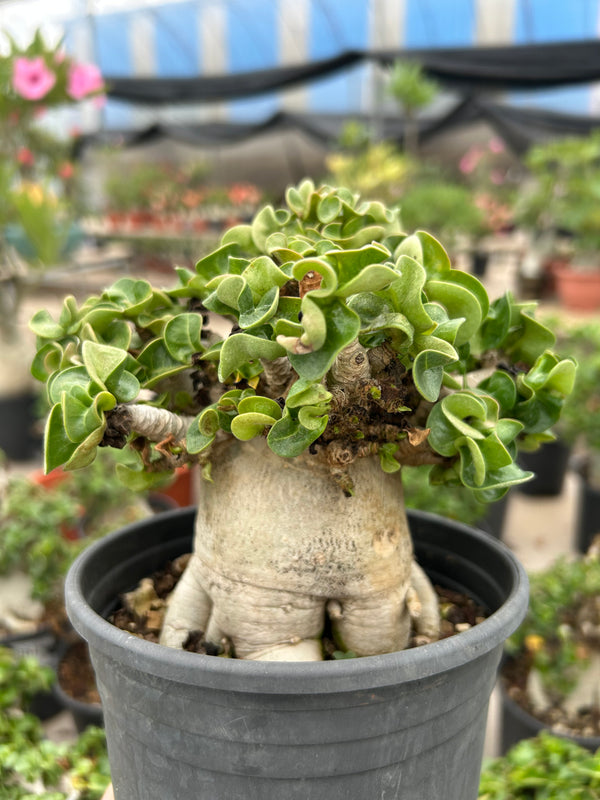
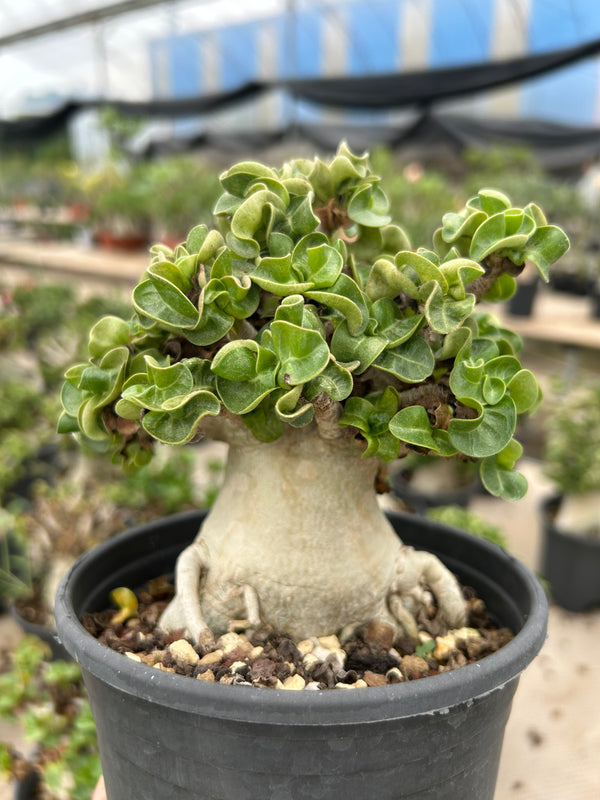
Diagnostic Features: Distinguished from the typical Dorstenia foetida form by its exceptionally long, narrow, lanceolate leaves that feature a distinctly crinkly, wavy, and slightly serrated or dentate margin. The foliage often displays prominent, brilliant white or light-colored primary veins contrasting against a dark green or blackish-green blade. It develops a squat, swollen, dark green-to-mahogany stem caudex marked by prominent spiral leaf and inflorescence scars, producing flat, horned, disc-like green-to-chartreuse hypanthodia (shield flowers) that expel seeds explosively via hydraulic pressure.

Growth Habit: A slow-growing, perennial stem succulent/subshrub reaching heights of 10 to 16 inches (25–40 cm) and widths of 12 inches (30 cm). It is deciduous or semi-evergreen, entering a winter dormancy period where it drops its leaves and requires dry conditions.

History & Etymology

Etymology: The genus name Dorstenia honors Theodor Dorsten (1492–1552), a German botanist and medical professor. The specific epithet lancifolia derives from the Latin words lancea (lance) and folium (leaf), referring to the narrow, lance-shaped leaves.

Historical Context: Long treated taxonomically as a regional variant or synonym within the highly variable Dorstenia foetida species complex native to the Horn of Africa and Arabian Peninsula, selections featuring extreme leaf narrowness have been propagated and treasured by specialist caudex collectors worldwide for their unique architectural form and striking foliar variegation patterns.

Care Guide

Essential Care Tips for Thriving Plants

Light

Provide partial to full sun. Most plants thrive on direct UV exposure. Avoid placing behind window glass, as it filters out the essential UV rays needed for healthy growth.

Water

Follow the "Soak and Dry" principle. Ensure the top 2–3 cm of soil is bone dry before watering (use the finger test). Reduce frequency in winter, but do not stop watering entirely.

Temperature

The ideal range is 18–35 °C. Maintain temperatures above 5 °C during winter. Please note that temperatures below 0 °C pose a significant risk of plant death.

Humidity

Best kept at 30–50% humidity. Note: High air humidity is not a substitute for root watering. Avoid overly damp areas to prevent root rot or leggy side shoots.

Soil

A loose, well-draining medium is ideal. A mix containing 50–70% grit or mineral soil is recommended for aeration. Outdoor ground planting is also a viable option.

Fertilizer

Fertilize during repotting using Osmocote A2 slow-release fertilizer. Apply sparingly twice a year, or adjust the fertilizer type based on your specific home environment.

Planting Guide

Start Your Green Journey in 4 Steps

Unbox & Inspect

Carefully unpack and inspect the plant’s body and roots. We recommend taking photos or videos immediately for your records. Place it in a shaded, well-ventilated spot for 1–2 days to acclimate to its new environment.

Potting & Placement

After 24 hours of rest, pot the plant using slightly moistened soil. Place it in a bright, airy location to encourage recovery. Keep away from AC vents or heaters to prevent damage from temperature fluctuations.

First Watering

Use water that has sat for at least 24 hours. If using the damp-potting method, wait 2–3 days before the first watering. Ensure a thorough soak until water drains freely from the bottom.

Daily Care

Monitor leaf condition and soil moisture daily. If the soil remains damp, increase ventilation rather than watering. Proper airflow is essential to prevent root rot and ensure lasting health.