Important Notice: Low-Temperature Shipping — Read Before Ordering

Notice on Low-Temperature Shipping

Recently, temperatures have been gradually dropping in various regions, and some plants require insulated packaging for shipping. When placing an order, you can check the estimated delivery time on the order page. Below are the packaging arrangements for different temperature conditions:

If the temperature at your address is expected to remain below -5°C throughout the estimated delivery period, please do not place an order.

If the minimum temperature at your address during the estimated delivery period is between 0°C and 5°C, your order will be shipped in an insulated box, and an additional shipping fee will be required. The specific fee will be notified by email. You may pay the additional shipping fee, or apply to us for a refund.

If the minimum temperature at your address during the estimated delivery period is above 5°C, no insulated box will be arranged, and your order will be shipped as normal.

Note: For some cold-sensitive plants, we will send email reminders depending on the situation.

Thank you all for your support and trust!

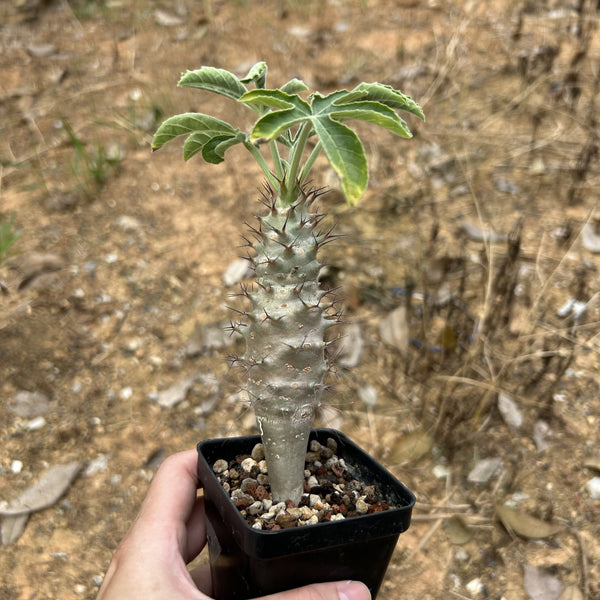
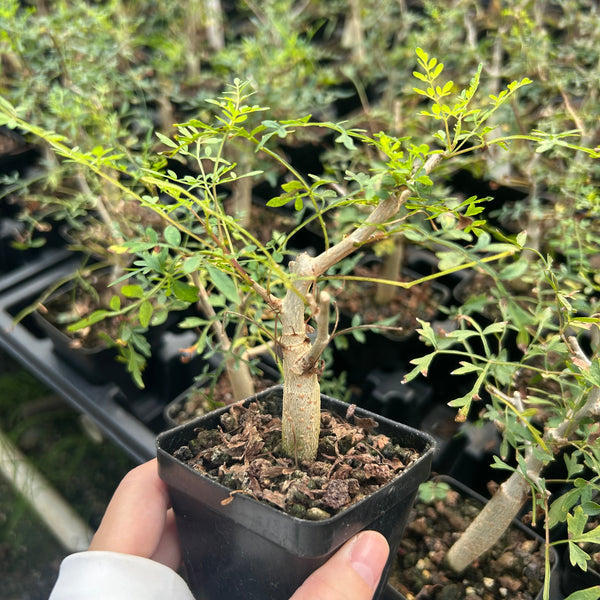
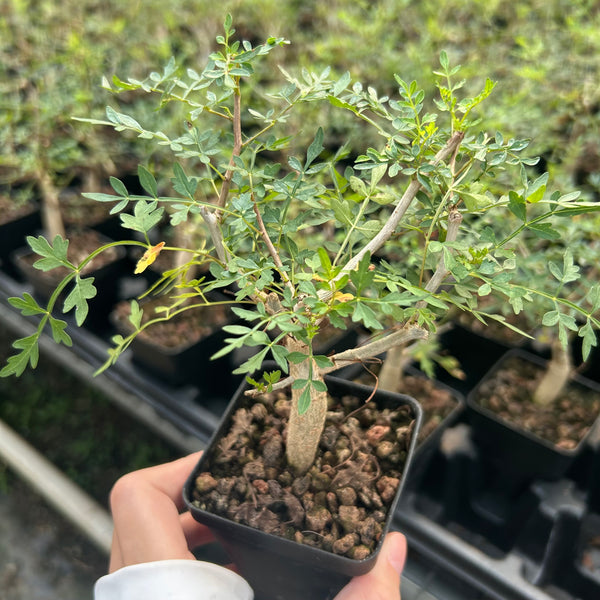
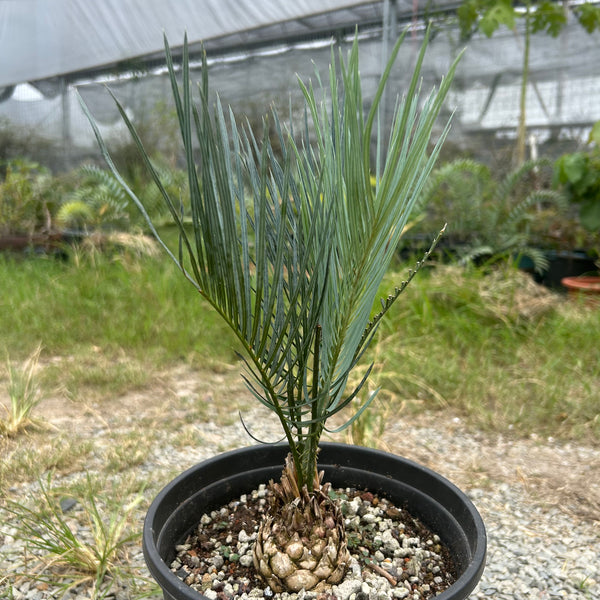
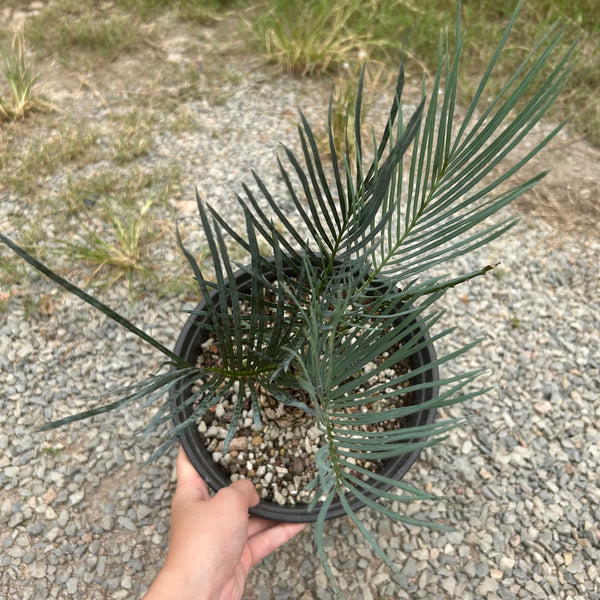
Delonix pumila

Delonix
$ 35.00 / plant
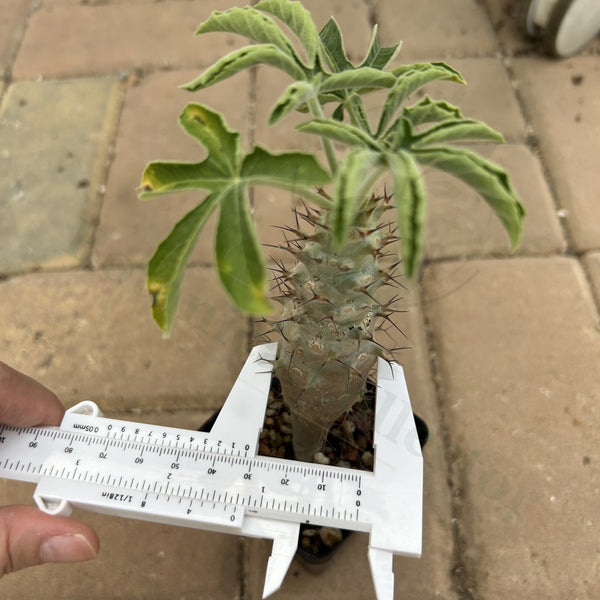
Plant selection You'll receive a similar plant. Appearance may vary. In stock · 50 available
Quantity
Sales Type Retail, Same Batch
Plant size W0.5-1cm
Packaged Weight Actual packaged weight varies by product and root system. 0.15 kg
Propagation Method Seed-grown

Description

Geographic & Climate

  • Geographic Coordinates: 23°24'S – 23°32'S, 43°45'E (Endemic to southwestern Madagascar, specifically restricted to La Table Hill near Toliara and the coastal plateau extending south from Saint-Augustin across the Onilahy River).

  • Climate Classification: Hot Arid / Desert Climate (Köppen: BWh) transitioning to Hot Semi-Arid Climate (BSh).

  • Habitat Characteristics: Occurs from sea level up to 160 meters in elevation within xerophytic spiny forests and coastal scrubland. It grows directly on exposed, rocky Tertiary limestone outcrops alongside succulent Euphorbia and Commiphora species, experiencing prolonged dry winters and brief, irregular summer rainfall.

Botanical Morphology

  • Diagnostic Features: Distinguished from all other Delonix species by its dwarfed stature, short swollen caudiciform trunk (up to 50 cm tall and 40 cm in diameter) with smooth, pale grey bark, and gnarled, contorted branches with twigs often trailing down to ground level. Its bipinnate leaves are strongly reduced, bearing only 1–2(–3) pairs of pinnae with (2–)3–4(–5) pairs of small, glabrous, grey-green elliptic leaflets (5–27 mm long). The nocturnal, moth-pollinated flowers open for a single day with five non-overlapping, crisped white petals that fade to butter-yellow; the upper petal features a pale sulphur-yellow blotch with a white margin, bright crimson-red petal claws, and long exserted pink stamens (4.5–5.5 cm) topped with maroon anthers.

  • Growth Habit: A slow-growing, deciduous pachycaul shrub or dwarf tree reaching a mature height of 1.5–3 meters. It enters full leaf dormancy during the cool, dry winter months and flushes leaves and terminal corymbose racemes with the onset of warm summer rains.

History & Etymology

  • Etymology: The genus name Delonix derives from the Greek delos ("evident" or "conspicuous") and onyx ("claw"), referring to the long, narrow claws of the petals. The specific epithet pumila comes from the Latin pumilus ("dwarf" or "diminutive"), referencing its compact, stunted growth form compared to taller congeners like Delonix regia.

  • Historical Context: Although sterile herbarium specimens were collected near La Table in the early 20th century, Delonix pumila was formally described as a distinct species in 1995 by David J. Du Puy, Peter B. Phillipson, and Raymond Rabevohitra in Kew Bulletin (based on the 1993 holotype collection Du Puy, Labat & Comtet M419 at Kew). Classified as Endangered (EN) on the IUCN Red List with an area of occupancy of roughly 93 km², its thick caudex and low, bonsai-like branching quickly made it a prized rarity among succulent and pachycaul collectors.

Care Guide

Essential Care Tips for Thriving Plants

Light

Provide partial to full sun. Most plants thrive on direct UV exposure. Avoid placing behind window glass, as it filters out the essential UV rays needed for healthy growth.

Water

Follow the "Soak and Dry" principle. Ensure the top 2–3 cm of soil is bone dry before watering (use the finger test). Reduce frequency in winter, but do not stop watering entirely.

Temperature

The ideal range is 18–35 °C. Maintain temperatures above 5 °C during winter. Please note that temperatures below 0 °C pose a significant risk of plant death.

Humidity

Best kept at 30–50% humidity. Note: High air humidity is not a substitute for root watering. Avoid overly damp areas to prevent root rot or leggy side shoots.

Soil

A loose, well-draining medium is ideal. A mix containing 50–70% grit or mineral soil is recommended for aeration. Outdoor ground planting is also a viable option.

Fertilizer

Fertilize during repotting using Osmocote A2 slow-release fertilizer. Apply sparingly twice a year, or adjust the fertilizer type based on your specific home environment.

Planting Guide

Start Your Green Journey in 4 Steps

Unbox & Inspect

Carefully unpack and inspect the plant’s body and roots. We recommend taking photos or videos immediately for your records. Place it in a shaded, well-ventilated spot for 1–2 days to acclimate to its new environment.

Potting & Placement

After 24 hours of rest, pot the plant using slightly moistened soil. Place it in a bright, airy location to encourage recovery. Keep away from AC vents or heaters to prevent damage from temperature fluctuations.

First Watering

Use water that has sat for at least 24 hours. If using the damp-potting method, wait 2–3 days before the first watering. Ensure a thorough soak until water drains freely from the bottom.

Daily Care

Monitor leaf condition and soil moisture daily. If the soil remains damp, increase ventilation rather than watering. Proper airflow is essential to prevent root rot and ensure lasting health.