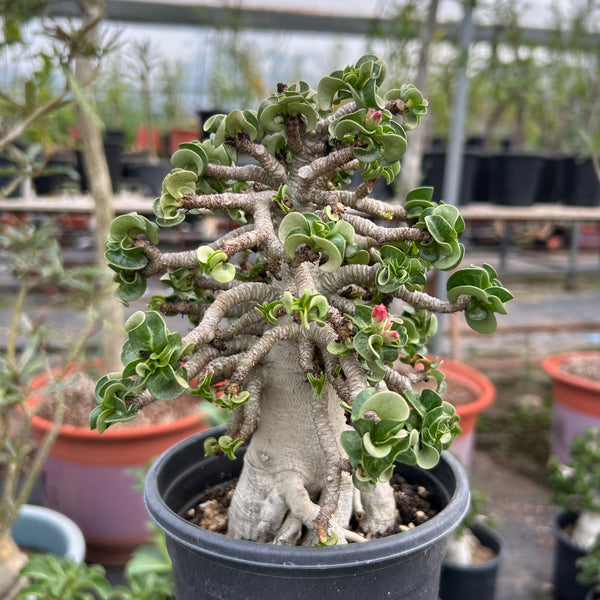
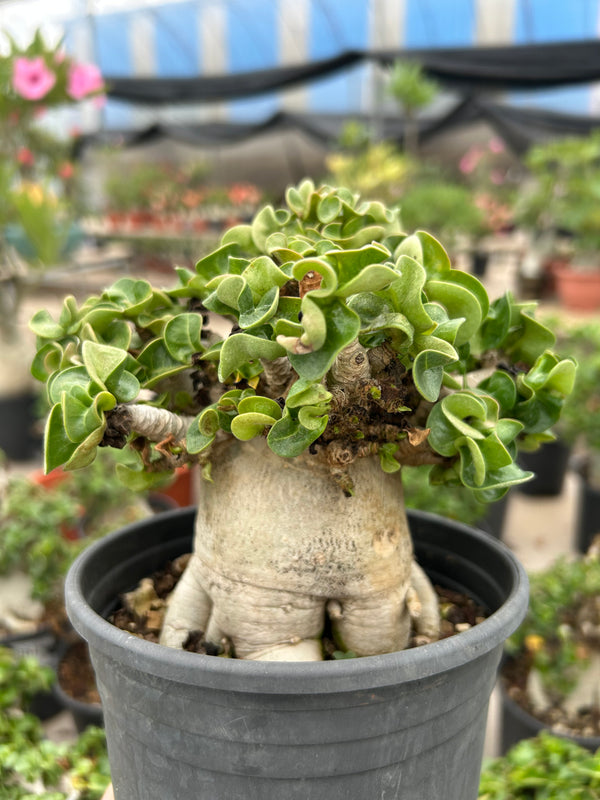
We offer rare, unusual, and distinctive plants — and wholesale service for retail customers placing larger orders.

WYSIWYG

Cycas cairnsiana

· Premium
In Stock · Ships in 48h
$ 500.00 / plant
Attribute Option
Quantity Qty
1

Cataloged as

Sales Type Retail, WYSIWYG
Product Size W5.5cm
Weight 1.0 kg
Propagation Method Seed-grown
Genus Cycas

Description

Geographic & Climate

  • Geographic Coordinates: Approximately 18°10'S – 18°50'S, 143°45'E – 144°30'E (Type locality: Newcastle Range, Etheridge Shire, northeast Queensland, Australia).

  • Climate Classification: Tropical Savanna / Semi-Arid Tropical (Köppen: Aw bordering BSh) — pronounced monsoonal summer wet season followed by an intense, prolonged winter dry season.

  • Habitat Characteristics: Occurs at elevations between 450 and 550 meters above sea level. Annual rainfall ranges from 700 to 1,350 mm, falling almost entirely between December and March. Substrate consists of skeletal, nutrient-poor, gritty mineral soils weathered directly over exposed siliceous granite hills, ridges, and boulder outcrops in open savanna woodland.

Botanical Morphology

  • Diagnostic Features:

    • Foliage: Fronds measure 60–110 cm in length, rigidly bowed and distinctly keeled (V-shaped in cross-section). Emerging fronds are densely covered in dark orange-brown tomentum, shedding completely to reveal an intense, chalky, silvery glaucous-blue epicuticular wax layer on mature leaves.

    • Pinnae (Leaflets): 180–280 leaflets per leaf, inserted at 20°–60° along the rachis. Median leaflets are exceptionally narrow (8–18 cm long by only 2–3.5 mm wide) with strongly revolute (recurved) margins, providing extreme reduction of transpirational surface area.

    • Reproductive Structures & Seeds: Dioecious. Solitary ovoid male cones (16–20 cm long, 7–10 cm diameter) with upturned apical spines. Open female megasporophylls (16–21 cm long) with narrowly triangular, toothed apical lamina bearing 2–4 ovules. Sarcotesta is covered in a dense, powdery blue-white waxy bloom, ripening to yellow-brown.

  • Growth Habit: Extremely slow-growing arborescent pachycaul gymnosperm. Enters winter dormancy during the dry period (May to October). Mature plants develop an erect pachycaul trunk 2–5 meters in height and 12–16 cm in diameter, frequently swollen at the base.

History & Etymology

  • Etymology: Genus Cycas originates from the Ancient Greek kykas (a historical transcription error for koikas, referencing a palm-like tree). The specific epithet cairnsiana honors William Wellington Cairns (1828–1888), who served as the Governor of Queensland from 1875 to 1877.

  • Historical Context: First collected in the 1870s by police officer and naturalist William E. Armit during exploration of the rugged Newcastle Range. Formally described in 1876 by the Victorian Government Botanist Baron Ferdinand von Mueller in Fragmenta Phytographiae Australiae (10: 63). Though scientifically known for over a century, it remained virtually absent from private horticulture until the late 1980s, when discovery of its otherworldly powdery-blue foliage turned it into one of the most coveted collector cycads worldwide.

Care Guide

Essential Care Tips for Thriving Plants

Light

Provide partial to full sun. Most plants thrive on direct UV exposure. Avoid placing behind window glass, as it filters out the essential UV rays needed for healthy growth.

Water

Follow the "Soak and Dry" principle. Ensure the top 2–3 cm of soil is bone dry before watering (use the finger test). Reduce frequency in winter, but do not stop watering entirely.

Temperature

The ideal range is 18–35 °C. Maintain temperatures above 5 °C during winter. Please note that temperatures below 0 °C pose a significant risk of plant death.

Humidity

Best kept at 30–50% humidity. Note: High air humidity is not a substitute for root watering. Avoid overly damp areas to prevent root rot or leggy side shoots.

Soil

A loose, well-draining medium is ideal. A mix containing 50–70% grit or mineral soil is recommended for aeration. Outdoor ground planting is also a viable option.

Fertilizer

Fertilize during repotting using Osmocote A2 slow-release fertilizer. Apply sparingly twice a year, or adjust the fertilizer type based on your specific home environment.

Planting Guide

Start Your Green Journey in 4 Steps

Unbox & Inspect

Carefully unpack and inspect the plant’s body and roots. We recommend taking photos or videos immediately for your records. Place it in a shaded, well-ventilated spot for 1–2 days to acclimate to its new environment.

Potting & Placement

After 24 hours of rest, pot the plant using slightly moistened soil. Place it in a bright, airy location to encourage recovery. Keep away from AC vents or heaters to prevent damage from temperature fluctuations.

First Watering

Use water that has sat for at least 24 hours. If using the damp-potting method, wait 2–3 days before the first watering. Ensure a thorough soak until water drains freely from the bottom.

Daily Care

Monitor leaf condition and soil moisture daily. If the soil remains damp, increase ventilation rather than watering. Proper airflow is essential to prevent root rot and ensure lasting health.