Important Notice: Low-Temperature Shipping — Read Before Ordering

Notice on Low-Temperature Shipping

Recently, temperatures have been gradually dropping in various regions, and some plants require insulated packaging for shipping. When placing an order, you can check the estimated delivery time on the order page. Below are the packaging arrangements for different temperature conditions:

If the temperature at your address is expected to remain below -5°C throughout the estimated delivery period, please do not place an order.

If the minimum temperature at your address during the estimated delivery period is between 0°C and 5°C, your order will be shipped in an insulated box, and an additional shipping fee will be required. The specific fee will be notified by email. You may pay the additional shipping fee, or apply to us for a refund.

If the minimum temperature at your address during the estimated delivery period is above 5°C, no insulated box will be arranged, and your order will be shipped as normal.

Note: For some cold-sensitive plants, we will send email reminders depending on the situation.

Thank you all for your support and trust!

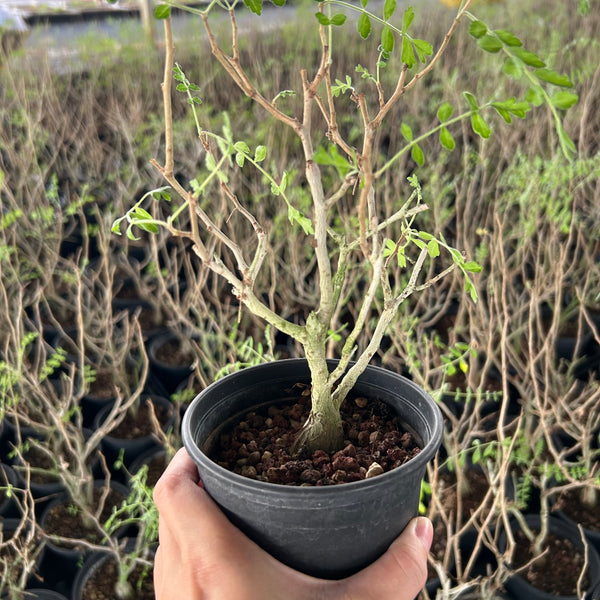
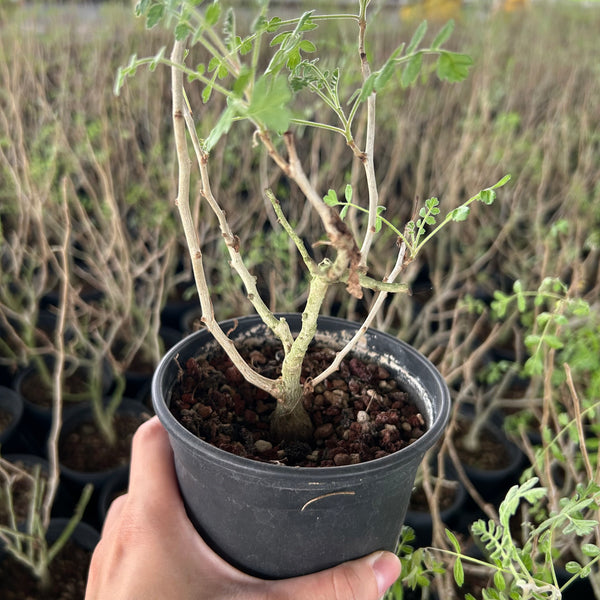
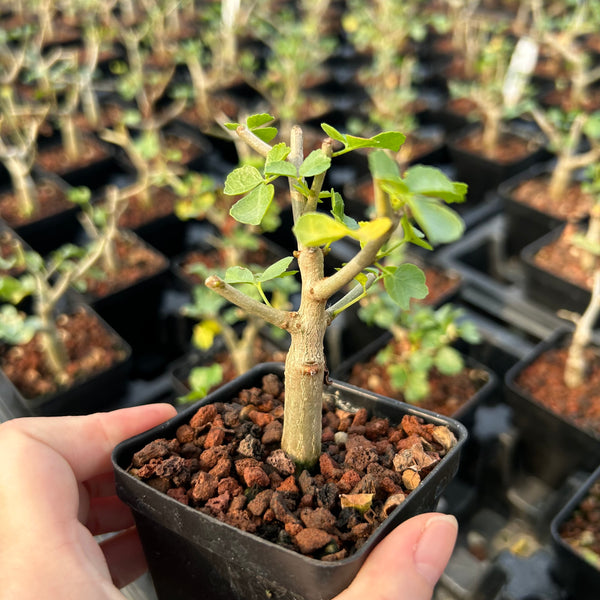
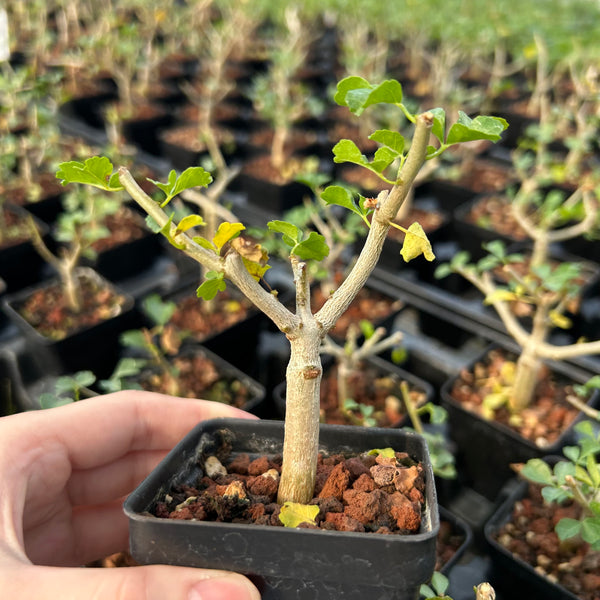
Boswellia asplenifolia

Boswellia
$ 100.00 / plant
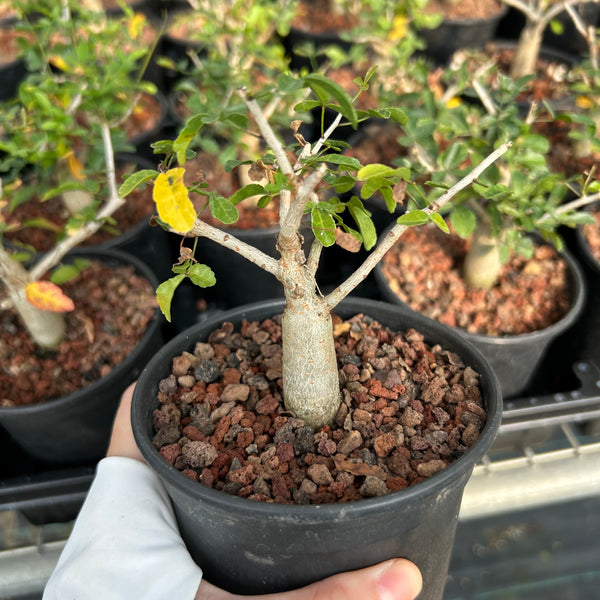
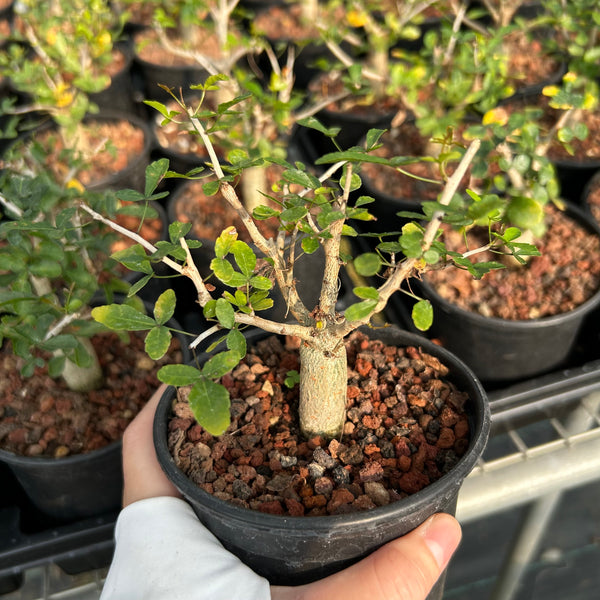
Plant selection You'll receive a similar plant. Appearance may vary. In stock · 50 available
Quantity
Sales Type Same Batch, Retail
Plant size W1cm
Propagation Method Seed-grown

Cataloged as

Description

Geographic & Climate

  • Geographic Coordinates: 12°25'N – 12°42'N, 53°20'E – 54°05'E (Endemic to Northwestern and North-Central Socotra Island, Yemen; precise type locality coordinates are not recorded in the original protologue, but the distribution range is strictly restricted to this sector of the archipelago).

  • Climate Classification: Tropical Desert Climate (Köppen: BWh) and Tropical Semi-Arid Steppe (BSh) influenced by the Indian Ocean monsoon systems.

  • Habitat Characteristics: Occurs in desert and dry shrubland biomes on coastal rocky hillsides, north-facing cliffs, and dry semi-evergreen woodlands across various substrates (including limestone and granitic foothills). Exact altitudinal limits are recorded as insufficient/not formally defined in primary database summaries, though sympatric lowland-to-foothill habitats generally receive bimodal seasonal rainfall (150–300 mm annually) driven by the northeast and southwest monsoons.

Botanical Morphology

  • Diagnostic Features:

    • Bark & Stems: Ash-grey or reddish-grey to yellowish papery bark that exfoliates in thin flakes; branches are glabrous.

    • Foliage: Imparipinnate, fern-like compound leaves with a winged rachis and numerous small, narrow, finely serrate or crenate leaflets (distinguishing it from Boswellia socotrana and B. nana, the latter having simple leaves with petioles < 3 cm).

    • Flowers & Fruits: Inflorescences are many-flowered, rebranching panicles or racemes. Petals are pink to reddish and glabrous on the outer surface. The floral disk is concave (approx. 0.4 mm high × 1.5 mm diameter), 10-lobed, glandular, and orange. Style is 0.8–1 mm long with a truncate-capitate stigma. Fruits are 3(–4)-locular drupes, subglobose to broadly ovoid (6–7 × 5–6 mm), glabrous, and reddish-brown when ripe, containing pyrenes (3.5–4 × 2.5–3.2 mm) rounded on the back and angular in front with an apical point.

  • Growth Habit: Erect, deciduous woody shrub or small tree reaching up to 8 m in height. Slow-growing in cultivation; enters full leaf dormancy during the prolonged annual dry season, with flowering typically occurring between February and April.

History & Etymology

  • Etymology: The specific epithet asplenifolia (originally spelled aspleniifolia by Balfour) is derived from the fern genus Asplenium (spleenwort) and the Latin folius ("leaved"), referring to the delicate, fern-like pinnate arrangement of its leaves and small leaflets.

  • Historical Context: First collected during the 1880 scientific expedition to Socotra led by Scottish botanist Isaac Bayley Balfour (syntypes B.C.S. No. 439 and Schweinfurth No. 754). Balfour originally described the taxon in 1882 as Odina aspleniifolia (placing it in Anacardiaceae). It was later transferred to Lannea by Engler, treated as a subspecies of Boswellia socotrana by Lvončík, and finally established at the species rank as Boswellia asplenifolia by Swedish botanist Mats Thulin in his 2020 monograph The Genus Boswellia (Burseraceae): The Frankincense Trees.

Care Guide

Essential Care Tips for Thriving Plants

Light

Provide partial to full sun. Most plants thrive on direct UV exposure. Avoid placing behind window glass, as it filters out the essential UV rays needed for healthy growth.

Water

Follow the "Soak and Dry" principle. Ensure the top 2–3 cm of soil is bone dry before watering (use the finger test). Reduce frequency in winter, but do not stop watering entirely.

Temperature

The ideal range is 18–35 °C. Maintain temperatures above 5 °C during winter. Please note that temperatures below 0 °C pose a significant risk of plant death.

Humidity

Best kept at 30–50% humidity. Note: High air humidity is not a substitute for root watering. Avoid overly damp areas to prevent root rot or leggy side shoots.

Soil

A loose, well-draining medium is ideal. A mix containing 50–70% grit or mineral soil is recommended for aeration. Outdoor ground planting is also a viable option.

Fertilizer

Fertilize during repotting using Osmocote A2 slow-release fertilizer. Apply sparingly twice a year, or adjust the fertilizer type based on your specific home environment.

Planting Guide

Start Your Green Journey in 4 Steps

Unbox & Inspect

Carefully unpack and inspect the plant’s body and roots. We recommend taking photos or videos immediately for your records. Place it in a shaded, well-ventilated spot for 1–2 days to acclimate to its new environment.

Potting & Placement

After 24 hours of rest, pot the plant using slightly moistened soil. Place it in a bright, airy location to encourage recovery. Keep away from AC vents or heaters to prevent damage from temperature fluctuations.

First Watering

Use water that has sat for at least 24 hours. If using the damp-potting method, wait 2–3 days before the first watering. Ensure a thorough soak until water drains freely from the bottom.

Daily Care

Monitor leaf condition and soil moisture daily. If the soil remains damp, increase ventilation rather than watering. Proper airflow is essential to prevent root rot and ensure lasting health.