Important Notice: Low-Temperature Shipping — Read Before Ordering

Notice on Low-Temperature Shipping

Recently, temperatures have been gradually dropping in various regions, and some plants require insulated packaging for shipping. When placing an order, you can check the estimated delivery time on the order page. Below are the packaging arrangements for different temperature conditions:

If the temperature at your address is expected to remain below -5°C throughout the estimated delivery period, please do not place an order.

If the minimum temperature at your address during the estimated delivery period is between 0°C and 5°C, your order will be shipped in an insulated box, and an additional shipping fee will be required. The specific fee will be notified by email. You may pay the additional shipping fee, or apply to us for a refund.

If the minimum temperature at your address during the estimated delivery period is above 5°C, no insulated box will be arranged, and your order will be shipped as normal.

Note: For some cold-sensitive plants, we will send email reminders depending on the situation.

Thank you all for your support and trust!

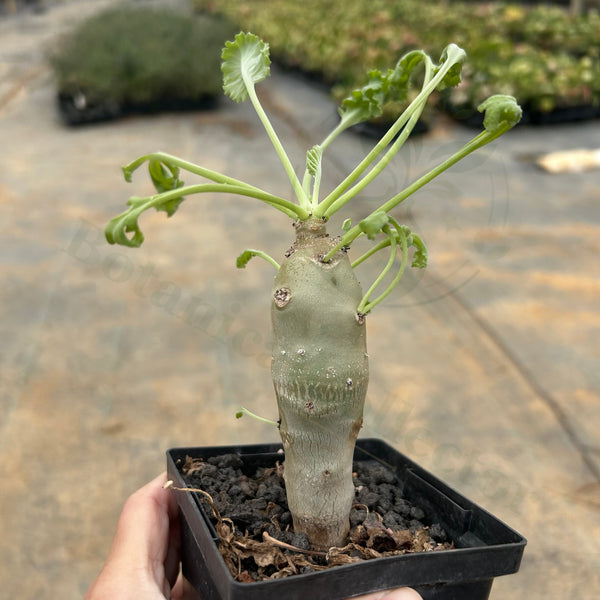
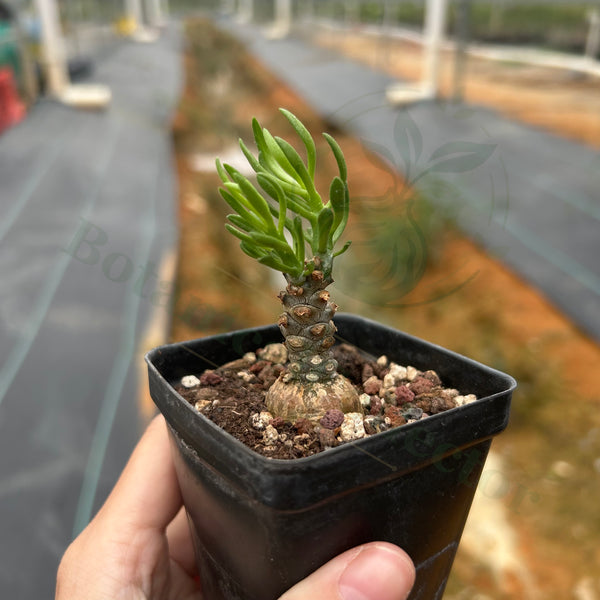
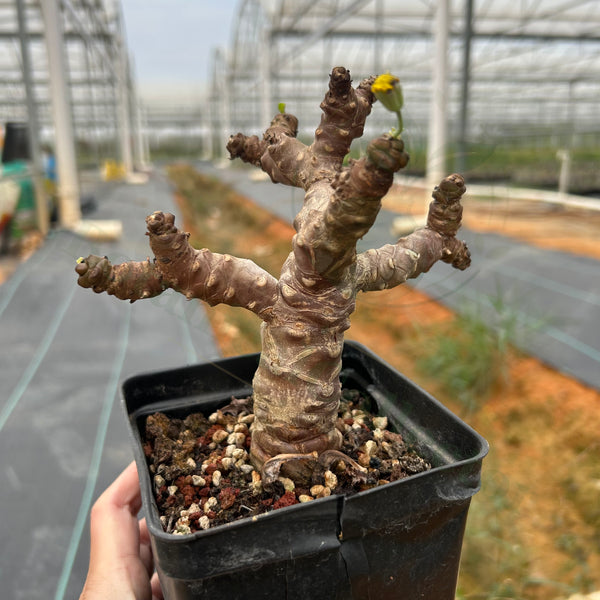
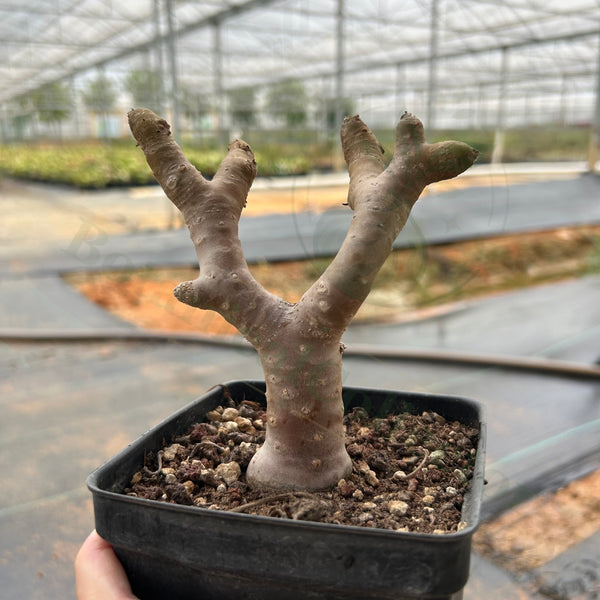
Adenium socotranum

Adenia
$ 25.00 / plant
Plant selection You'll receive a similar plant. Appearance may vary. In stock · 43 available
Quantity
Sales Type Retail, Same Batch
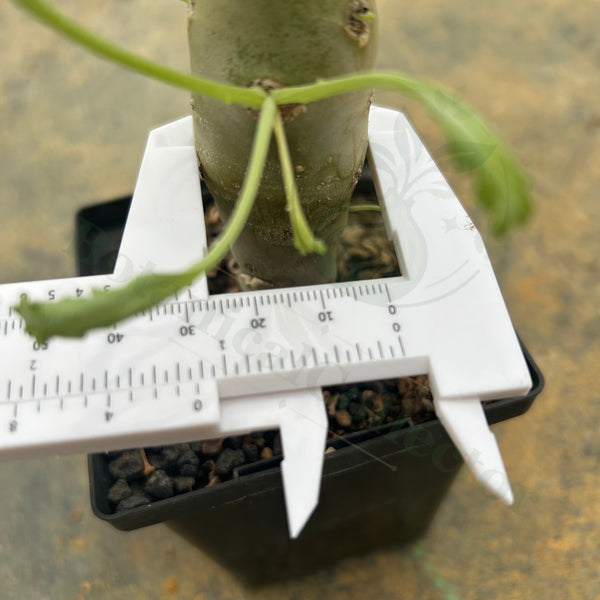
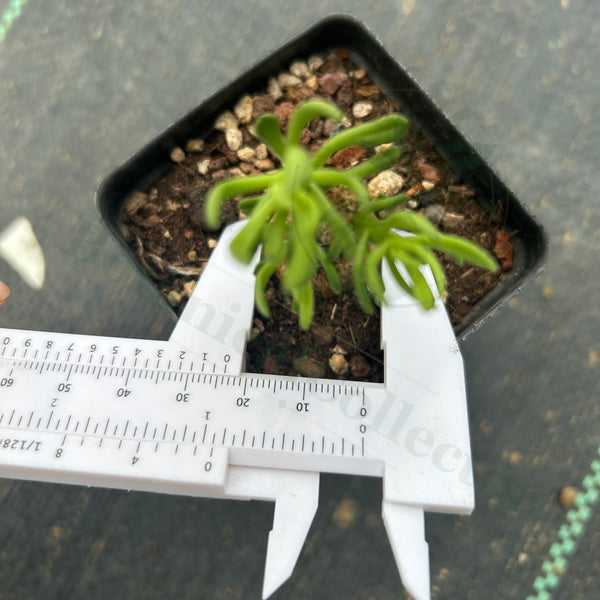
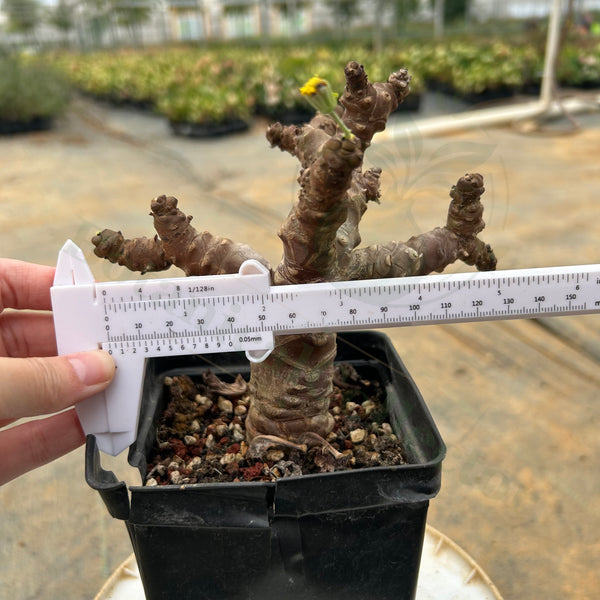
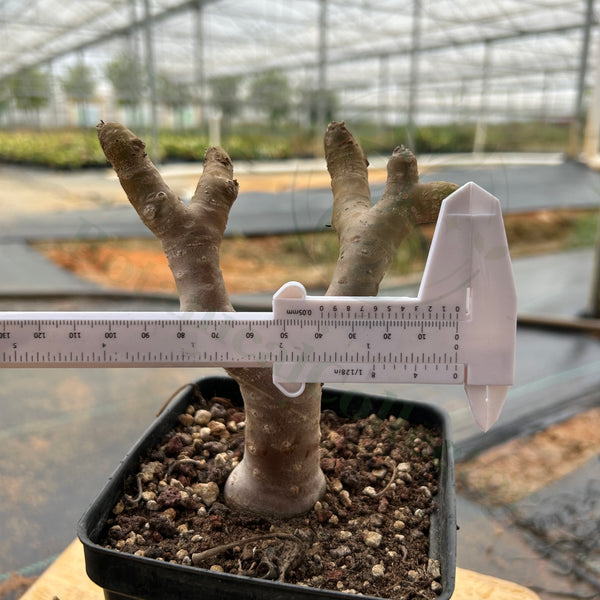
Plant size W2.5-3cm
Packaged Weight Actual packaged weight varies by product and root system. See related articles for details. 0.2 kg
Propagation Method Seed-grown

Cataloged as

Description

Origin

Adenium socotranum is endemic to the Island of Socotra (part of Yemen), located in the Indian Ocean. It is geographically isolated from other Adenium species found on the African mainland and the Arabian Peninsula. Due to its unique evolutionary path and the fragile ecosystem of its island home, it is a highly protected species listed under CITES Appendix II.

Habitat

In its natural environment, this species thrives in arid, rocky terrain, primarily on limestone plateaus and rocky hillsides. The island of Socotra is known for its harsh, alien-like landscapes and extreme conditions: scorching temperatures, high winds, and very low rainfall. Adenium socotranum has evolved to become a pachycaul giant, anchoring its massive base into rock crevices to store immense quantities of water, allowing it to survive prolonged droughts that would kill most other vegetation.

Description

Adenium socotranum is the "Titan" of the genus, characterized by its prehistoric appearance and massive proportions.

  • Caudex & Trunk: It develops an enormous, conical or bottle-shaped trunk (caudex) that can reach several meters in diameter in the wild. The bark is smooth and distinctly silvery-gray or pale beige, which helps reflect the intense tropical sun. Unlike other desert roses, it is very slow-growing, taking decades to achieve a significant size.

  • Foliage: The leaves are dark green, elliptical, and feature a very prominent white midrib. They are typically clustered at the tips of the short, thick branches and are deciduous, falling off during the dry season to conserve moisture.

  • Flowers: It produces beautiful rose-pink to nectar-pink flowers. The blooms usually appear in spring while the plant is still leafless, creating a striking contrast against the massive silver trunk.

  • Distinctive Growth Habit: One of the most reliable ways to identify true A. socotranum (besides its origin) is its vertical, columnar branching that emerges from the top of the massive base, and its unique dormancy cycle which is strictly tuned to its island's specific climate.

Care Guide

Essential Care Tips for Thriving Plants

Light

Provide partial to full sun. Most plants thrive on direct UV exposure. Avoid placing behind window glass, as it filters out the essential UV rays needed for healthy growth.

Water

Follow the "Soak and Dry" principle. Ensure the top 2–3 cm of soil is bone dry before watering (use the finger test). Reduce frequency in winter, but do not stop watering entirely.

Temperature

The ideal range is 18–35 °C. Maintain temperatures above 5 °C during winter. Please note that temperatures below 0 °C pose a significant risk of plant death.

Humidity

Best kept at 30–50% humidity. Note: High air humidity is not a substitute for root watering. Avoid overly damp areas to prevent root rot or leggy side shoots.

Soil

A loose, well-draining medium is ideal. A mix containing 50–70% grit or mineral soil is recommended for aeration. Outdoor ground planting is also a viable option.

Fertilizer

Fertilize during repotting using Osmocote A2 slow-release fertilizer. Apply sparingly twice a year, or adjust the fertilizer type based on your specific home environment.

Planting Guide

Start Your Green Journey in 4 Steps

Unbox & Inspect

Carefully unpack and inspect the plant’s body and roots. We recommend taking photos or videos immediately for your records. Place it in a shaded, well-ventilated spot for 1–2 days to acclimate to its new environment.

Potting & Placement

After 24 hours of rest, pot the plant using slightly moistened soil. Place it in a bright, airy location to encourage recovery. Keep away from AC vents or heaters to prevent damage from temperature fluctuations.

First Watering

Use water that has sat for at least 24 hours. If using the damp-potting method, wait 2–3 days before the first watering. Ensure a thorough soak until water drains freely from the bottom.

Daily Care

Monitor leaf condition and soil moisture daily. If the soil remains damp, increase ventilation rather than watering. Proper airflow is essential to prevent root rot and ensure lasting health.
  • 5 stars: 1 (100%)
  • 4 stars: 0 (0%)
  • 3 stars: 0 (0%)
  • 2 stars: 0 (0%)
  • 1 star: 0 (0%)