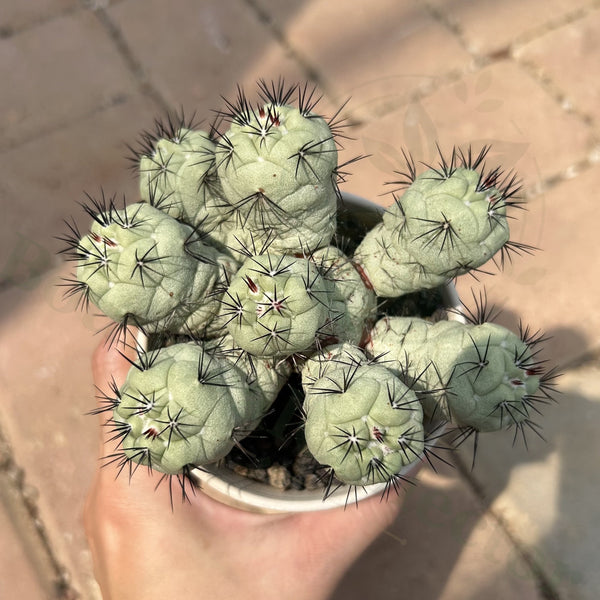
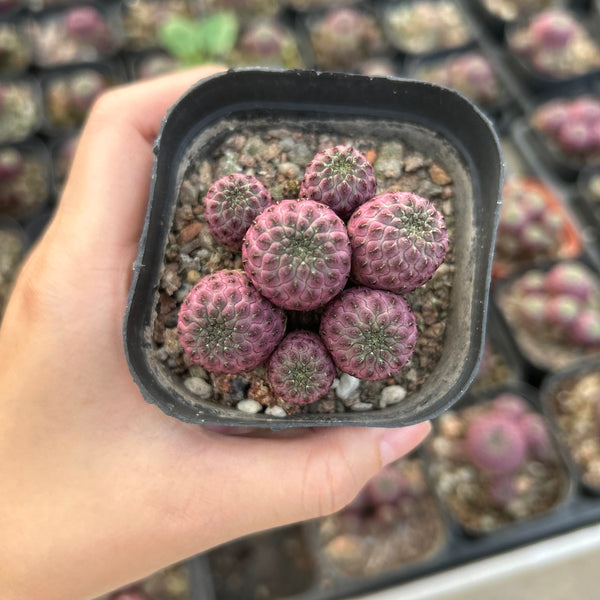
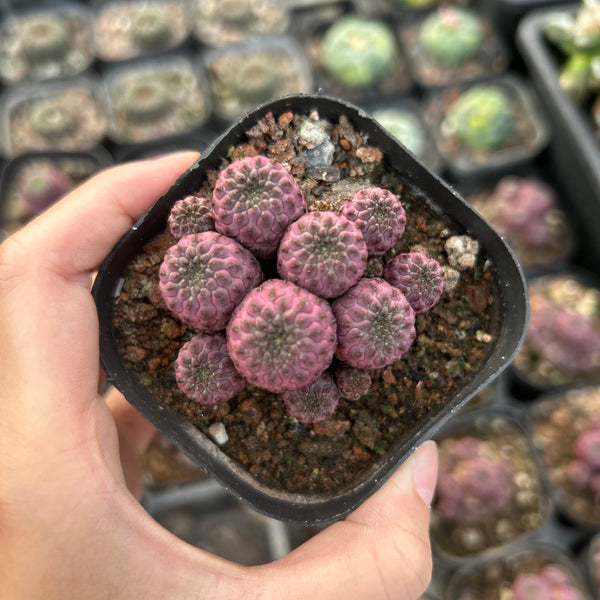
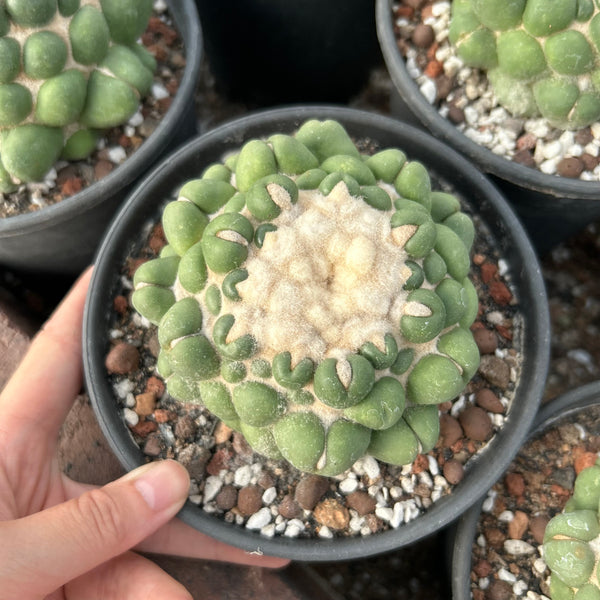
Uebelmannia eriocactoides

BotanicalCollector

· Premium
In Stock · Ships in 48h
$ 150.00 / plant
Attribute Option
Quantity Qty
1
Sales Type Retail, Same Batch
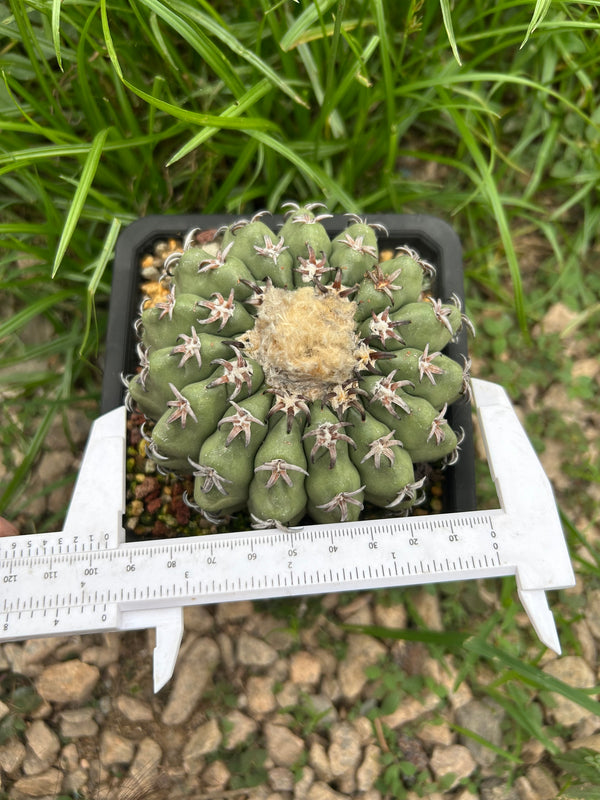
Product Size W5.5-6cm
Weight 0.3 kg
Propagation Method Offset
Genus Uebelmannia

Description

Geographic & Climate

  • Geographic Coordinates: Brazil, Minas Gerais, west of Diamantina, Serra do Espinhaço (approximately 18°14'S, 43°36'W)

  • Climate Classification: Tropical wet-and-dry / Subtropical highland climate (Aw / Cwb)

  • Habitat Characteristics: Elevations ranging from 700 to 1,100 meters above sea level. Inhabits arid to semi-arid steep slopes, ridges, horizontal crevices, and vertical quartzite rock faces within campo rupestre (dry savanna) formations, growing in pockets of organic leaf mold and sand. Subject to seasonal mist, high humidity, and high daytime solar radiation.

Botanical Morphology

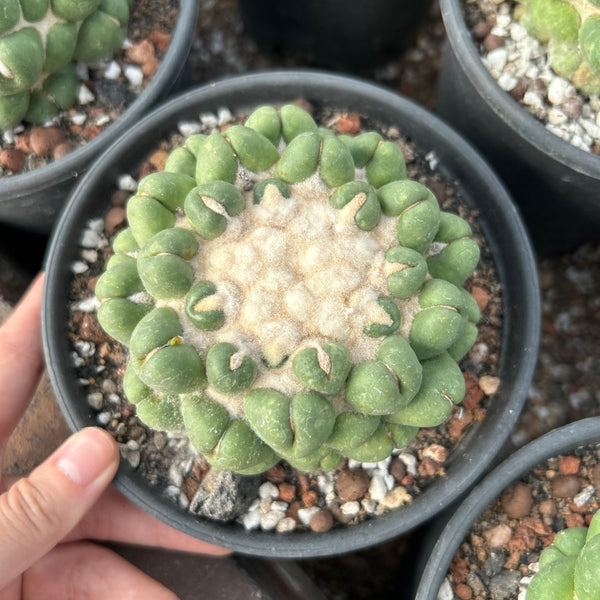
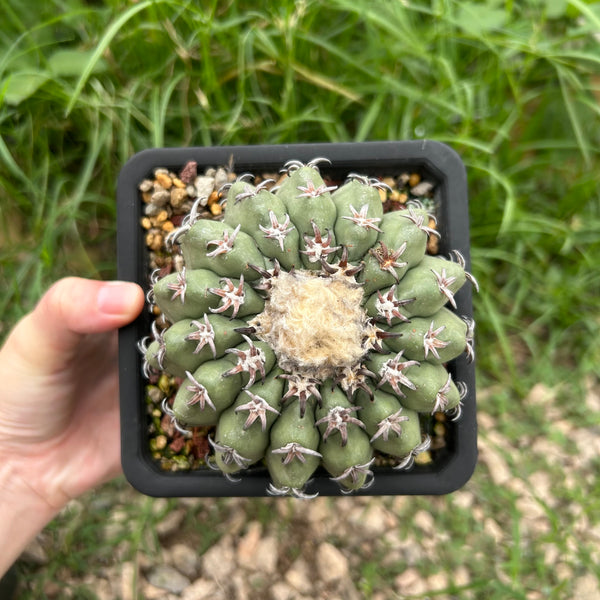
  • Diagnostic Features: Features a tall, upright, clavate to shortly columnar stem reaching 30–50 (up to 80) cm in height. The epidermis ranges from green to deep reddish-brown with a distinct white or bluish wax patina near the apex. Possesses 18 to 25 straight ribs. Unlike typical forms where areoles merge into a continuous line, the areoles here are individual, closely set, and densely covered with 11 to 20 fine, needle-like, golden-yellow to whitish-yellow spines (resembling juvenile Eriocactus leninghausii), measuring about 10 mm long. Older lower stems eventually become spineless. Flowers are diurnal, slender, funnel-shaped, and greenish-yellow, measuring about 15 mm long and 12 mm in diameter.

  • Growth Habit: Solitary, slow-growing columnar habit. Active growth occurs from spring through summer, with sporadic flowering during this period. Requires high warmth, excellent mineral drainage, and winter protection with a strict minimum temperature of 10°C.

History & Etymology

  • Etymology: The genus name Uebelmannia honors Werner Uebelmann, a Swiss Swiss cactus exporter and patron of botany. The specific epithet pectinifera derives from Latin pecten ('comb') and -fer ('-bearing'), referring to comb-like spine arrangements, while the varietal epithet eriocactoides combines the genus name Eriocactus with the Greek suffix -oides ('resembling'), referencing the striking similarity of its golden seedlings and spine clusters to juvenile Eriocactus (now Parodia) species.

  • Historical Context: First described and studied within the complex taxonomic revisions of the genus Uebelmannia by botanists including R. Řepka, J. Krajča, and V. Toman (and later recombined by Guiggi), originating from the quartzitic outcrops of the Espinhaço range in Minas Gerais.

Care Guide

Essential Care Tips for Thriving Plants

Light

Provide partial to full sun. Most plants thrive on direct UV exposure. Avoid placing behind window glass, as it filters out the essential UV rays needed for healthy growth.

Water

Follow the "Soak and Dry" principle. Ensure the top 2–3 cm of soil is bone dry before watering (use the finger test). Reduce frequency in winter, but do not stop watering entirely.

Temperature

The ideal range is 18–35 °C. Maintain temperatures above 5 °C during winter. Please note that temperatures below 0 °C pose a significant risk of plant death.

Humidity

Best kept at 30–50% humidity. Note: High air humidity is not a substitute for root watering. Avoid overly damp areas to prevent root rot or leggy side shoots.

Soil

A loose, well-draining medium is ideal. A mix containing 50–70% grit or mineral soil is recommended for aeration. Outdoor ground planting is also a viable option.

Fertilizer

Fertilize during repotting using Osmocote A2 slow-release fertilizer. Apply sparingly twice a year, or adjust the fertilizer type based on your specific home environment.

Planting Guide

Start Your Green Journey in 4 Steps

01

Unbox & Inspect

Carefully unpack and inspect the plant’s body and roots. We recommend taking photos or videos immediately for your records. Place it in a shaded, well-ventilated spot for 1–2 days to acclimate to its new environment.

02

Potting & Placement

After 24 hours of rest, pot the plant using slightly moistened soil. Place it in a bright, airy location to encourage recovery. Keep away from AC vents or heaters to prevent damage from temperature fluctuations.

03

First Watering

Use water that has sat for at least 24 hours. If using the damp-potting method, wait 2–3 days before the first watering. Ensure a thorough soak until water drains freely from the bottom.

04

Daily Care

Monitor leaf condition and soil moisture daily. If the soil remains damp, increase ventilation rather than watering. Proper airflow is essential to prevent root rot and ensure lasting health.