Important Notice: Low-Temperature Shipping — Read Before Ordering

Notice on Low-Temperature Shipping

Recently, temperatures have been gradually dropping in various regions, and some plants require insulated packaging for shipping. When placing an order, you can check the estimated delivery time on the order page. Below are the packaging arrangements for different temperature conditions:

If the temperature at your address is expected to remain below -5°C throughout the estimated delivery period, please do not place an order.

If the minimum temperature at your address during the estimated delivery period is between 0°C and 5°C, your order will be shipped in an insulated box, and an additional shipping fee will be required. The specific fee will be notified by email. You may pay the additional shipping fee, or apply to us for a refund.

If the minimum temperature at your address during the estimated delivery period is above 5°C, no insulated box will be arranged, and your order will be shipped as normal.

Note: For some cold-sensitive plants, we will send email reminders depending on the situation.

Thank you all for your support and trust!

WYSIWYG

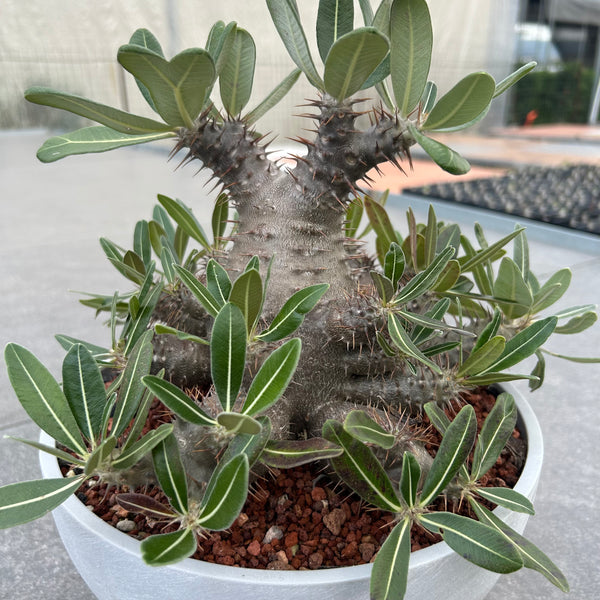
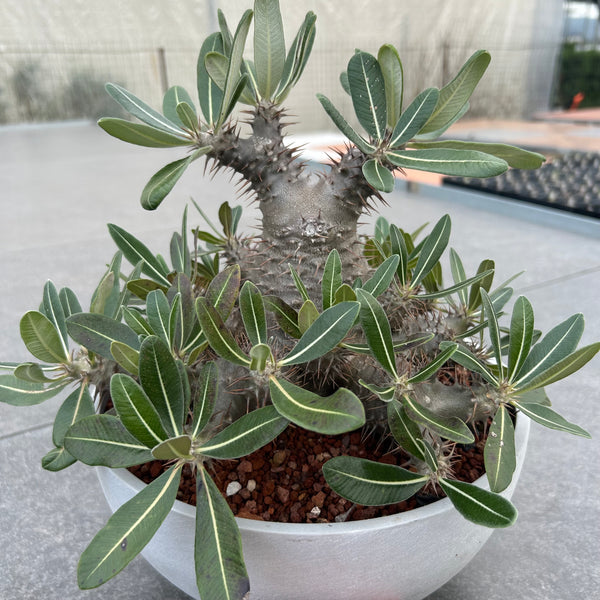
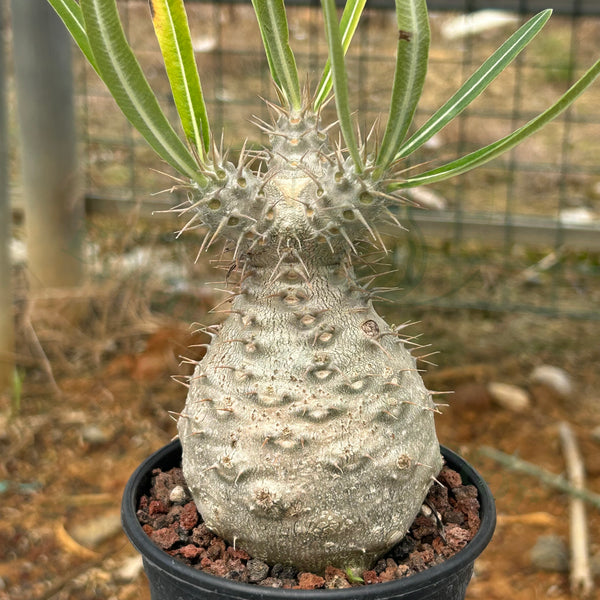
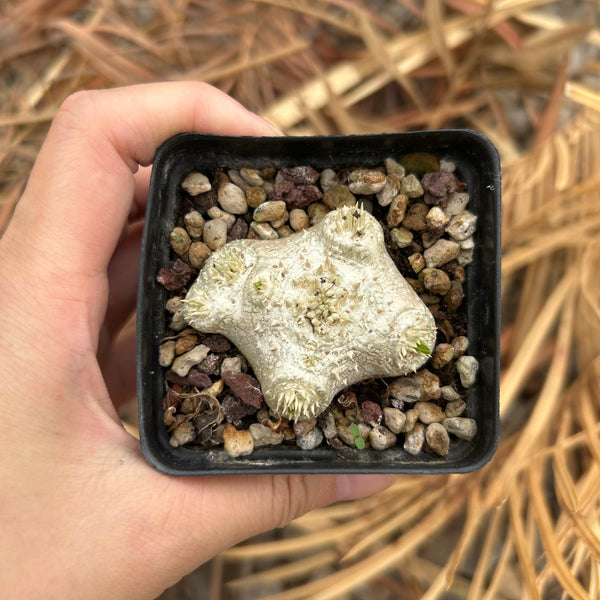
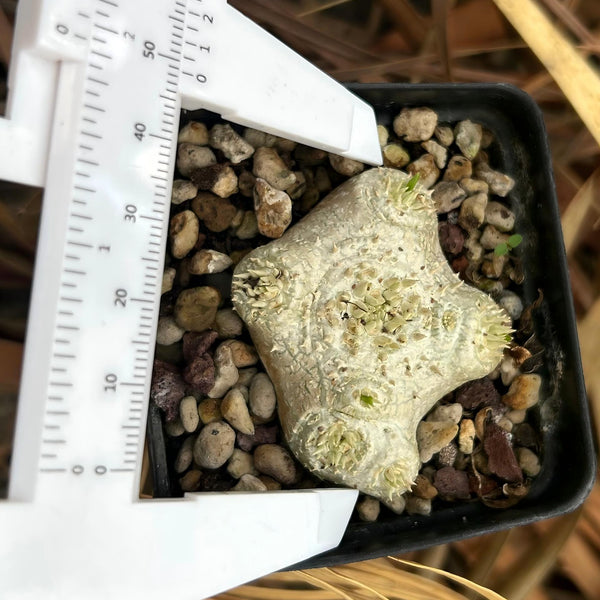
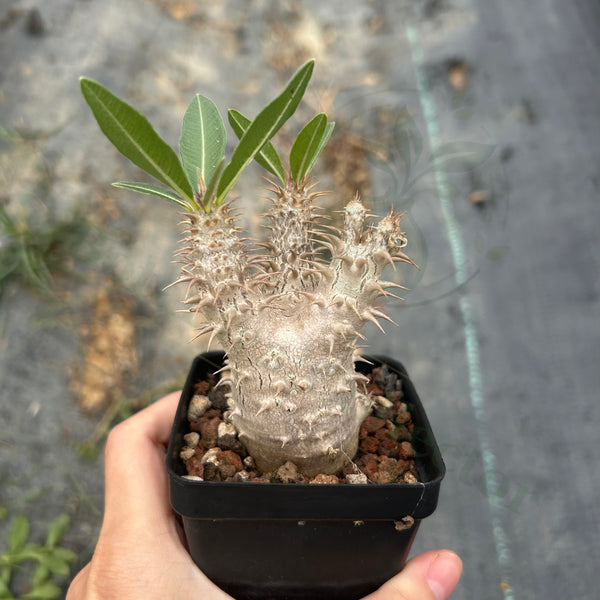
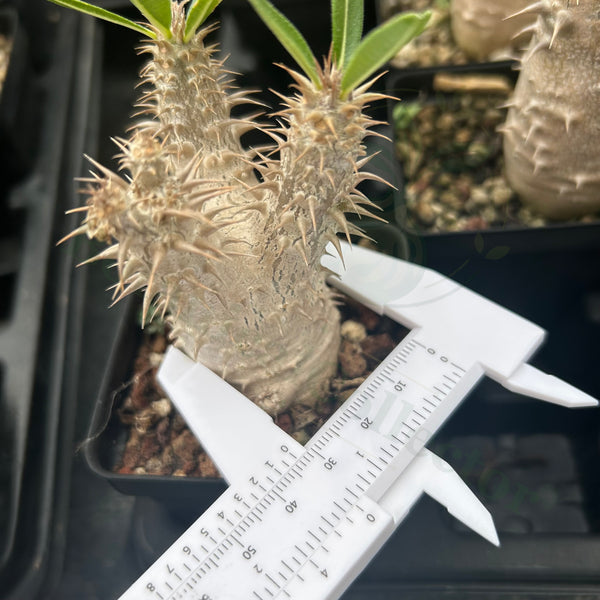
Pachypodium leallii

$ 90.00 / plant
Plant selection You will receive the exact plant shown in the photos. Out of stock
Quantity
Sales Type Retail, WYSIWYG
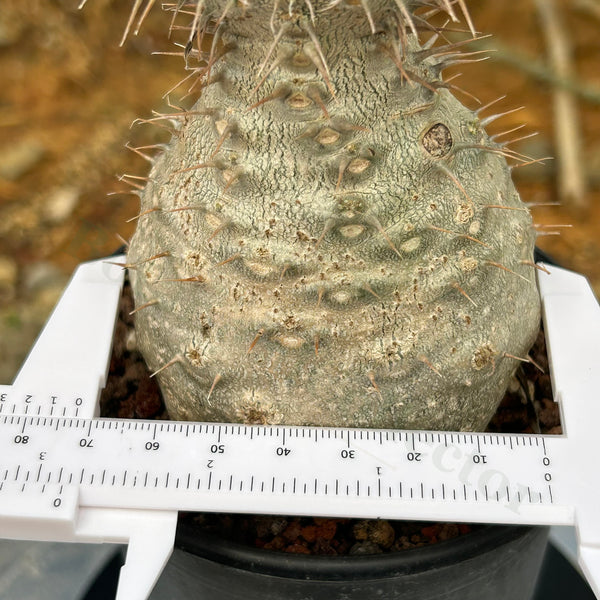
Plant size W5.3cm
Packaged Weight Actual packaged weight varies by product and root system. 0.4 kg
Propagation Method Seed-grown

Description

Geographic & Climate

  • Geographic Coordinates: Southern Angola and Namibia (specifically ranging across the Etendeka plateau in northwestern/northeastern Namibia and southern Angola, approximately 11°S to 20°S, 12°E to 18°E).

  • Climate Classification: Arid and semi-desert climate (BWh / BSh).

  • Habitat Characteristics: Found at elevations from 1000 to 1600 meters above sea level. Inhabits semi-desert regions, arid low mopane scrub, and xerophyllous forests, growing primarily on steep rocky hillsides and basalt slopes. Experiences extreme temperature fluctuations ranging from occasional frosts around -10°C up to 45°C, with minimal seasonal rainfall.

Botanical Morphology

  • Diagnostic Features: Known commonly as the Bottle Tree, it is one of the largest pachycaul species in the genus. It features a massive, thick, bottle-shaped silvery-grey trunk that remains almost entirely branchless until reaching the upper apex. The upper branches are sparse, succulent, and armed with slender, sharp spines up to 30 cm long. Leaves are oblong, short-hairy on both surfaces, and cluster at the branch tips. It produces large, sweet-scented white to pale pink flowers (2.5-4 cm across) in spring before the new leaves emerge.

  • Growth Habit: A slow-growing, succulent shrub or small tree capable of reaching heights of 3 to 6 meters (rarely up to 8 meters) in habitat. It enters a seasonal dormancy phase during cooler or drier periods.

History & Etymology

  • Etymology: The genus name Pachypodium derives from the Greek words pachys (thick) and podion (small foot), referring to the swollen caudiciform trunks characteristic of the group. The species name lealii honors Fernando da Costa Leal, a 19th-century Portuguese military officer and geologist who explored southern Angola and documented the plant.

  • Historical Context: First discovered and scientifically described by the Austrian botanist Friedrich Martin Josef Welwitsch in 1869 based on specimens found during his expeditions in southern Angola. Historically, local indigenous hunters utilized the highly toxic watery latex sap from its stems to poison arrow tips for big game hunting.

Care Guide

Essential Care Tips for Thriving Plants

Light

Provide partial to full sun. Most plants thrive on direct UV exposure. Avoid placing behind window glass, as it filters out the essential UV rays needed for healthy growth.

Water

Follow the "Soak and Dry" principle. Ensure the top 2–3 cm of soil is bone dry before watering (use the finger test). Reduce frequency in winter, but do not stop watering entirely.

Temperature

The ideal range is 18–35 °C. Maintain temperatures above 5 °C during winter. Please note that temperatures below 0 °C pose a significant risk of plant death.

Humidity

Best kept at 30–50% humidity. Note: High air humidity is not a substitute for root watering. Avoid overly damp areas to prevent root rot or leggy side shoots.

Soil

A loose, well-draining medium is ideal. A mix containing 50–70% grit or mineral soil is recommended for aeration. Outdoor ground planting is also a viable option.

Fertilizer

Fertilize during repotting using Osmocote A2 slow-release fertilizer. Apply sparingly twice a year, or adjust the fertilizer type based on your specific home environment.

Planting Guide

Start Your Green Journey in 4 Steps

Unbox & Inspect

Carefully unpack and inspect the plant’s body and roots. We recommend taking photos or videos immediately for your records. Place it in a shaded, well-ventilated spot for 1–2 days to acclimate to its new environment.

Potting & Placement

After 24 hours of rest, pot the plant using slightly moistened soil. Place it in a bright, airy location to encourage recovery. Keep away from AC vents or heaters to prevent damage from temperature fluctuations.

First Watering

Use water that has sat for at least 24 hours. If using the damp-potting method, wait 2–3 days before the first watering. Ensure a thorough soak until water drains freely from the bottom.

Daily Care

Monitor leaf condition and soil moisture daily. If the soil remains damp, increase ventilation rather than watering. Proper airflow is essential to prevent root rot and ensure lasting health.