Pachypodium ambongense

BotanicalCollector

4.9 · Premium
In Stock · Ships in 48h
$ 70.00 / plant
Attribute Option
Quantity Qty
1
International Logistics
Unbeatable Quality
All The Help You Need
Sales Type Retail, WYSIWYG
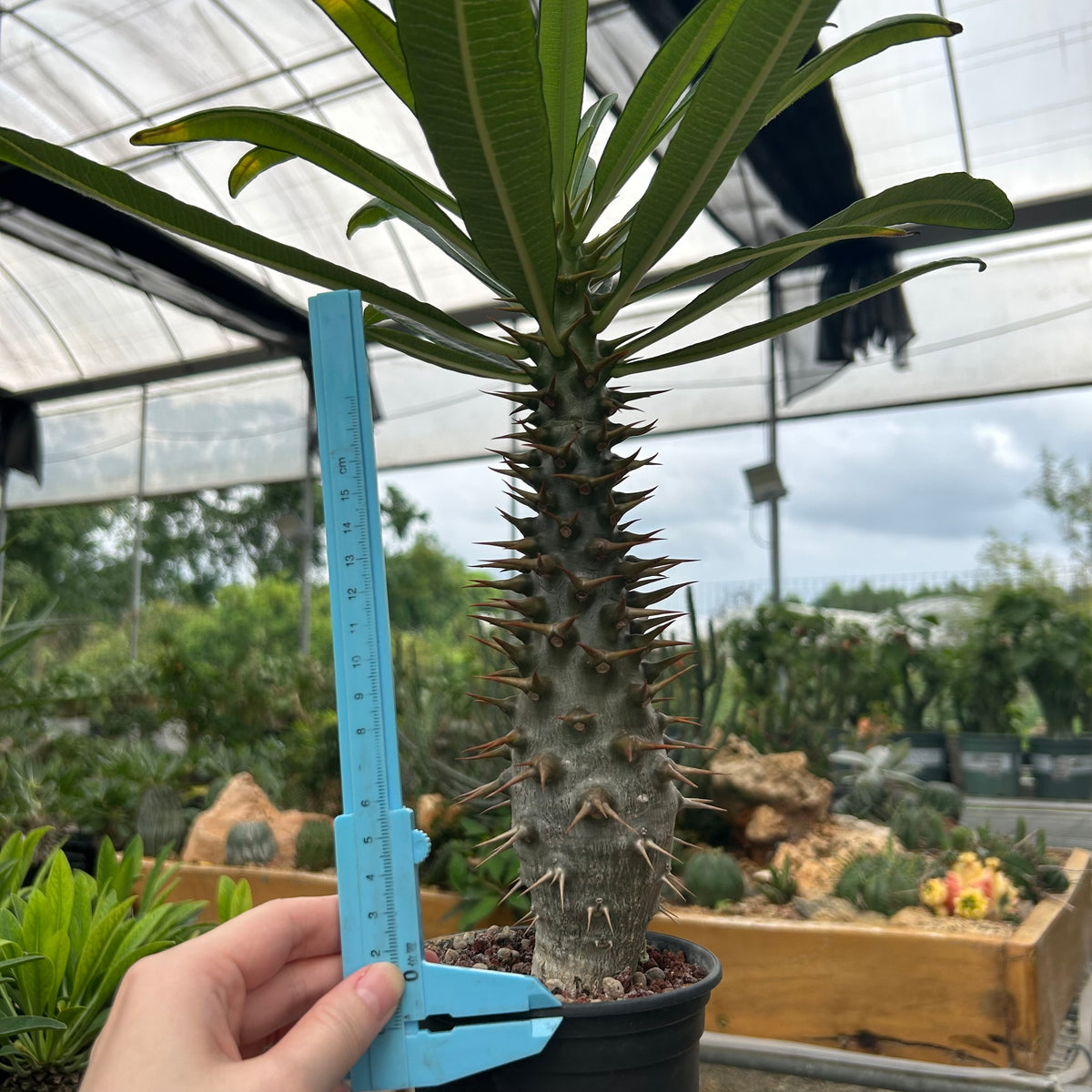
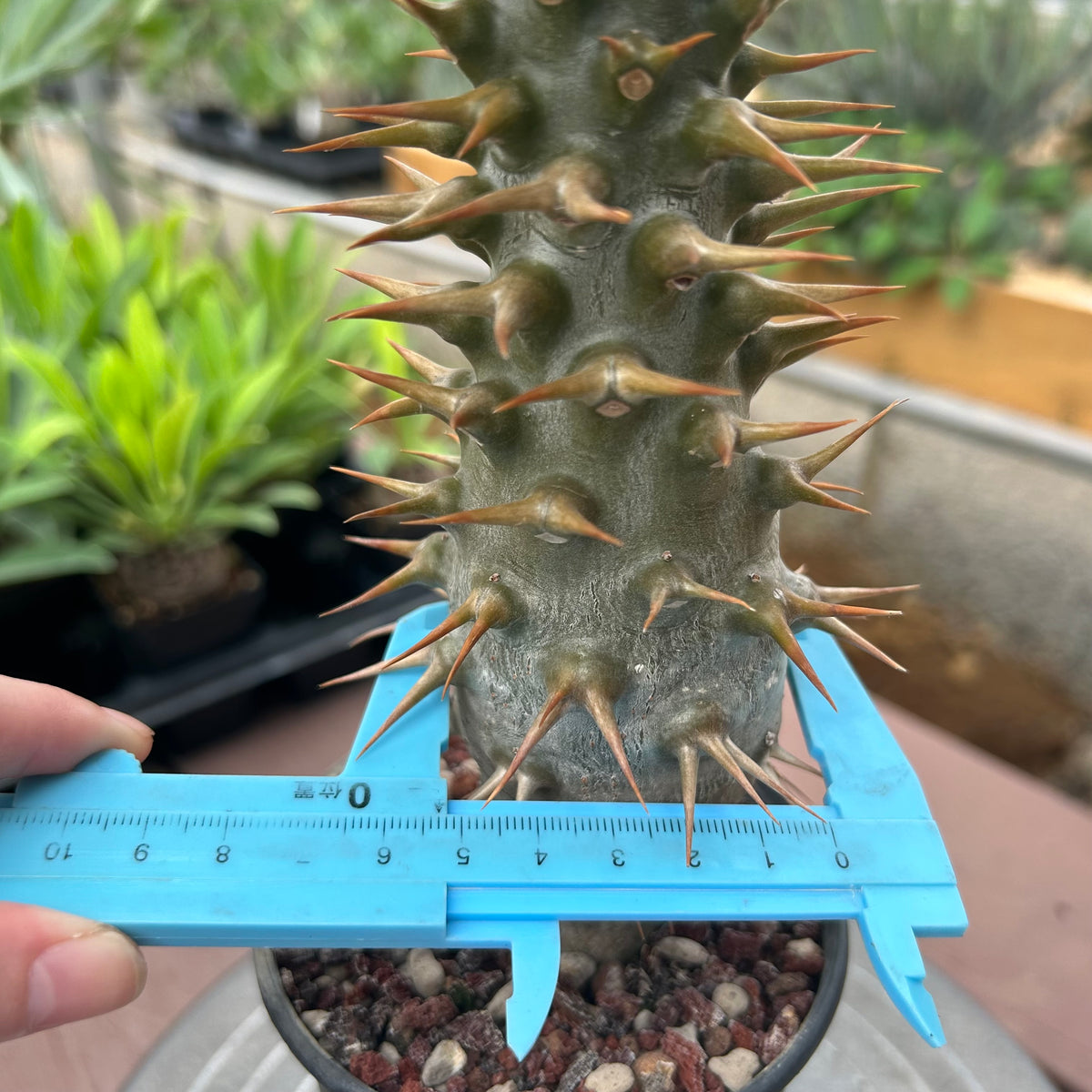
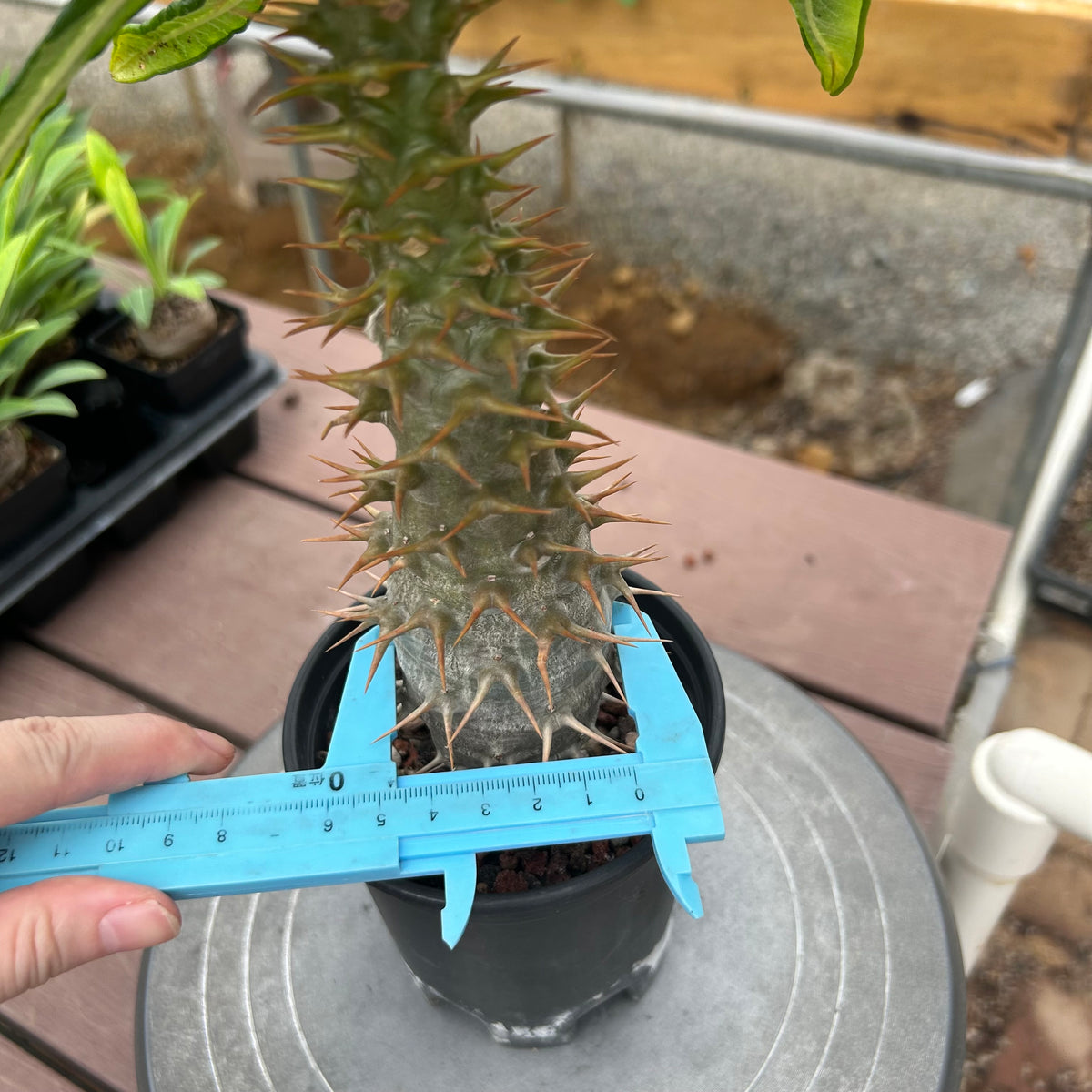
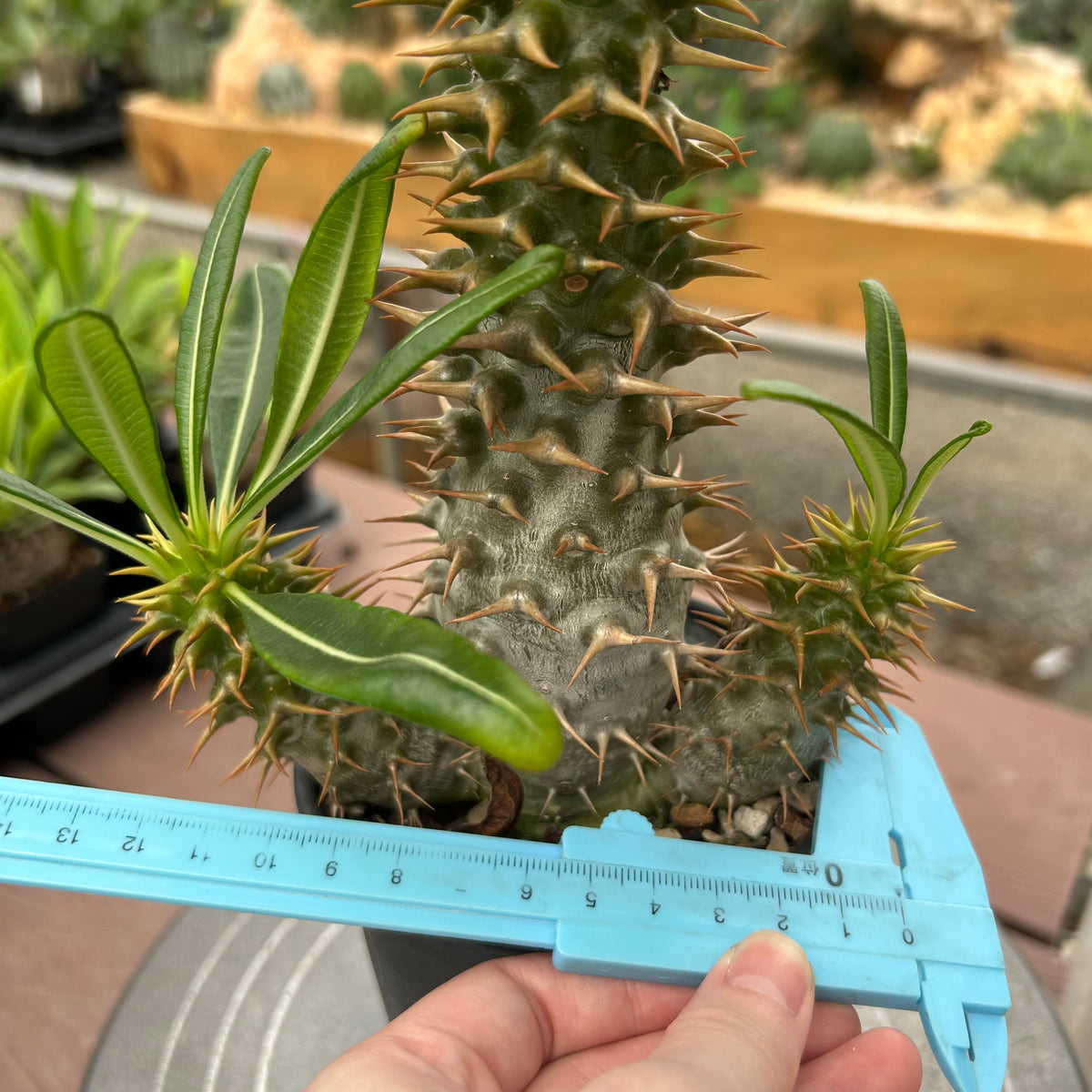
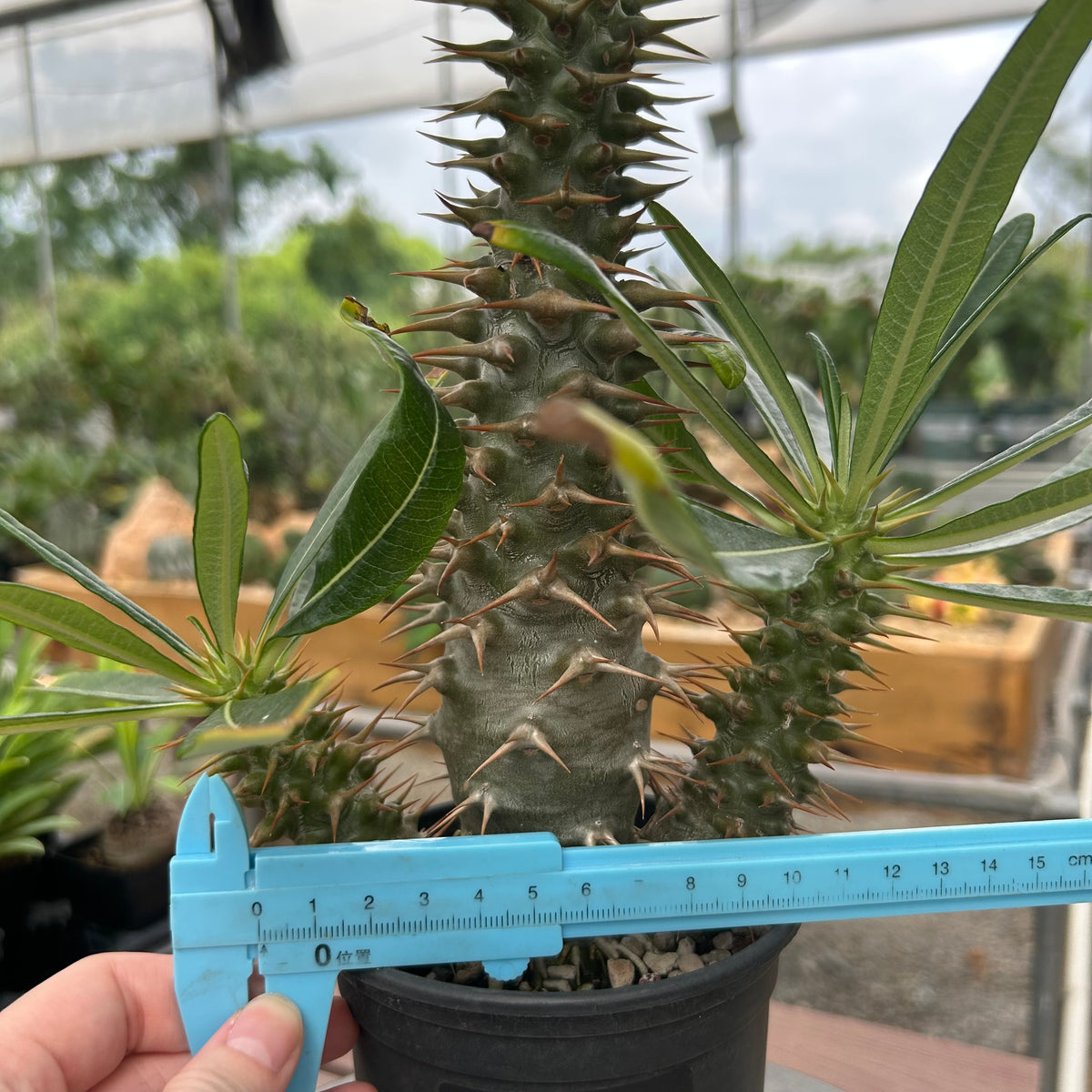
Product Size W12cm
Weight 1.0 kg
Propagation Method Seed-grown
Genus Pachypodium

Description

Origin

Pachypodium ambongense is one of the rarest and most localized species in the genus. It is endemic to Western Madagascar, specifically restricted to the Namoroka region (Reserve Naturelle Integrale de Namoroka). It was first described by the French botanist Henri Perrier de la Bâthie in 1921. Due to its extremely limited distribution and slow growth, it is a flagship species for collectors and is protected under CITES Appendix II.

Habitat

In the wild, this species is a specialist of the limestone karst (Tsingy) landscapes. It thrives in the crevices of eroded limestone outcrops, often growing in full sun or light shade within deciduous dry forests. The habitat is characterized by a dramatic seasonal split: an intense summer rainy season followed by a severe, bone-dry winter. The plant anchors its roots into the mineral-rich alkaline grit of the limestone, utilizing its succulent trunk to survive months of total drought.

Description

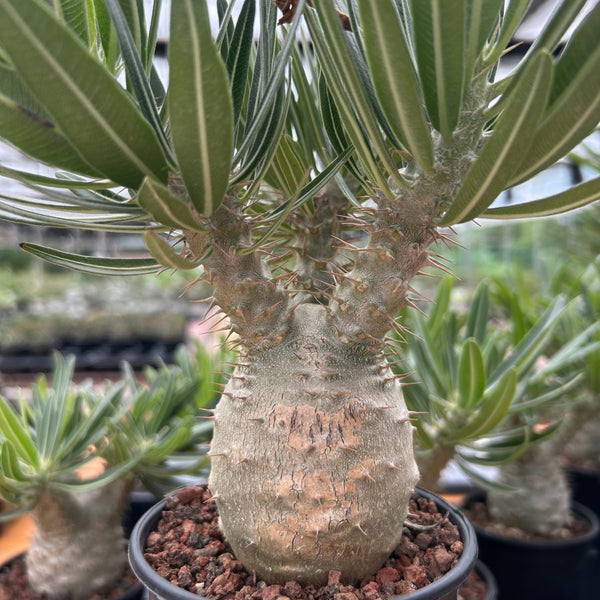
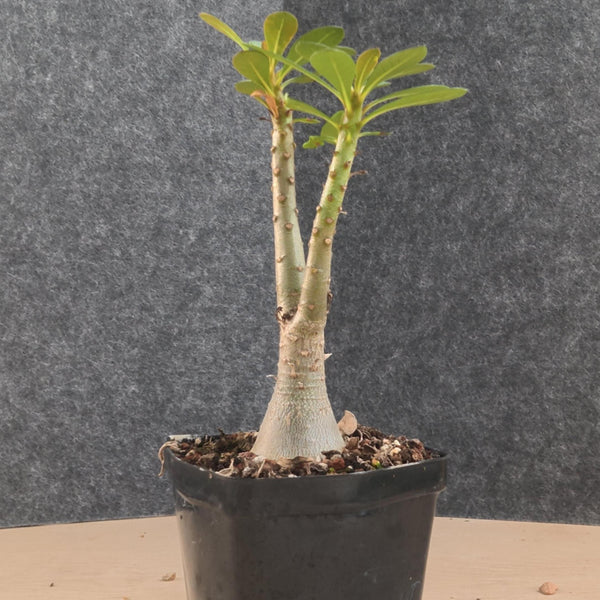
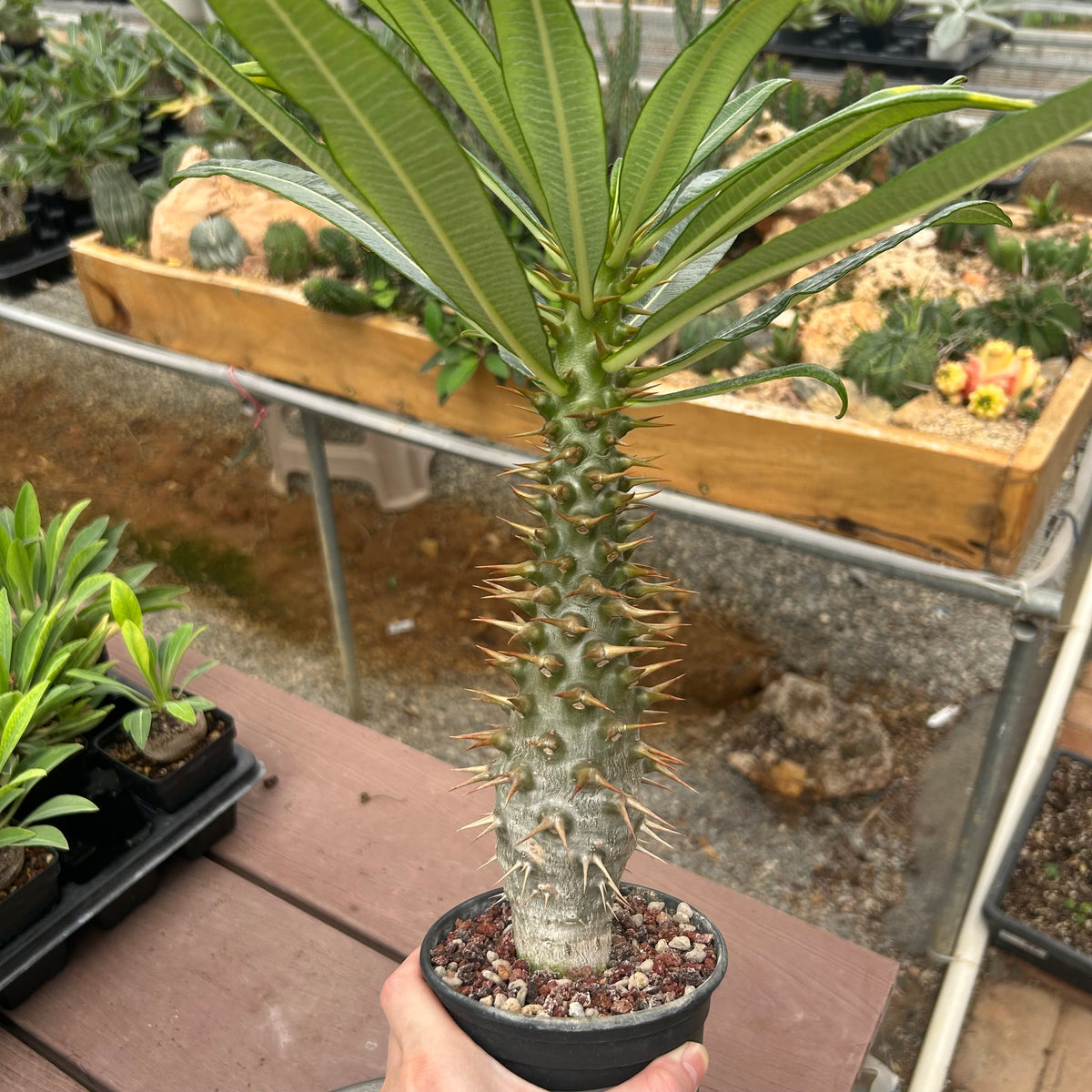
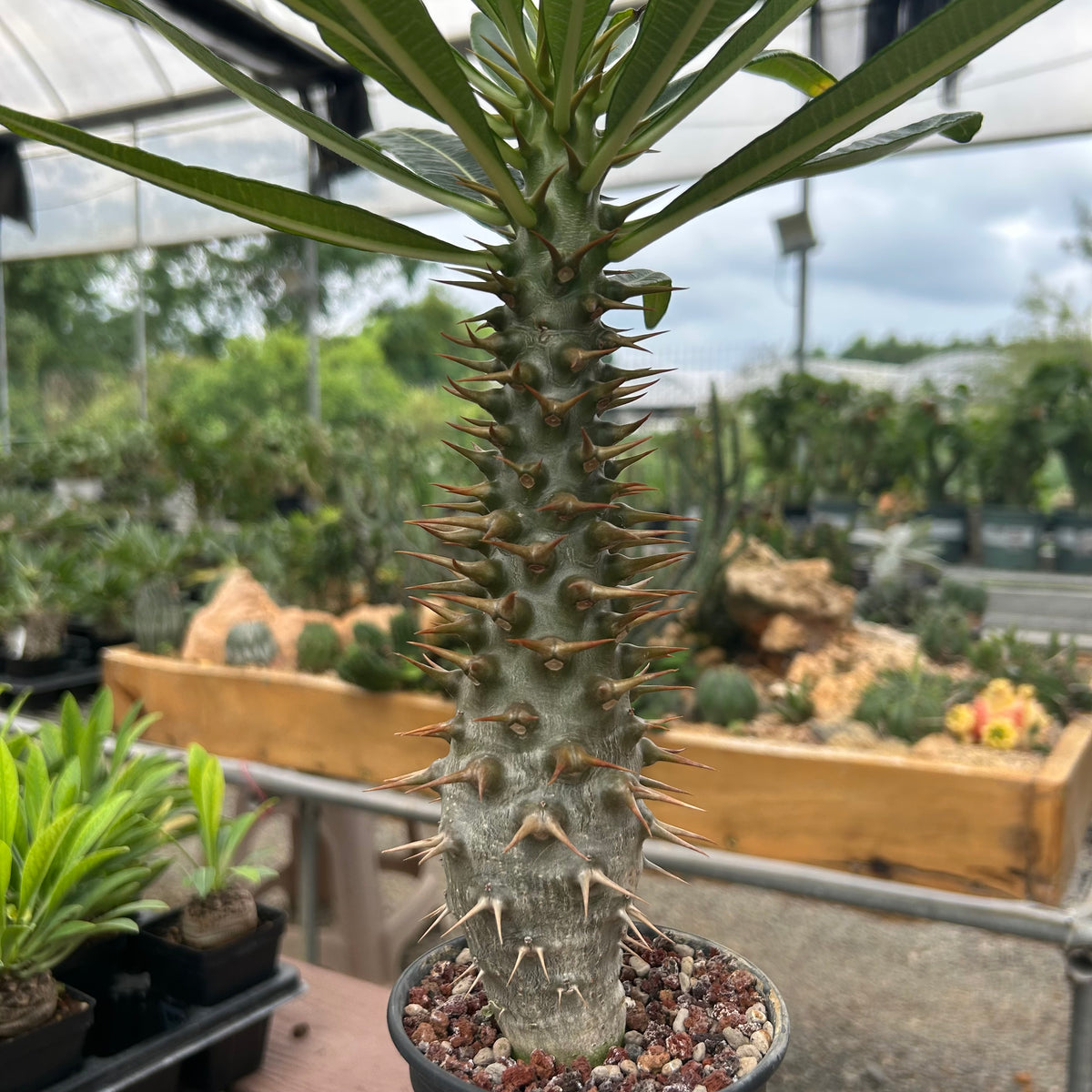
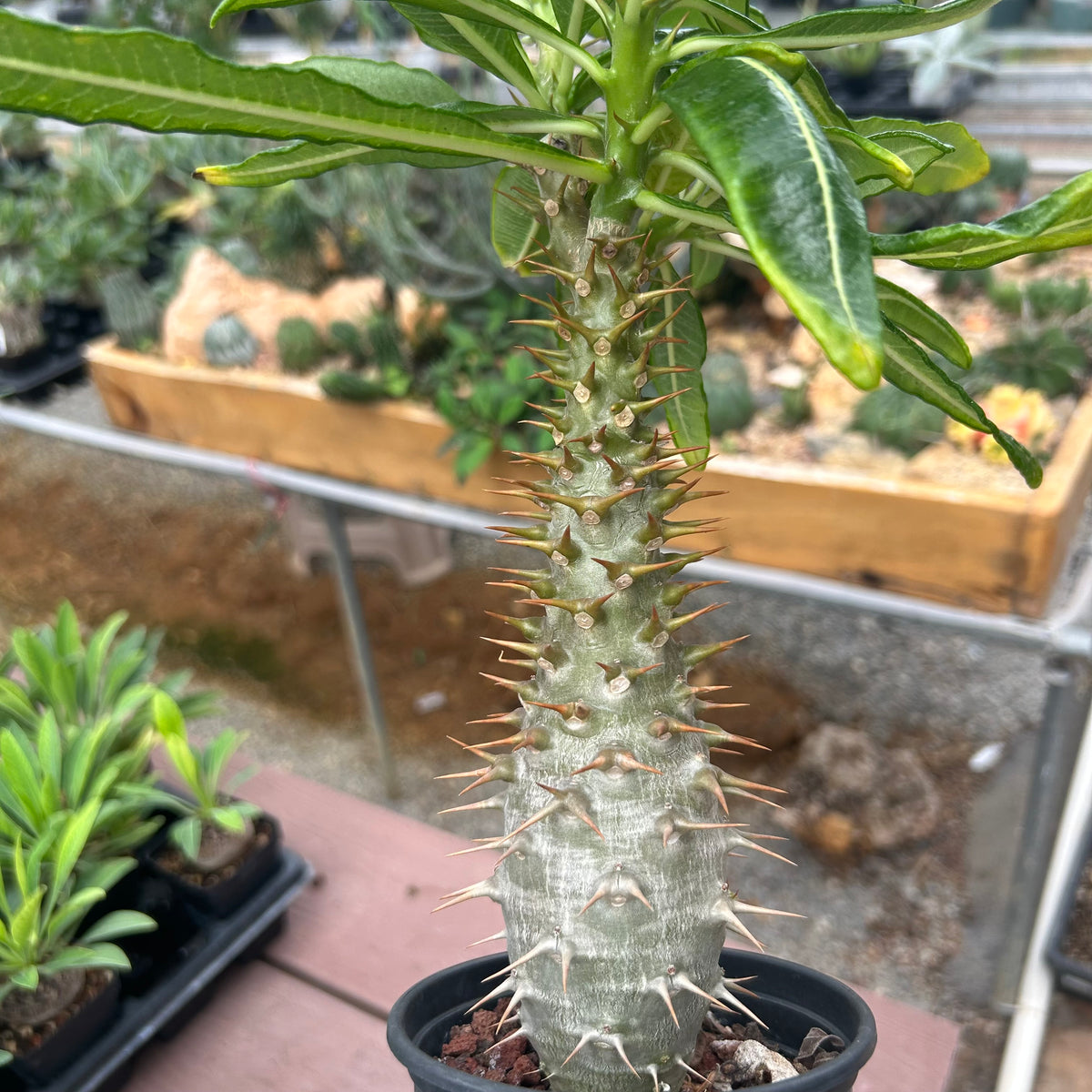
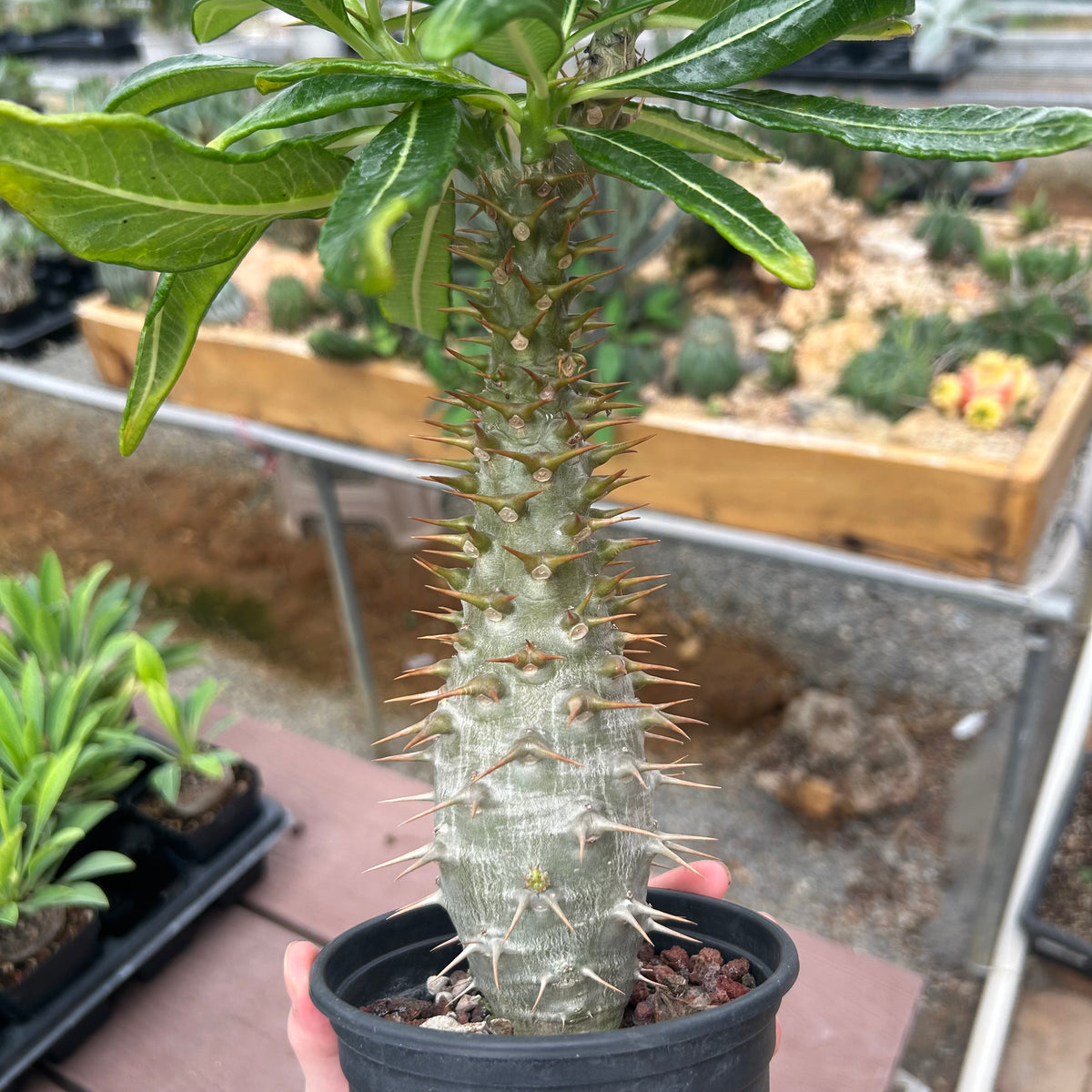
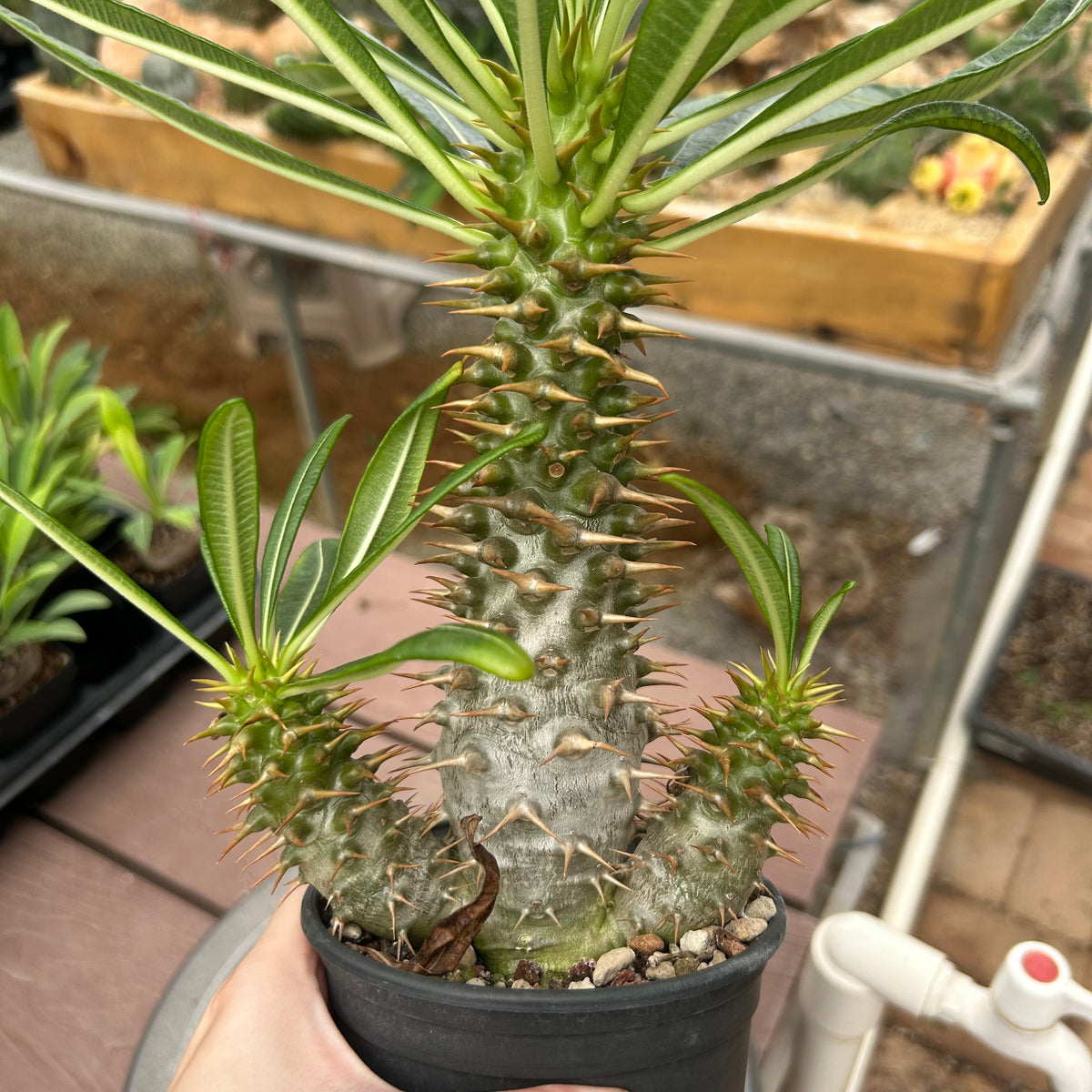
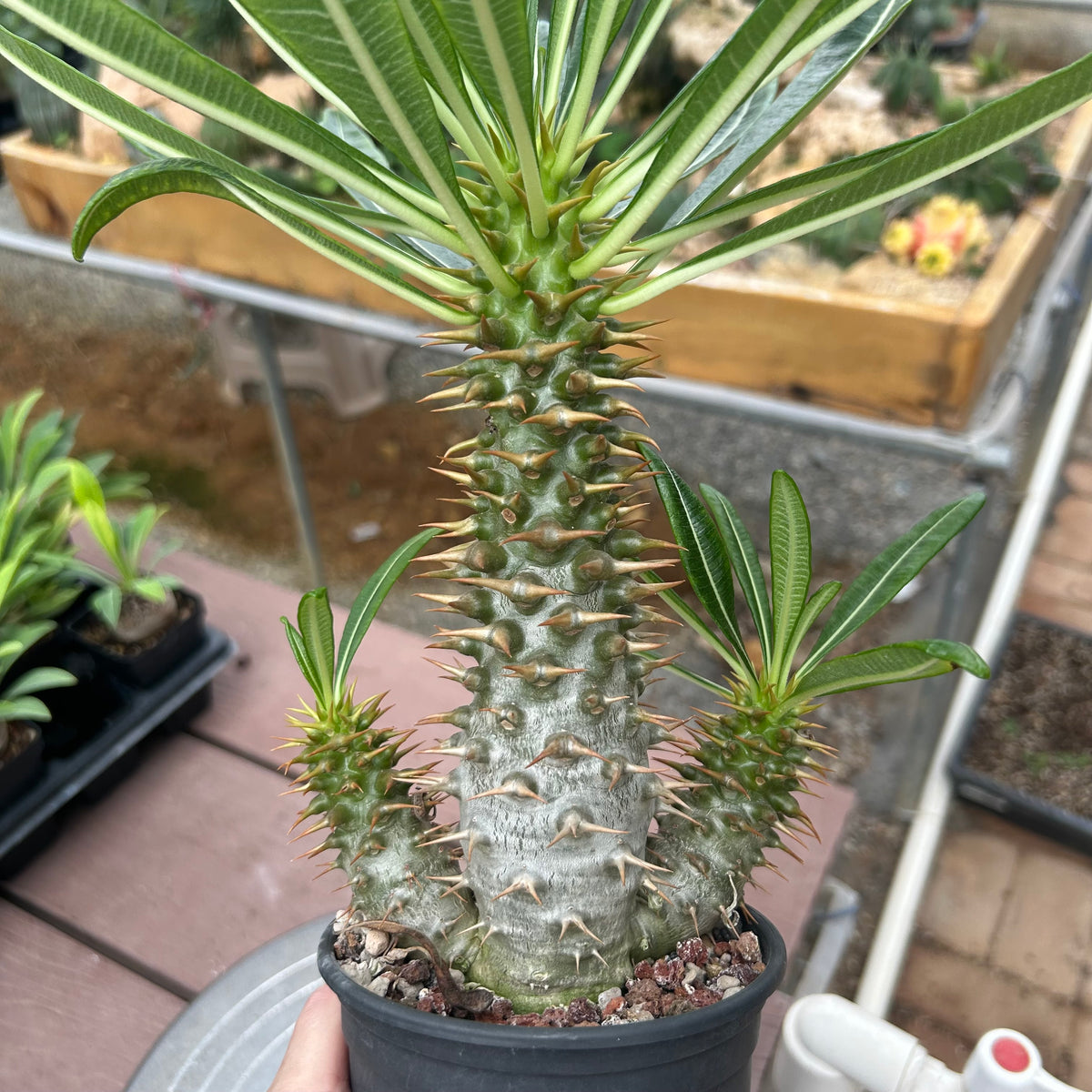
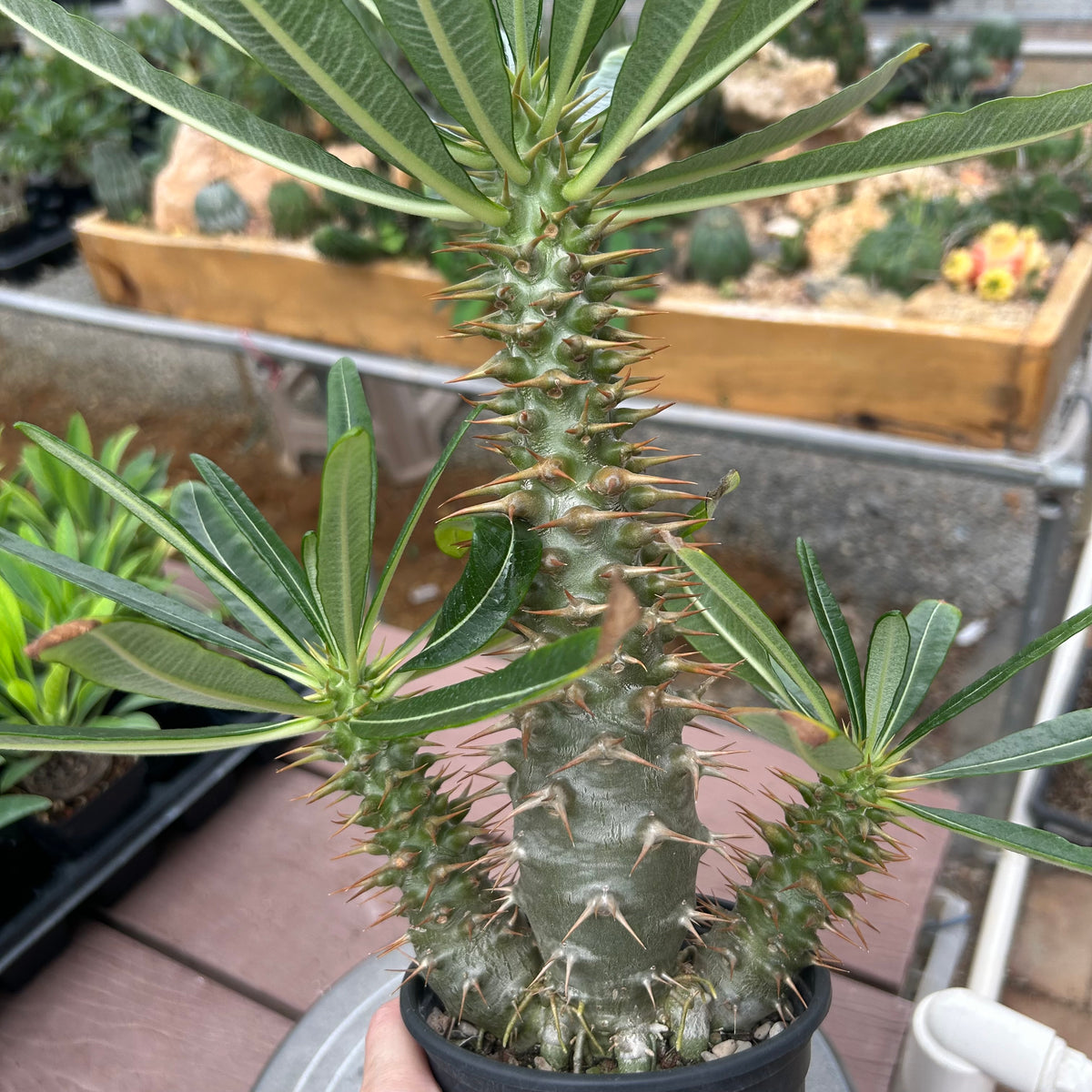
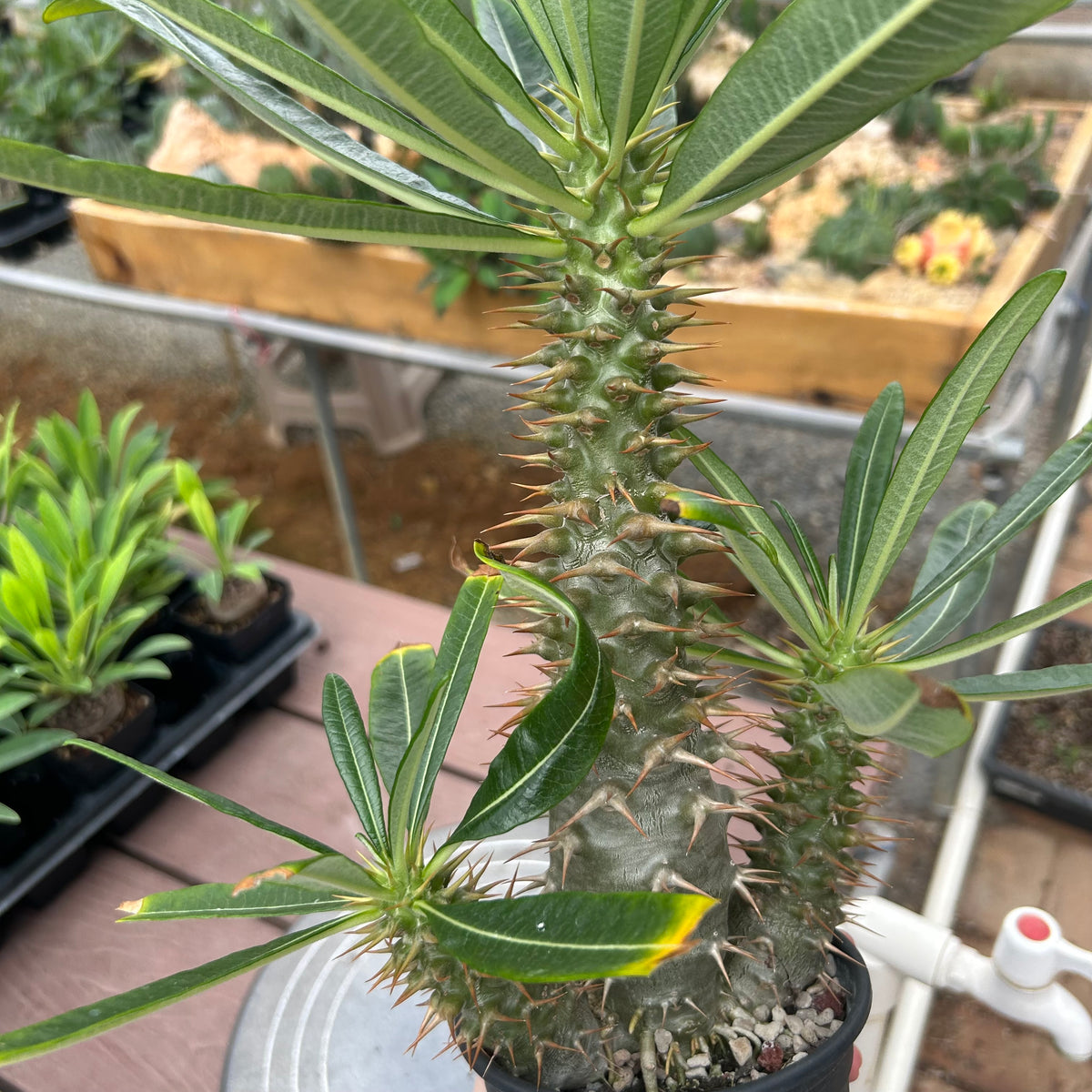
Pachypodium ambongense is an architectural masterpiece, prized for its bottle-shaped trunk and large, pristine flowers.

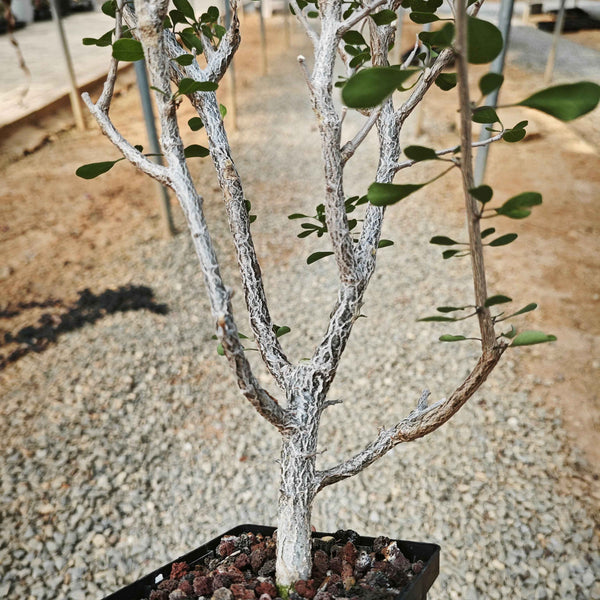
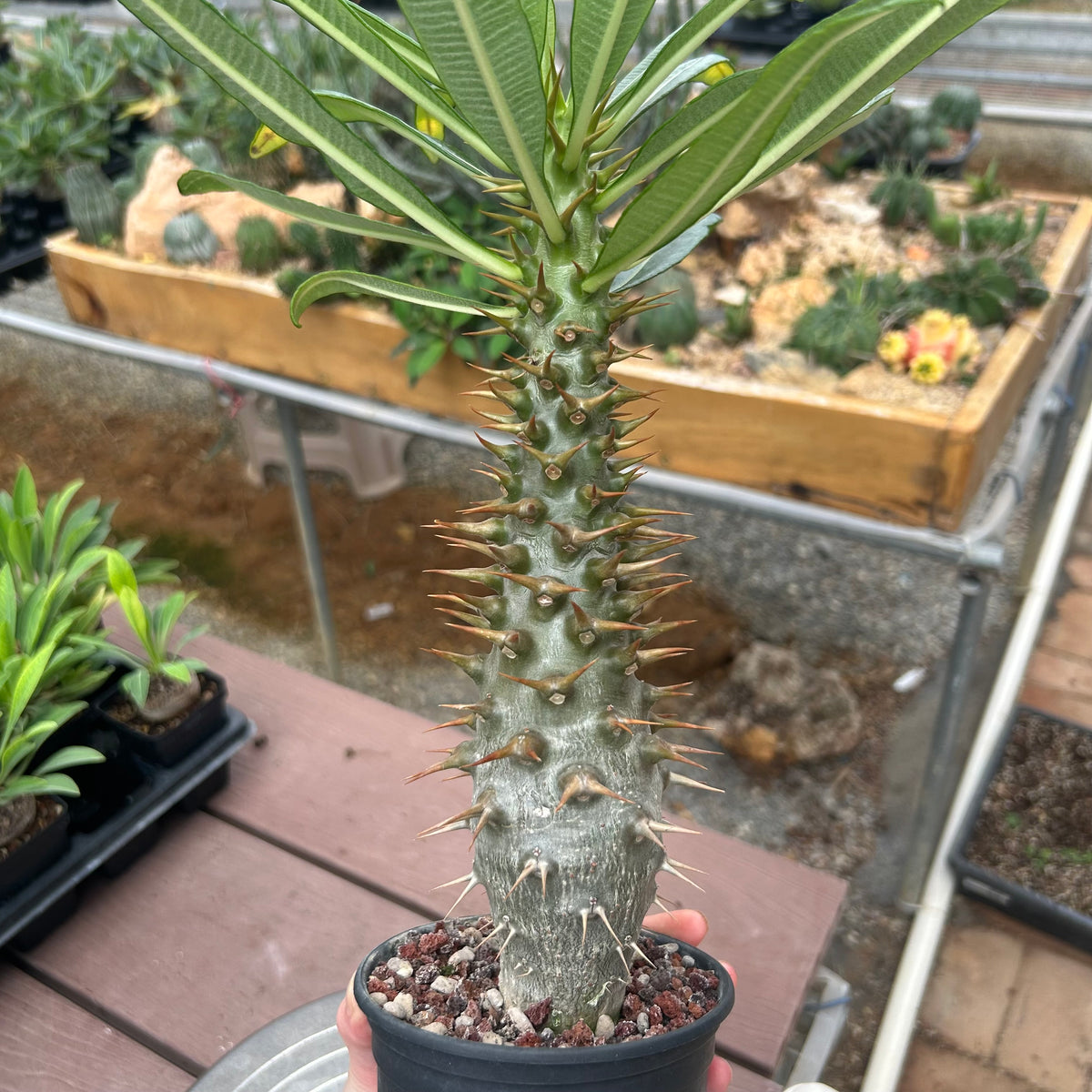
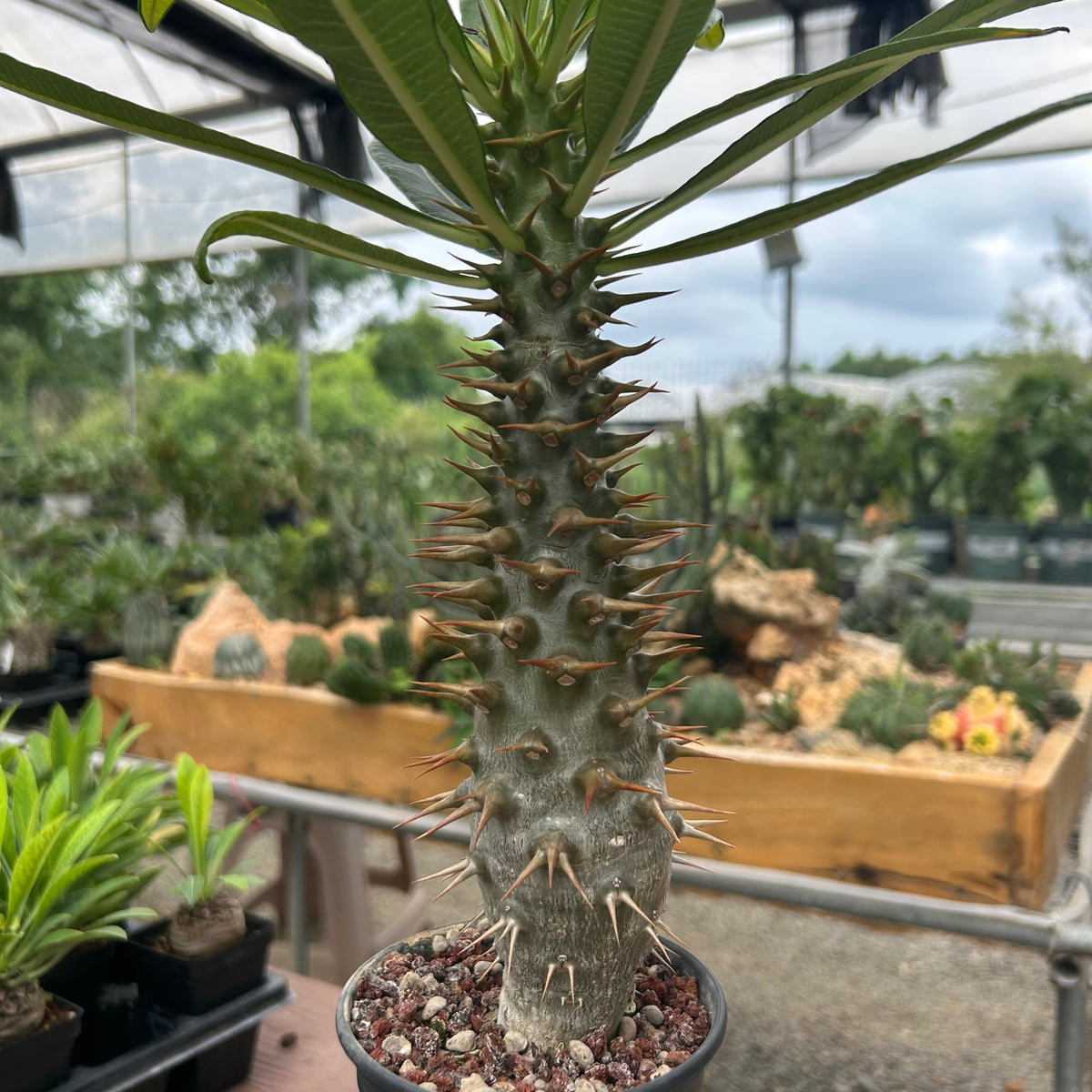
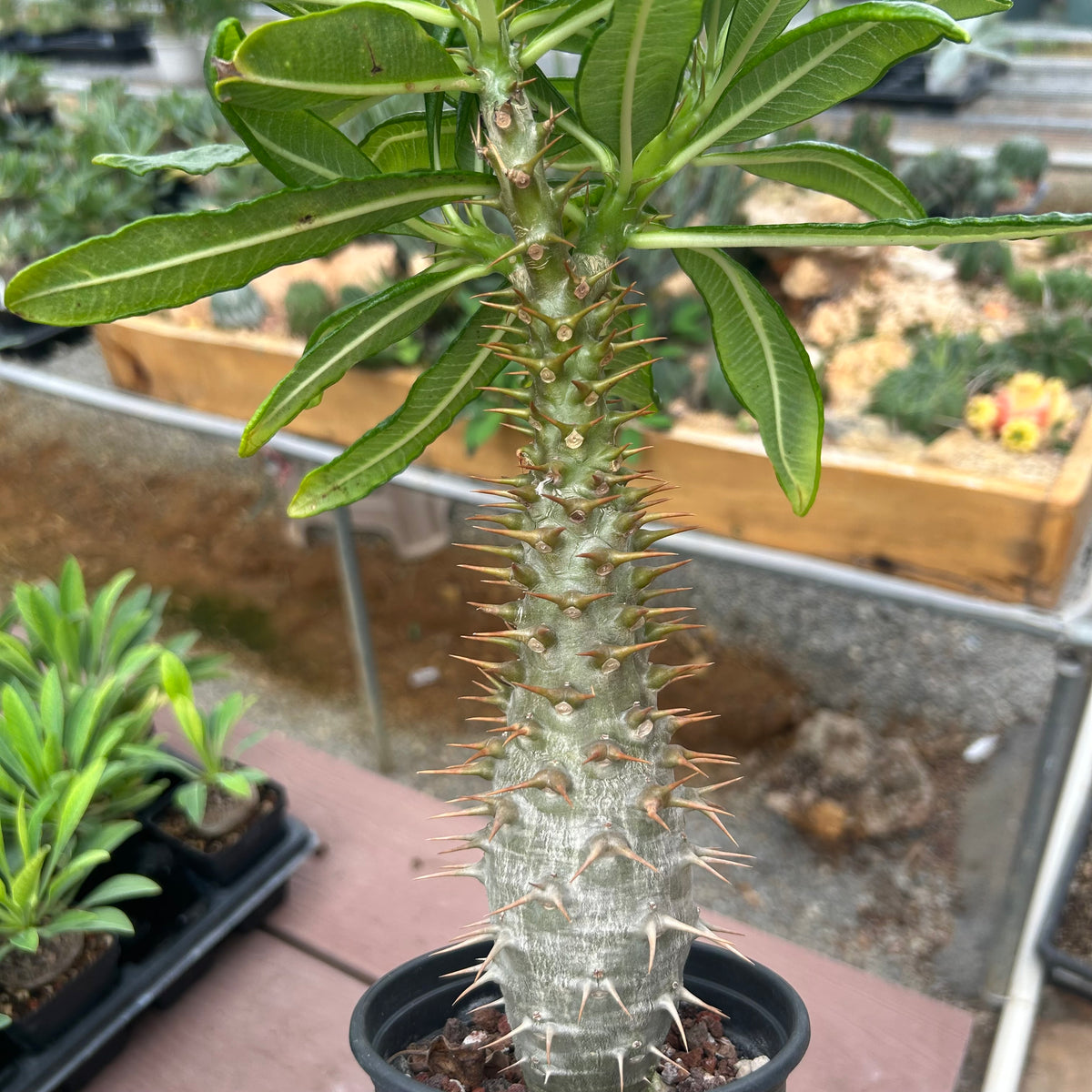
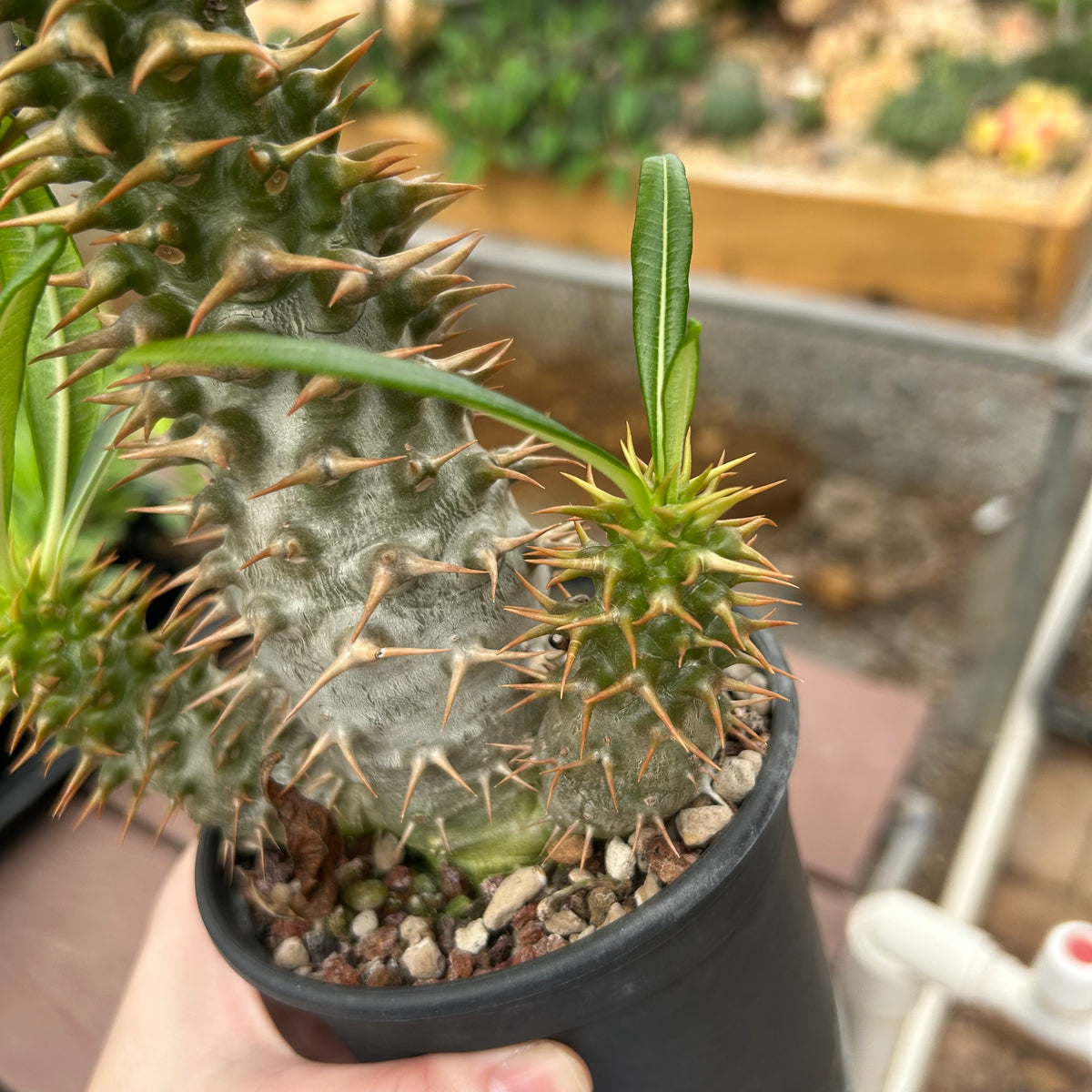
  • Caudex & Trunk: It develops a classic bottle-shaped (lageniform) pachycaul trunk. The bark is smooth and silvery-gray, giving it a very clean and refined appearance compared to other species. It is a slow-growing dwarf tree, typically reaching 1 to 1.5 meters in the wild, but remaining compact in cultivation.

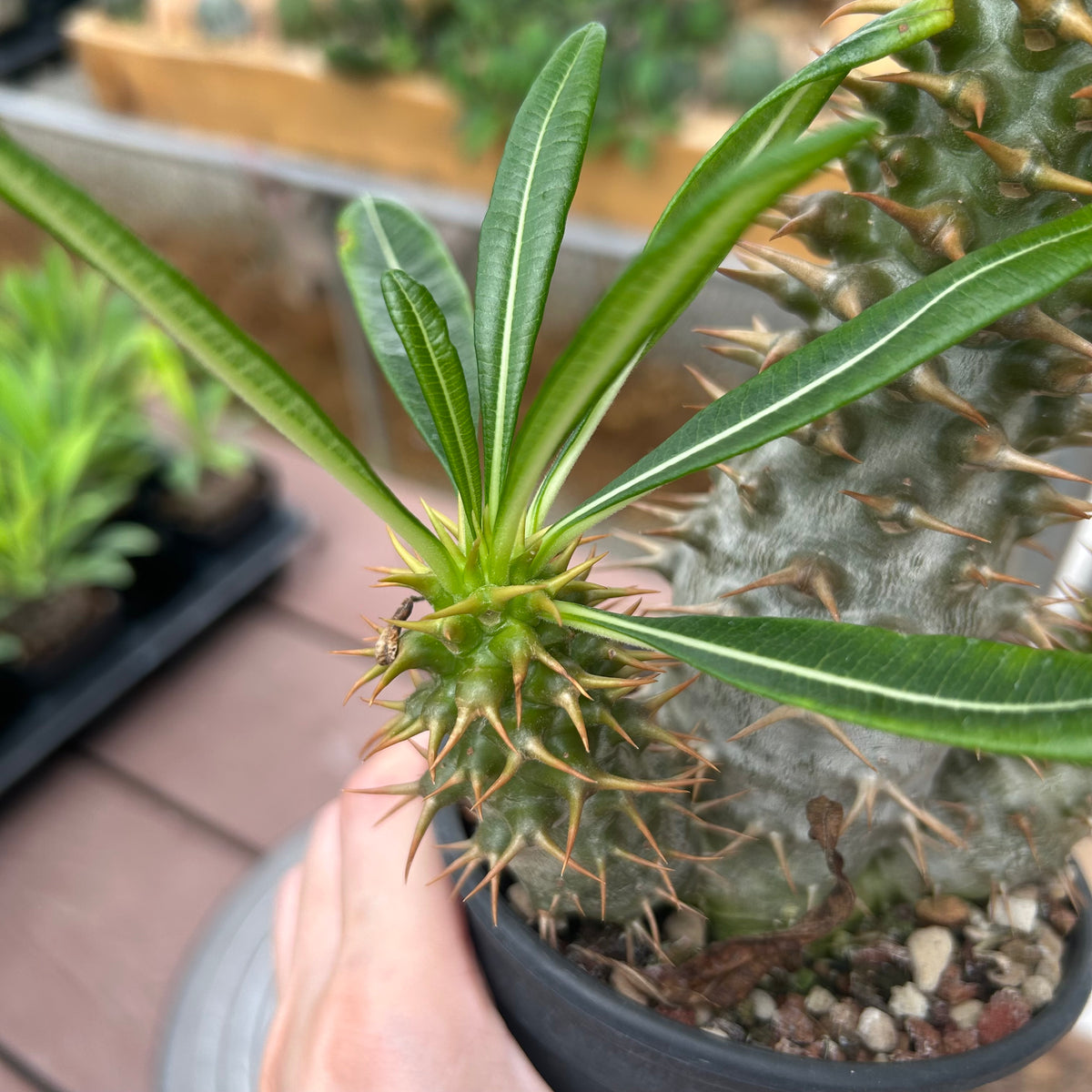
  • Spines: The trunk is armed with pairs of straight, sharp stipular spines that are about 5–10 mm long. These spines are often less dense than those of P. lamerei, emphasizing the smooth texture of the silver bark.

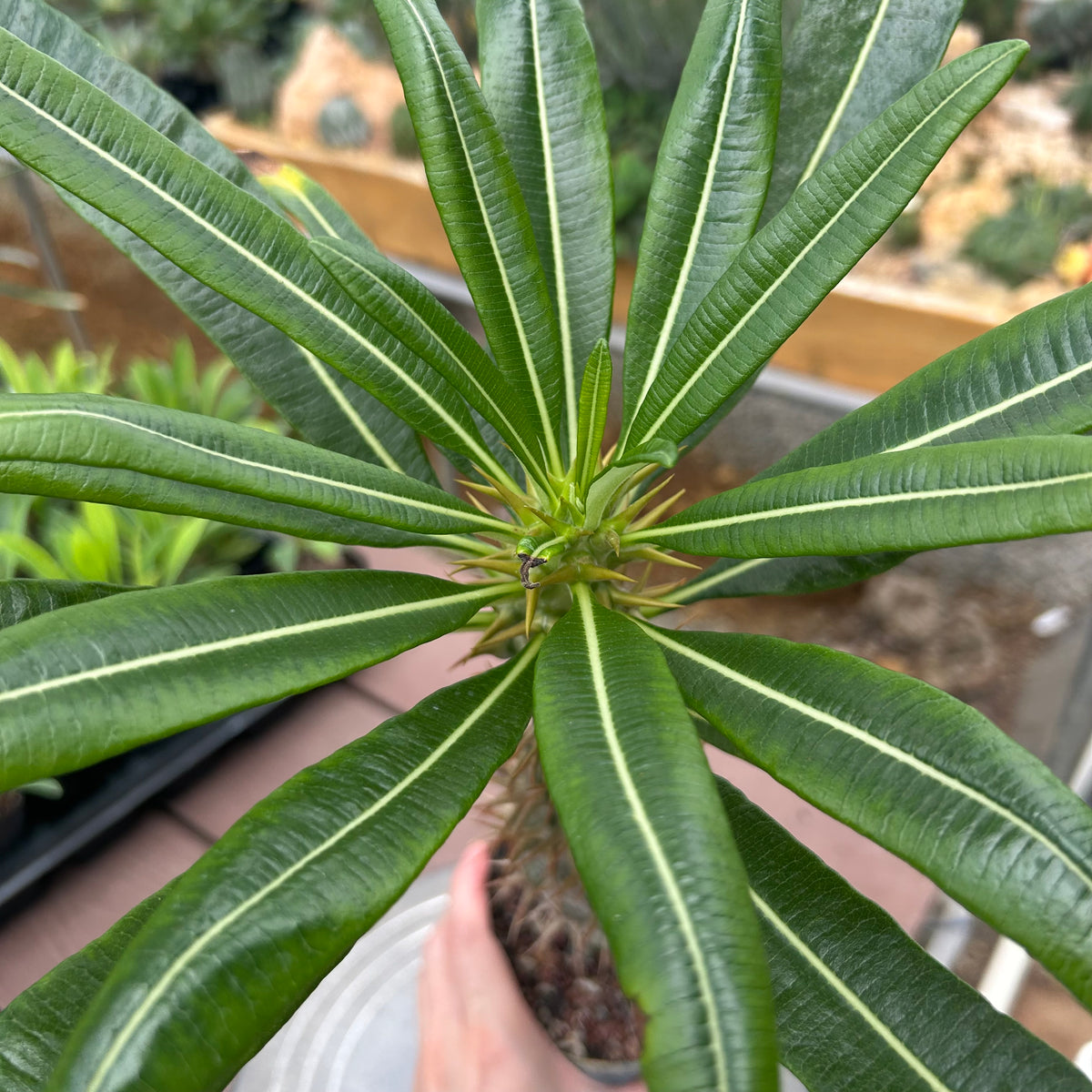
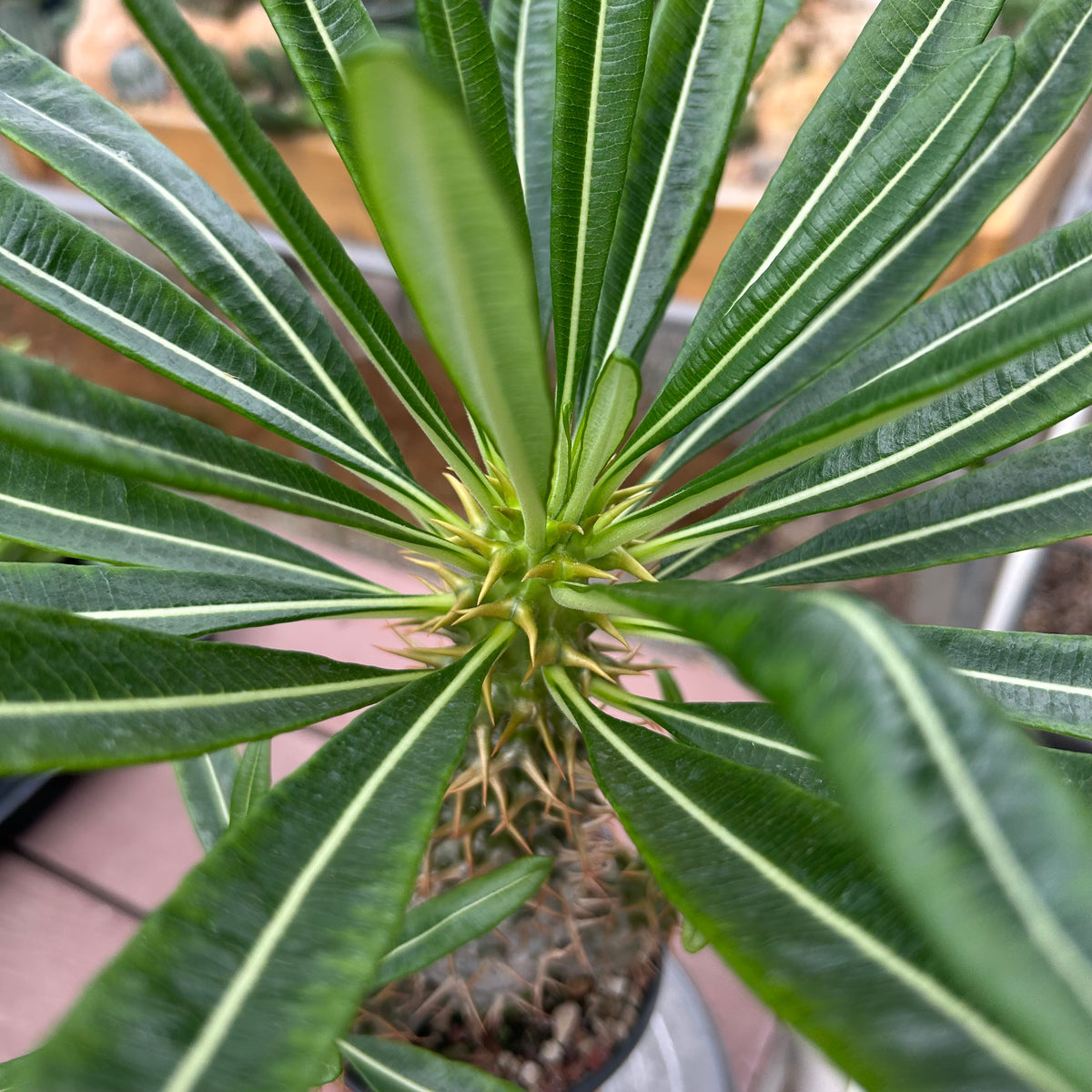
  • Foliage: It produces a crown of obovate to elliptical leaves at the apex. The leaves are a vibrant green, relatively thin, and have a distinct light-colored midrib.

  • Flowers: The most defining trait of this species is its large, pure white flowers with a yellow throat. Unlike many other Madagascan species, the floral tube of P. ambongense is notably long and straight, which is a key diagnostic feature for identification.

  • Cultivation: This is a "trophy" plant for experienced growers. It requires maximum light intensity and a strictly mineral, alkaline substrate (incorporating limestone or crushed coral is recommended). It is highly sensitive to overwatering, especially during its deep winter dormancy, and must be kept warm at all times.

Care Guide

Essential Care Tips for Thriving Plants

Light

Provide partial to full sun. Most plants thrive on direct UV exposure. Avoid placing behind window glass, as it filters out the essential UV rays needed for healthy growth.

Water

Follow the "Soak and Dry" principle. Ensure the top 2–3 cm of soil is bone dry before watering (use the finger test). Reduce frequency in winter, but do not stop watering entirely.

Temperature

The ideal range is 18–35 °C. Maintain temperatures above 5 °C during winter. Please note that temperatures below 0 °C pose a significant risk of plant death.

Humidity

Best kept at 30–50% humidity. Note: High air humidity is not a substitute for root watering. Avoid overly damp areas to prevent root rot or leggy side shoots.

Soil

A loose, well-draining medium is ideal. A mix containing 50–70% grit or mineral soil is recommended for aeration. Outdoor ground planting is also a viable option.

Fertilizer

Fertilize during repotting using Osmocote A2 slow-release fertilizer. Apply sparingly twice a year, or adjust the fertilizer type based on your specific home environment.

Planting Guide

Start Your Green Journey in 4 Steps

01

Unbox & Inspect

Carefully unpack and inspect the plant’s body and roots. We recommend taking photos or videos immediately for your records. Place it in a shaded, well-ventilated spot for 1–2 days to acclimate to its new environment.

02

Potting & Placement

After 24 hours of rest, pot the plant using slightly moistened soil. Place it in a bright, airy location to encourage recovery. Keep away from AC vents or heaters to prevent damage from temperature fluctuations.

03

First Watering

Use water that has sat for at least 24 hours. If using the damp-potting method, wait 2–3 days before the first watering. Ensure a thorough soak until water drains freely from the bottom.

04

Daily Care

Monitor leaf condition and soil moisture daily. If the soil remains damp, increase ventilation rather than watering. Proper airflow is essential to prevent root rot and ensure lasting health.