Important Notice: Low-Temperature Shipping — Read Before Ordering

Notice on Low-Temperature Shipping

Recently, temperatures have been gradually dropping in various regions, and some plants require insulated packaging for shipping. When placing an order, you can check the estimated delivery time on the order page. Below are the packaging arrangements for different temperature conditions:

If the temperature at your address is expected to remain below -5°C throughout the estimated delivery period, please do not place an order.

If the minimum temperature at your address during the estimated delivery period is between 0°C and 5°C, your order will be shipped in an insulated box, and an additional shipping fee will be required. The specific fee will be notified by email. You may pay the additional shipping fee, or apply to us for a refund.

If the minimum temperature at your address during the estimated delivery period is above 5°C, no insulated box will be arranged, and your order will be shipped as normal.

Note: For some cold-sensitive plants, we will send email reminders depending on the situation.

Thank you all for your support and trust!

WYSIWYG

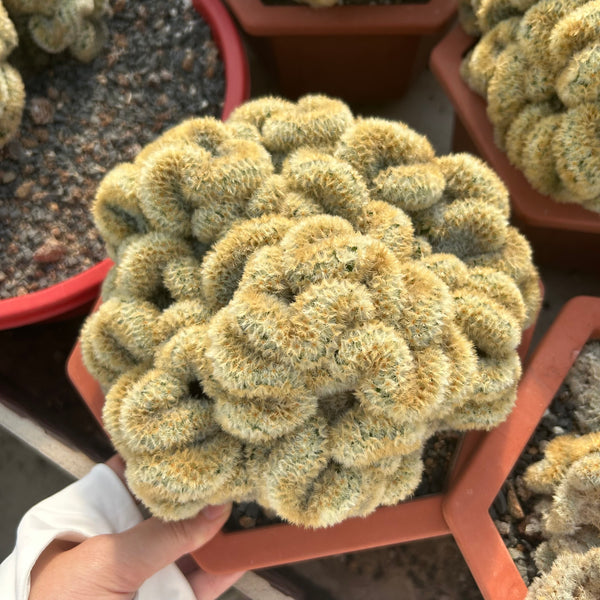
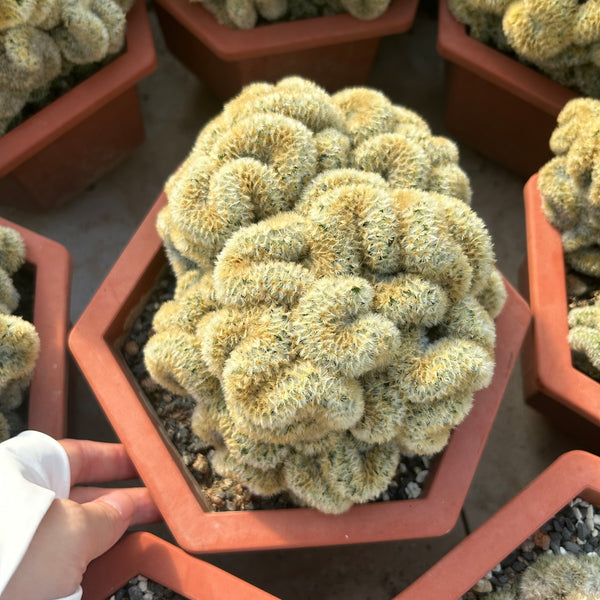
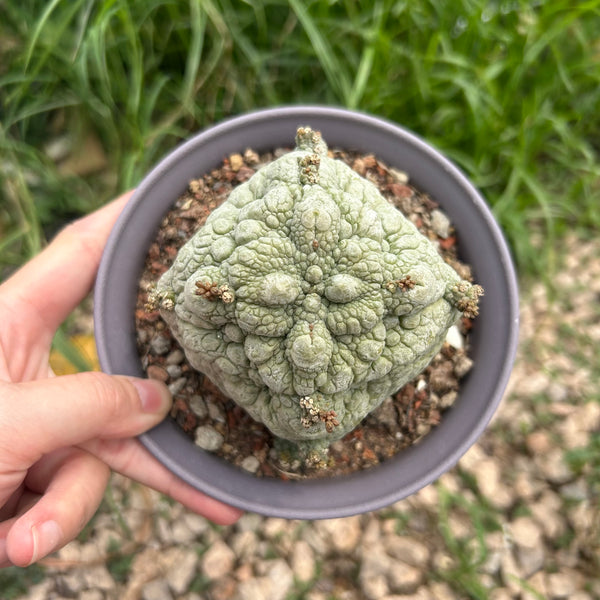
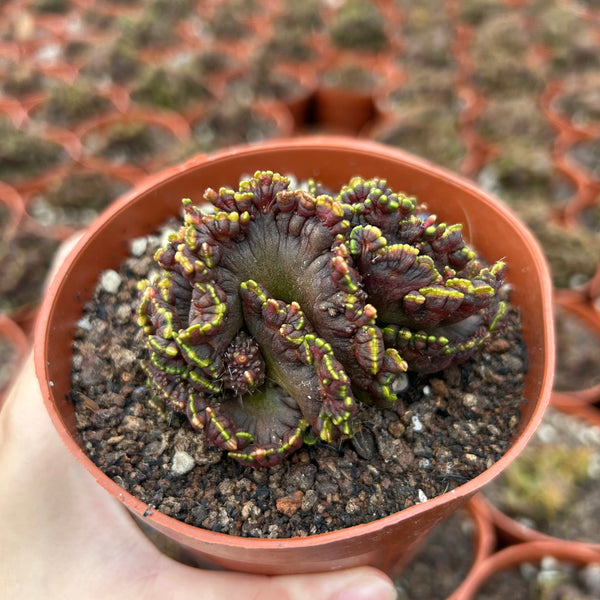
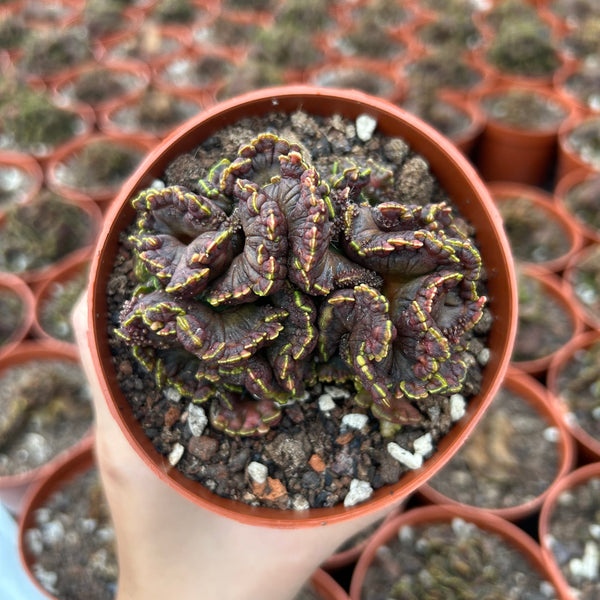
Euphorbia gymnocalycioides | Crested

$ 50.00 / plant
Plant selection You will receive the exact plant shown in the photos. Out of stock
Quantity
Sales Type WYSIWYG, Retail
Plant size W8.4cm
Packaged Weight Actual packaged weight varies by product and root system. 0.3 kg
Propagation Method Own-rooted

Description

Geographic & Climate

  • Geographic Coordinates: Southern Ethiopia (Sidamo Province)

  • Climate Classification: BWh (Hot Desert Climate) / Arid and semi-arid tropical zone

  • Habitat Characteristics: Found exclusively in localized rocky terrain, thriving in shallow, limestone-rich mineral soils under sparse shrub canopy, subject to high solar radiation and seasonal, low-volume rainfall.

Botanical Morphology

  • Diagnostic Features: Flattened globular to subglobular stem (up to 12 cm tall and 10 cm wide) with a striking, spineless cactus-like appearance demonstrating convergent evolution. Features prominent tubercles arranged in a distinct spiral pattern across roughly 18 vertical series separated by deep grooves. Each tubercle is tipped by a tiny horny shield bearing ephemeral leaf scars. Spines are entirely absent except in microscopic seedling stages.

  • Growth Habit: Extremely slow-growing perennial succulent. Exhibits active growth during warmer summer months and enters strict dormancy during cooler or dry periods. Roots consist of a thick, fleshy taproot blending directly into the stem base.

History & Etymology

  • Etymology: The generic name Euphorbia honors Euphorbus, the ancient Greek physician to King Juba II. The specific epithet gymnocalycioides derives from Greek gymnos (naked) and Gymnocalycium (a South American cactus genus), combined with the Latin suffix -oides (resembling), highlighting its remarkable visual mimicry of a spineless cactus.

  • Historical Context: Formally described in 1984 by prominent botanists Michael George Gilbert and Susan Carter. Due to its extreme scarcity in its native Ethiopian habitat and restrictive distribution, it quickly became a legendary "holy grail" specimen among specialized succulent and caudiciform collectors.

Care Guide

Essential Care Tips for Thriving Plants

Light

Provide partial to full sun. Most plants thrive on direct UV exposure. Avoid placing behind window glass, as it filters out the essential UV rays needed for healthy growth.

Water

Follow the "Soak and Dry" principle. Ensure the top 2–3 cm of soil is bone dry before watering (use the finger test). Reduce frequency in winter, but do not stop watering entirely.

Temperature

The ideal range is 18–35 °C. Maintain temperatures above 5 °C during winter. Please note that temperatures below 0 °C pose a significant risk of plant death.

Humidity

Best kept at 30–50% humidity. Note: High air humidity is not a substitute for root watering. Avoid overly damp areas to prevent root rot or leggy side shoots.

Soil

A loose, well-draining medium is ideal. A mix containing 50–70% grit or mineral soil is recommended for aeration. Outdoor ground planting is also a viable option.

Fertilizer

Fertilize during repotting using Osmocote A2 slow-release fertilizer. Apply sparingly twice a year, or adjust the fertilizer type based on your specific home environment.

Planting Guide

Start Your Green Journey in 4 Steps

Unbox & Inspect

Carefully unpack and inspect the plant’s body and roots. We recommend taking photos or videos immediately for your records. Place it in a shaded, well-ventilated spot for 1–2 days to acclimate to its new environment.

Potting & Placement

After 24 hours of rest, pot the plant using slightly moistened soil. Place it in a bright, airy location to encourage recovery. Keep away from AC vents or heaters to prevent damage from temperature fluctuations.

First Watering

Use water that has sat for at least 24 hours. If using the damp-potting method, wait 2–3 days before the first watering. Ensure a thorough soak until water drains freely from the bottom.

Daily Care

Monitor leaf condition and soil moisture daily. If the soil remains damp, increase ventilation rather than watering. Proper airflow is essential to prevent root rot and ensure lasting health.