Important Notice: Low-Temperature Shipping — Read Before Ordering

Notice on Low-Temperature Shipping

Recently, temperatures have been gradually dropping in various regions, and some plants require insulated packaging for shipping. When placing an order, you can check the estimated delivery time on the order page. Below are the packaging arrangements for different temperature conditions:

If the temperature at your address is expected to remain below -5°C throughout the estimated delivery period, please do not place an order.

If the minimum temperature at your address during the estimated delivery period is between 0°C and 5°C, your order will be shipped in an insulated box, and an additional shipping fee will be required. The specific fee will be notified by email. You may pay the additional shipping fee, or apply to us for a refund.

If the minimum temperature at your address during the estimated delivery period is above 5°C, no insulated box will be arranged, and your order will be shipped as normal.

Note: For some cold-sensitive plants, we will send email reminders depending on the situation.

Thank you all for your support and trust!

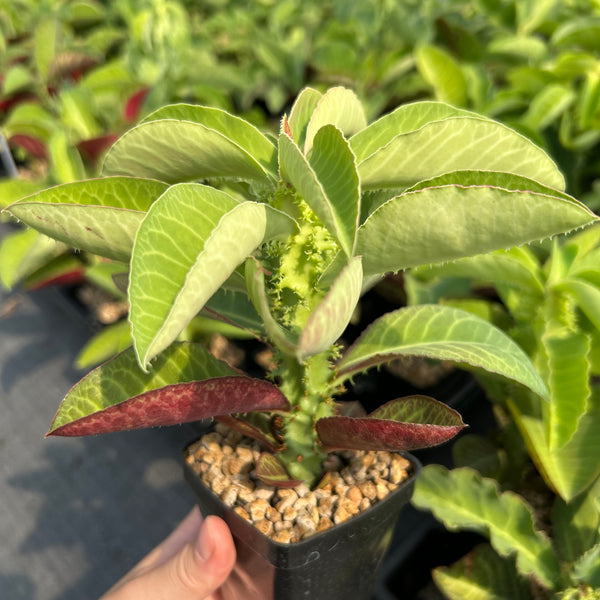
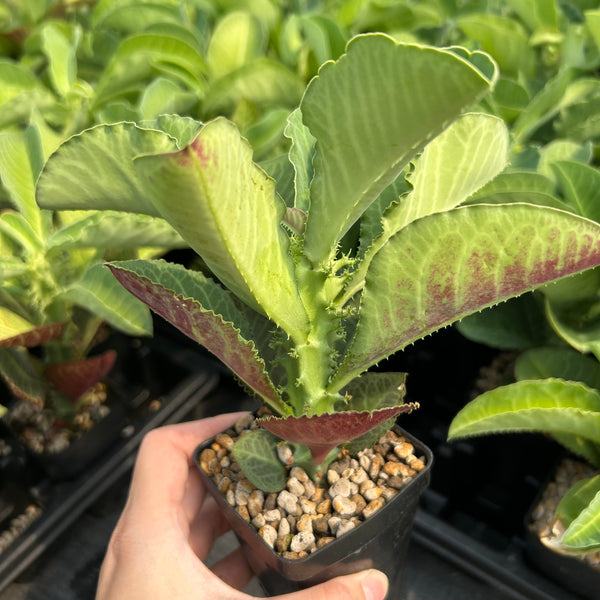
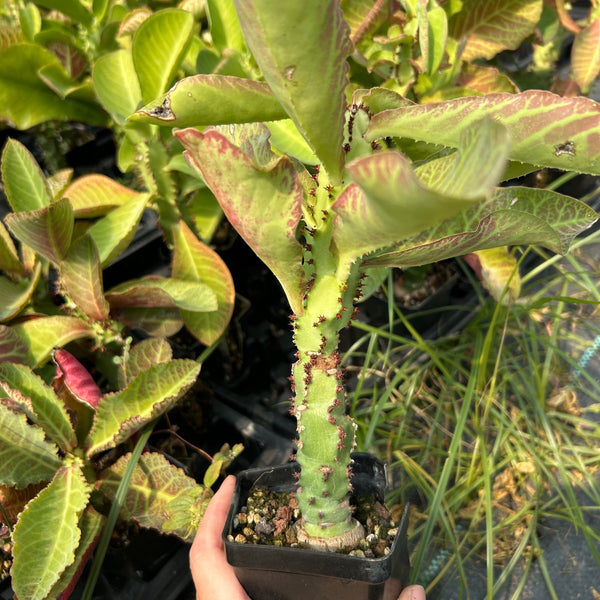
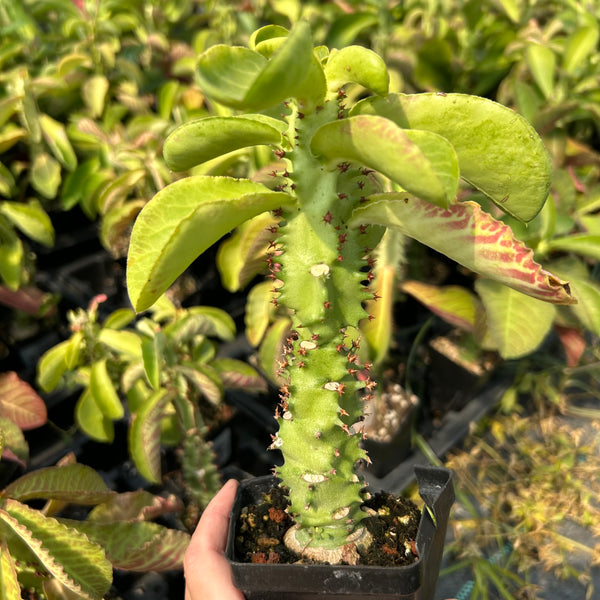
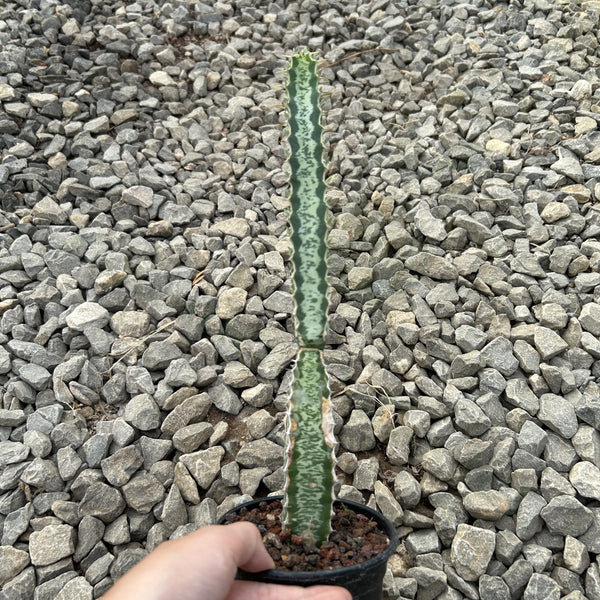
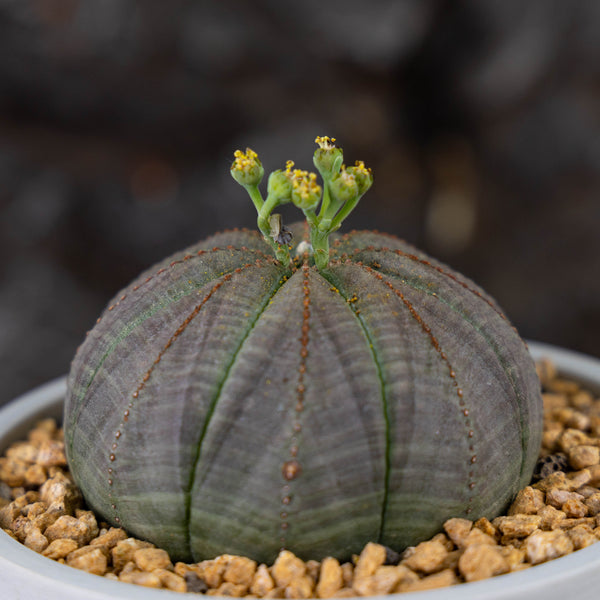
Euphorbia gorgonis

Euphorbia
$ 50.00 / plant
Plant selection You will receive the exact plant shown in the photos. In stock · 1 of 1
Quantity
Sales Type Retail, Same Batch
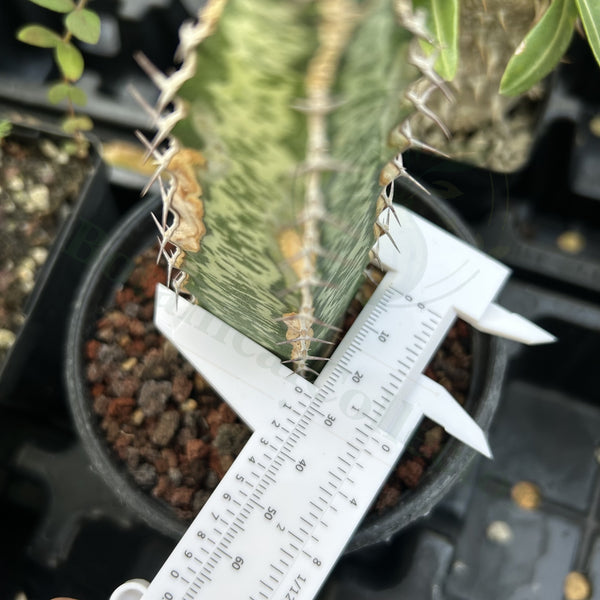
Plant size W11-12cm
Packaged Weight Actual packaged weight varies by product and root system. 0.25 kg
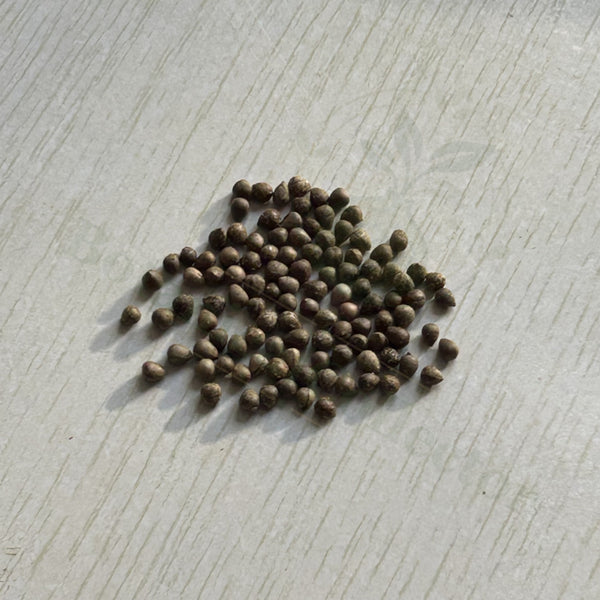
Propagation Method Seed-grown

Cataloged as

Description

Geographic & Climate

  • Geographic Coordinates: Approx. 33°40'S – 33°55'S, 25°25'E – 25°45'E (Eastern Cape Province, South Africa; restricted habitat between the Sundays River and Zwartkops River, near Uitenhage).

  • Climate Classification: Semi-arid / Subtropical Arid Climate (Köppen BSk to BSh).

  • Habitat Characteristics: Occurs at low altitudes on stony, gravelly hills and flats, growing among low scrub, Albany Thicket, and karroid vegetation. Soil substrate consists primarily of well-drained, nutrient-poor sandy to rocky loam over sandstone/shale. Rainfall occurs mostly in spring and autumn with irregular winter drizzles and prolonged hot, dry summers.

Botanical Morphology

  • Diagnostic Features: A dwarf spineless medusoid Euphorbia with a heavy underground tuberous main stem (caudex) up to 10 cm in diameter. The central apical disc (2–5.5 cm wide) is branchless, flat, or slightly depressed, encircled by short radiating branches arranged in 3–5 dense series. Key distinguishing feature: The cyathial nectar glands are rich dark purple-brown, crimson, or dark maroon with 3–7 irregular teeth or lobes along the margin—easily separating it from allied yellow-glanded species such as Euphorbia flanaganii or Euphorbia pugniformis.

  • Growth Habit: Geophytic caudiciform succulent with strict apical symmetry. Summer grower with slow growth rate. Extremely compact in habitat (radiating arms rarely exceed 2.5–5 cm in length); ultimate overall plant diameter reaches 10–15 cm.

History & Etymology

  • Etymology: The specific epithet gorgonis derives from the Greek/Latin Gorgon, referring to Medusa—one of the three Gorgon sisters of Greek mythology with snakes for hair—alluding to the snake-like radiating branches surrounding the central body.

  • Historical Context: First described in 1910 by German botanist Alwin Berger. It remains highly sought-after by succulent collectors due to its miniature size, dense geometry, and rich dark cyathia compared to larger medusoid relatives.

Care Guide

Essential Care Tips for Thriving Plants

Light

Provide partial to full sun. Most plants thrive on direct UV exposure. Avoid placing behind window glass, as it filters out the essential UV rays needed for healthy growth.

Water

Follow the "Soak and Dry" principle. Ensure the top 2–3 cm of soil is bone dry before watering (use the finger test). Reduce frequency in winter, but do not stop watering entirely.

Temperature

The ideal range is 18–35 °C. Maintain temperatures above 5 °C during winter. Please note that temperatures below 0 °C pose a significant risk of plant death.

Humidity

Best kept at 30–50% humidity. Note: High air humidity is not a substitute for root watering. Avoid overly damp areas to prevent root rot or leggy side shoots.

Soil

A loose, well-draining medium is ideal. A mix containing 50–70% grit or mineral soil is recommended for aeration. Outdoor ground planting is also a viable option.

Fertilizer

Fertilize during repotting using Osmocote A2 slow-release fertilizer. Apply sparingly twice a year, or adjust the fertilizer type based on your specific home environment.

Planting Guide

Start Your Green Journey in 4 Steps

Unbox & Inspect

Carefully unpack and inspect the plant’s body and roots. We recommend taking photos or videos immediately for your records. Place it in a shaded, well-ventilated spot for 1–2 days to acclimate to its new environment.

Potting & Placement

After 24 hours of rest, pot the plant using slightly moistened soil. Place it in a bright, airy location to encourage recovery. Keep away from AC vents or heaters to prevent damage from temperature fluctuations.

First Watering

Use water that has sat for at least 24 hours. If using the damp-potting method, wait 2–3 days before the first watering. Ensure a thorough soak until water drains freely from the bottom.

Daily Care

Monitor leaf condition and soil moisture daily. If the soil remains damp, increase ventilation rather than watering. Proper airflow is essential to prevent root rot and ensure lasting health.