We offer rare, unusual, and distinctive plants — and wholesale service for retail customers placing larger orders.

Euphorbia buruana Seeds

Euphorbia
$ 5.00 / seed
Seed selection In stock · 400 available
Quantity
Sales Type Retail, Same Batch
Harvest Year 2026
Propagation Method Seeds

Description

About the Seeds & Species

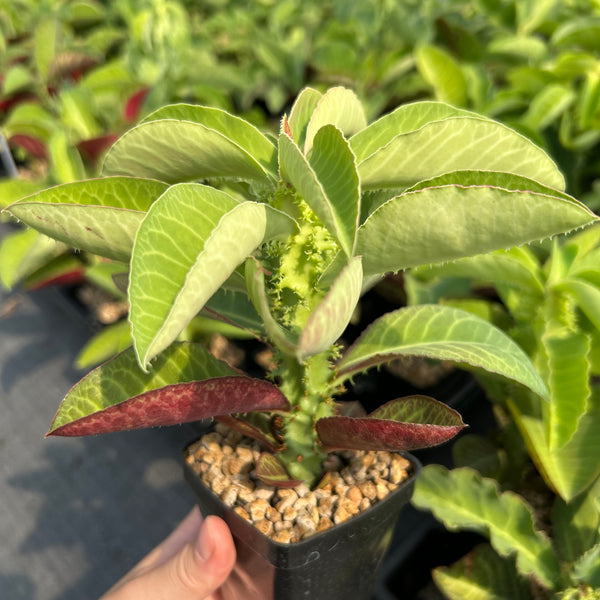
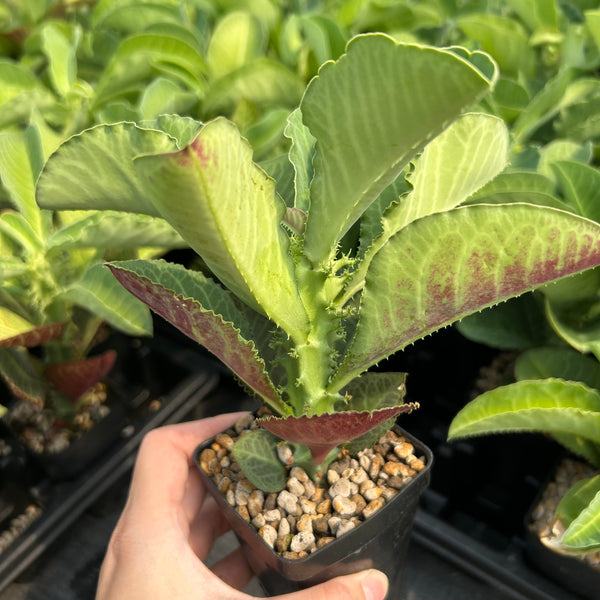
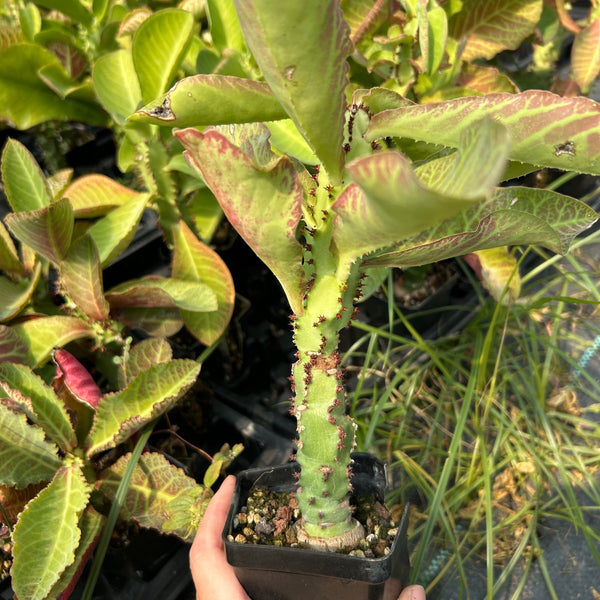
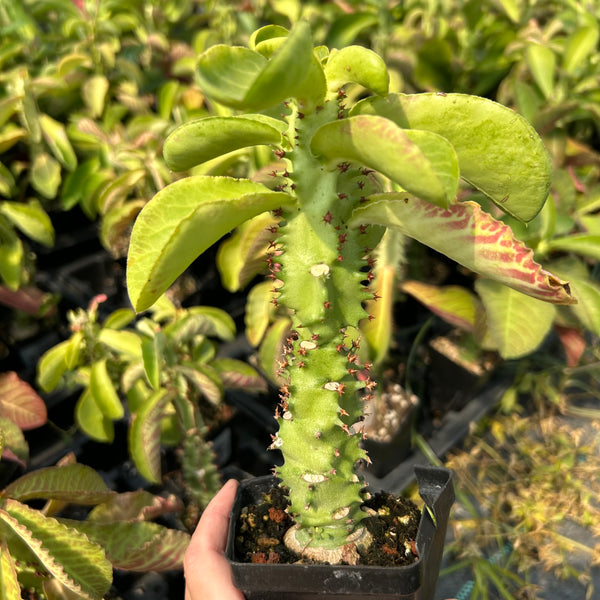
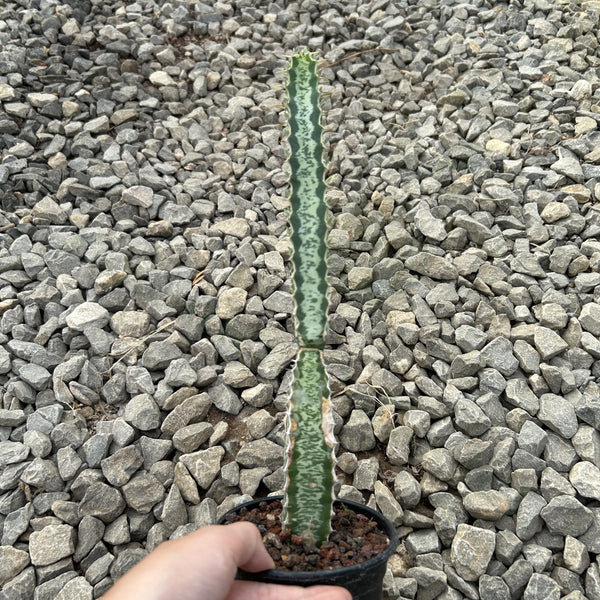
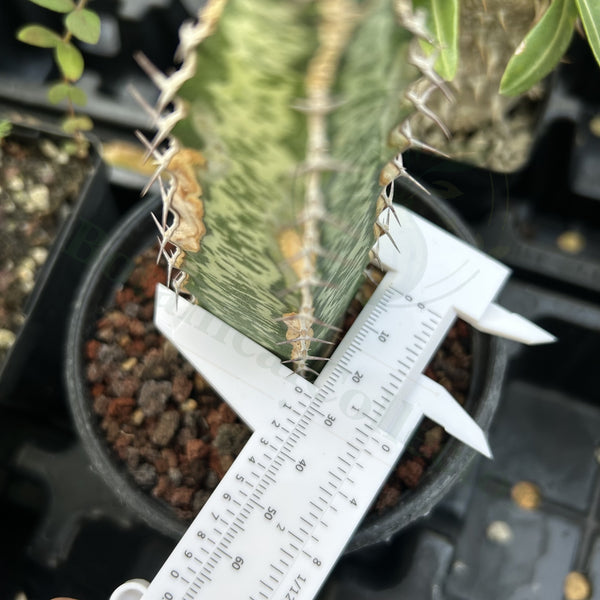
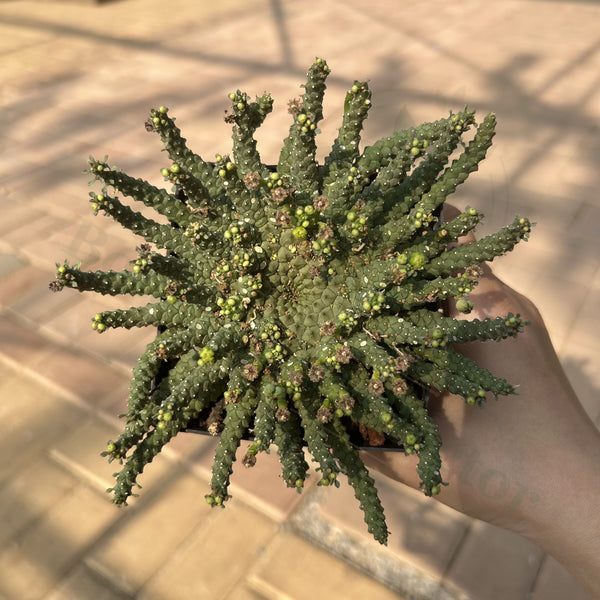
Euphorbia buruana is a succulent plant with a tuberous or thickened base native to Kenya and Tanzania.

The seed photograph shows rounded brown seeds.

The botanical account describes rounded, buff-coloured seeds with mottling, formed in sharply three-lobed capsules.

Sowing & Germination

Suggested Sowing Setup

  • Growing medium: Use a clean, fine-textured seed-starting mix that drains freely but can hold light, even moisture. Fine pumice or perlite can improve aeration; avoid compacted garden soil.
  • Sowing: Pre-moisten the mix and let excess water drain. Space the seeds in a shallow sowing, ensuring contact with the medium rather than burying them under a thick layer of compost. Label the container with the full name and sowing date.
  • Moisture & ventilation: Keep the seed zone lightly moist, without standing water. If a cover is needed to slow drying, check it regularly and provide ventilation; persistent saturation is not the goal.
  • Light & timing: Use bright, filtered light and protect covered trays from direct sun. Schedule sowing when your setup can maintain steady conditions, avoiding cold, wet spells and overheating.

Germination Notes

Germination timing and final results depend on seed condition and the growing environment. Keep a sowing log and check emergence regularly. If progress is slow, review moisture, warmth and airflow before repeatedly changing the setup or discarding the tray.

After Germination

Increase ventilation gradually as seedlings emerge, and introduce stronger light in stages. Water for the young roots and the drying speed of the mix; do not impose a mature plant’s dry resting routine on newly emerged seedlings. Wait until seedlings are established before disturbing their roots.

Why Choose Our Seeds?

Good things begin with a seed.

Homegrown, from the Source
True to Type, Guaranteed

Homegrown, from the Source

Seeds marked with Homegrown Seeds come entirely from plants we grow ourselves. From sowing and care to flowering and seed setting, everything is done by our own hands—no imported seeds, no middlemen. We also sow the same seeds ourselves, grow seedlings, and sell them.

True to Type, Guaranteed

Because we grow and harvest the seeds ourselves, the mother plants are right here with us and the variety source is clear. This greatly reduces the risk of buying seeds elsewhere and ending up with the wrong variety after wasting months of time. Here, you can see actual photos of the varieties on our website.

Fresh & Hand-Selected
Rare & Unusual Varieties

Fresh & Hand-Selected

Every batch is hand-selected before shipping. We keep only plump, evenly colored seeds with no signs of pests or disease. All seeds are from this year's continuous harvest (March to September)—fresh and ready to sow upon arrival.

Rare & Unusual Varieties

Most of our seeds are rare, uncommon varieties that are hard to find on the market. The mother plants have been grown to the flowering and seed-setting stage, providing a stable seed source—so you can trust the variety is true to type.

Sowing Guide

How to Sow Your Seeds

Pachypodium-Type Seeds

  1. Soak seeds in clean water for 5–6 hours. An optional fungicide or disinfectant pre-treatment is recommended.
  2. Soil mix: peat moss and inorganic grit at a 1:1 ratio.
  3. Incorporate slow-release base fertilizer approximately 4 cm (1.5 in.) below the soil surface before sowing.
  4. Have top-dressing grit, a spray bottle, or a watering can with a fine rose ready.

Bursera & Commiphora-Type Seeds

  1. Remove the fleshy outer seed coat and sow the hard inner shell only.
  2. Rinse thoroughly. Light scarification with sandpaper or fine gauze improves water uptake.
  3. Disinfect treated seeds, then follow the standard sowing procedure below.

Standard Sowing Procedure

  1. Fill pots with your prepared mix. Place fertilizer roughly 2 cm below the surface.
  2. Make a shallow depression in the center and set the pre-soaked seed in place.
  3. Cover the seed with a light layer of peat moss to help roots anchor as they emerge.
  4. Apply a thin layer of top-dressing grit over the surface.
  5. Water thoroughly on first watering—use gentle, low-pressure flow so seeds and soil are not disturbed.

Species-Specific Notes

  1. Jatropha mahafalensis and similar: remove the soft caruncle (attachment point) at the seed tip before sowing.
  2. For all other species not listed above, proceed with the standard sowing procedure.