Important Notice: Low-Temperature Shipping — Read Before Ordering

Notice on Low-Temperature Shipping

Recently, temperatures have been gradually dropping in various regions, and some plants require insulated packaging for shipping. When placing an order, you can check the estimated delivery time on the order page. Below are the packaging arrangements for different temperature conditions:

If the temperature at your address is expected to remain below -5°C throughout the estimated delivery period, please do not place an order.

If the minimum temperature at your address during the estimated delivery period is between 0°C and 5°C, your order will be shipped in an insulated box, and an additional shipping fee will be required. The specific fee will be notified by email. You may pay the additional shipping fee, or apply to us for a refund.

If the minimum temperature at your address during the estimated delivery period is above 5°C, no insulated box will be arranged, and your order will be shipped as normal.

Note: For some cold-sensitive plants, we will send email reminders depending on the situation.

Thank you all for your support and trust!

Cyphostemma montagnacii

Cyphostemma
$ 25.00 / plant
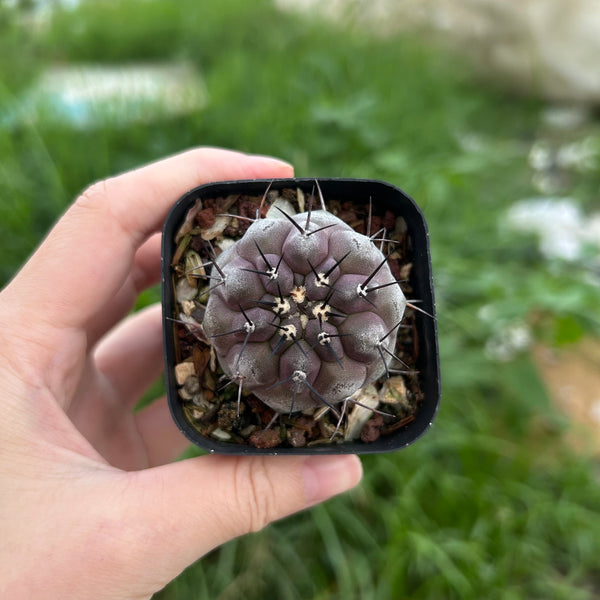
Plant selection You'll receive a similar plant. Appearance may vary. In stock · 50 available
Quantity
Sales Type Retail, Same Batch
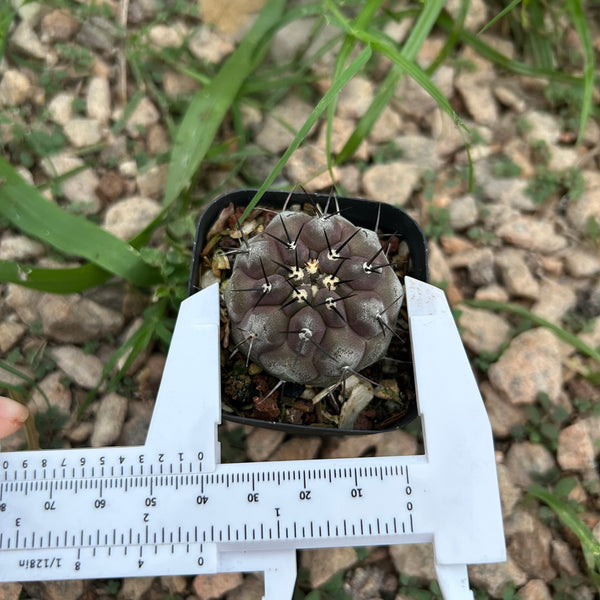
Plant size W2cm
Propagation Method Seed-grown

Description

Scientific Name: Cyphostemma montagnacii Desc.

Geographic & Climate

Geographic Coordinates
Type: Descoings 2265, collected 4 February 1957 at "Sud-Ouest: environs de Tuléar — face Est de la montagne de la Table, sur pentes rocailleuses dénudées" (east face of La Table mountain near Toliara, on bare rocky slopes). Holotype P00061367; isotype P00061368. A georeferenced duplicate of the same collection (MO/Tropicos 178780) gives 23.40°S, 43.783°E (WGS84 assumed) — this is a georeference of a type duplicate, not a coordinate printed on the label. POWO gives only "Madagascar" and publishes no species-level coordinates; LLIFLE has no verifiable dedicated page: insufficient native data for this taxon beyond the type-locality georeference. Secondary field accounts place the range south of Toliara to St Augustine Bay and eastwards along the Onilahy River, with possible occurrence at Tsimanampetsotsa, all below c. 150 m elevation.

Climate Classification
POWO assigns the species to the desert / dry shrubland biome. No species-level Köppen code is published by POWO or LLIFLE: insufficient native data for this taxon on that point. Southern Madagascar has a pronounced, months-long dry season and a short summer rainy period.

Habitat Characteristics
Low xerophytic thicket on limestone and scrubland (CITES identification guide); the type was collected on exposed rocky slopes. Originally part of the spiny-forest belt around Toliara, now largely cleared by slash-and-burn agriculture and logging. Elevation below c. 150 m across the documented range (secondary source). Listed in CITES Appendix II; wild populations are reported at low density and are vulnerable to collection and habitat degradation.

Botanical Morphology

Diagnostic Features
A climbing caudex geophyte: a thickened, tuber-like stem/caudex with distinctive tubercular bark, producing vine-like stems to c. 1.5 m that require support and climb through surrounding vegetation. Leaves small and fleshy, short-lived. Underground tuber reportedly reaching c. 1.5 m in depth and storing more than 50 litres of water in a single rainy season (secondary account). Flowers small, yellow to greenish-yellow, appearing with the November leaf-flush; small round, sweetish edible fruits by early February; seeds 1.5–2 cm, grooved on one side like a coffee bean, with a corky surface. Plants are bare again by March — an exceptionally short vegetative cycle. The CITES guide notes a close resemblance to C. elephantopus; both have succulent leaves, a deep tuber and a brief growing season, but C. montagnacii is distinguished by its tubercular-barked caudex and 1.5 m vine-like stems.

Growth Habit
Very slow growing; horticultural sources give a caudex of c. 30 cm or more in diameter. Annual stems die back in the dry season, leaving the plant leafless for most of the year; growth and flowering are confined to the short wet season. Propagation by seed is usually recommended; cuttings are possible but slow. No species-level hardiness limit is published — insufficient native data for this taxon on that point.

History & Etymology

Etymology
Cyphostemma from Greek kyphos ("hump, tumour") + stemma ("garland, crown"), referring to the swollen stem. The epithet's derivation is reported inconsistently: one field account says Descoings honoured his compatriot Montagniac, then director of the agricultural service at Toliara; a horticultural source instead derives it from the French place name Montagnac. The protologue text was not directly verified here, so the precise etymology is uncertain and neither version is asserted as definitive.

Historical Context
Bernard Descoings described the species from the 1957 Toliara collections; IPNI cites Bulletin de la Société Botanique de France 109: 274 (1963), while the article itself is dated 1962 — both dates appear in the literature. The Malagasy name "Mangeboka" means roughly "enduring"; in severe droughts the Mahafaly and Antandroy have opened the tubers for drinking water. A 2011 field study reported only c. 25 individuals per hectare and roughly 200 km² of suitable habitat; the species is listed in CITES Appendix II but has not been assessed on the IUCN Red List. Trade is small and largely wild-collected, with Germany the main importer; Arboretum Antsokay is among the institutions attempting ex-situ conservation.

Care Guide

Essential Care Tips for Thriving Plants

Light

Provide partial to full sun. Most plants thrive on direct UV exposure. Avoid placing behind window glass, as it filters out the essential UV rays needed for healthy growth.

Water

Follow the "Soak and Dry" principle. Ensure the top 2–3 cm of soil is bone dry before watering (use the finger test). Reduce frequency in winter, but do not stop watering entirely.

Temperature

The ideal range is 18–35 °C. Maintain temperatures above 5 °C during winter. Please note that temperatures below 0 °C pose a significant risk of plant death.

Humidity

Best kept at 30–50% humidity. Note: High air humidity is not a substitute for root watering. Avoid overly damp areas to prevent root rot or leggy side shoots.

Soil

A loose, well-draining medium is ideal. A mix containing 50–70% grit or mineral soil is recommended for aeration. Outdoor ground planting is also a viable option.

Fertilizer

Fertilize during repotting using Osmocote A2 slow-release fertilizer. Apply sparingly twice a year, or adjust the fertilizer type based on your specific home environment.

Planting Guide

Start Your Green Journey in 4 Steps

Unbox & Inspect

Carefully unpack and inspect the plant’s body and roots. We recommend taking photos or videos immediately for your records. Place it in a shaded, well-ventilated spot for 1–2 days to acclimate to its new environment.

Potting & Placement

After 24 hours of rest, pot the plant using slightly moistened soil. Place it in a bright, airy location to encourage recovery. Keep away from AC vents or heaters to prevent damage from temperature fluctuations.

First Watering

Use water that has sat for at least 24 hours. If using the damp-potting method, wait 2–3 days before the first watering. Ensure a thorough soak until water drains freely from the bottom.

Daily Care

Monitor leaf condition and soil moisture daily. If the soil remains damp, increase ventilation rather than watering. Proper airflow is essential to prevent root rot and ensure lasting health.