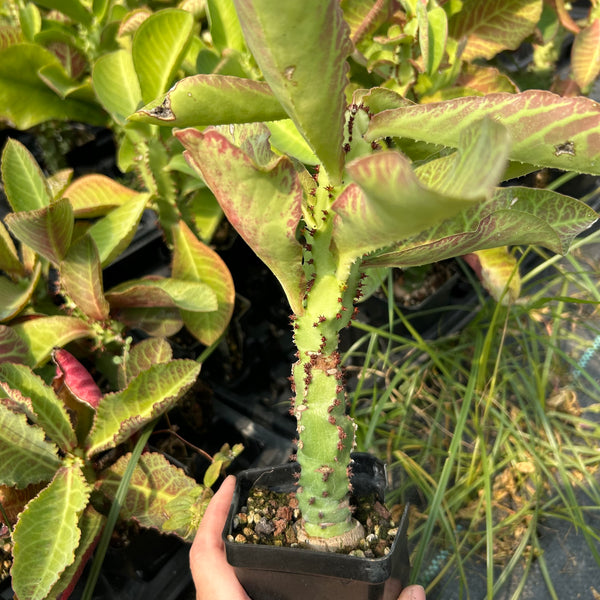
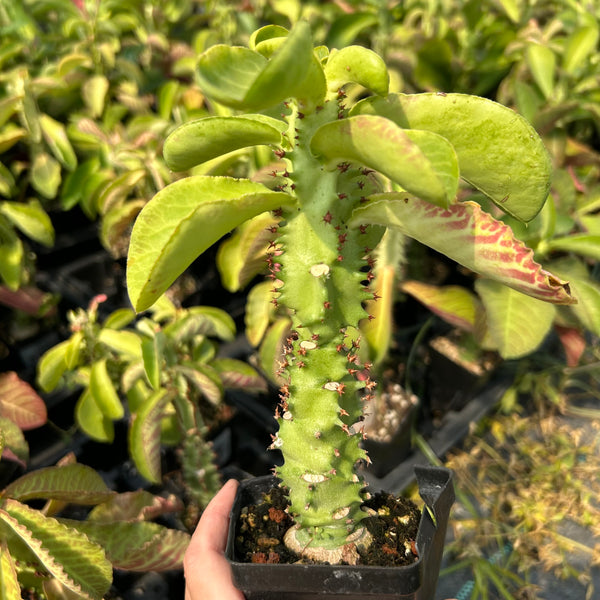
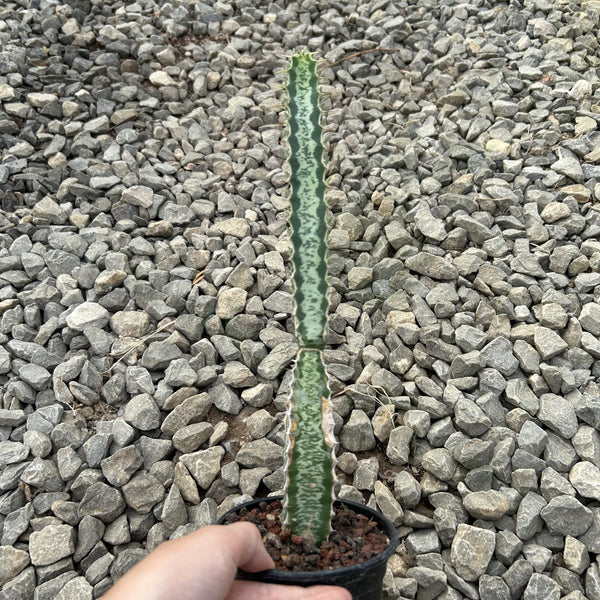
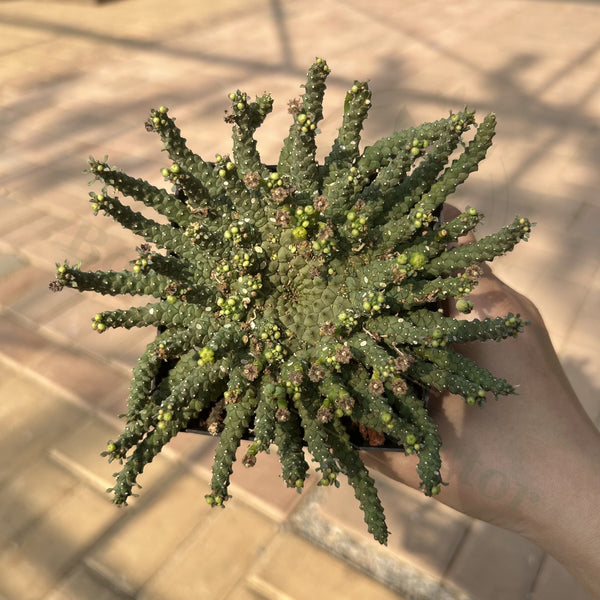
Euphorbia decepta

BotanicalCollector

4.9 · Premium
In Stock · Ships in 48h
$ 65.00 / plant
Quantity Qty
1
International Logistics
Unbeatable Quality
All The Help You Need
Sales Type Retail, Same Batch
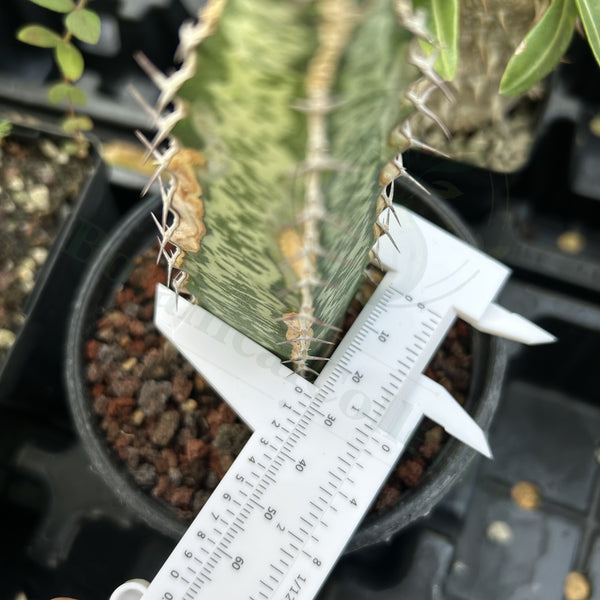
Product Size W4-6cm
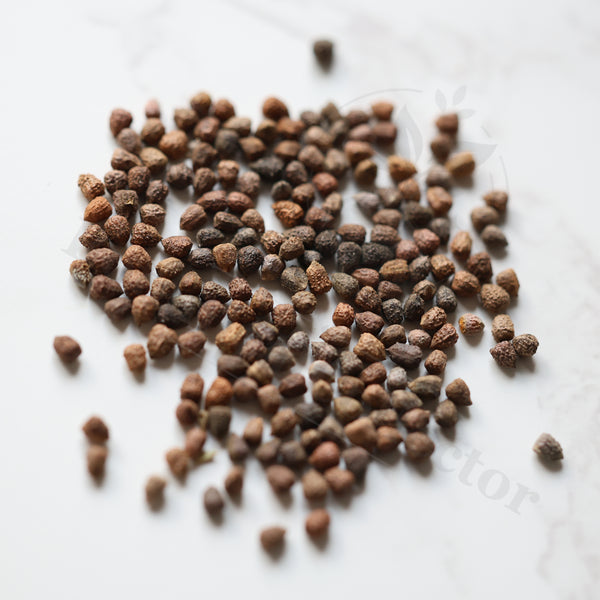
Propagation Method Seed-grown
Genus Euphorbia

Description

Origin

Euphorbia decepta is a rare South African endemic primarily found in the Great Karoo region. Its distribution spans parts of the Western Cape and Eastern Cape provinces.

  • Geographic Coordinates: The species is most concentrated around the Willowmore, Steytlerville, and Beaufort West districts, roughly situated between $32^\circ 20'$ to $33^\circ 30' S$ latitude and $22^\circ 30'$ to $24^\circ 15' E$ longitude. The type specimen was originally collected near Willowmore (approx. $33^\circ 17' S, 23^\circ 29' E$).

Habitat

This species thrives in the Groot Thicket and Karoo Nama-Karoo biomes. It is specifically adapted to stony, flat plains and low shale ridges.

  • Environmental Characteristics: It grows in gravelly or shaly soils that are extremely well-drained. The climate is characterized by semi-arid conditions with low, erratic rainfall (approx. 200–300mm annually), mainly occurring in late summer and autumn.
  • Resilience: It is a master of thermoregulation, often growing with its main body partially buried (geophytic) in the grit or sheltered between rocks to survive the searing summer heat and occasional winter frosts.

Description

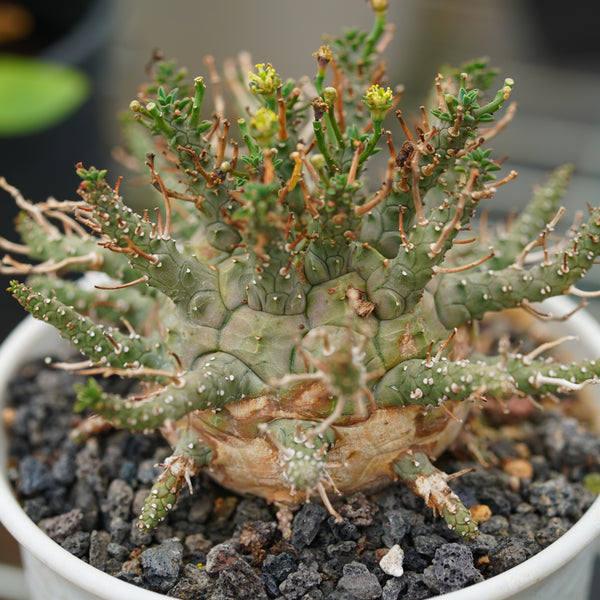
Euphorbia decepta is a dwarf "Medusa-head" (medusoid) succulent, admired for its compact, symmetrical, and almost "alien" architecture.

  • Central Caudex: The main body is sub-globose or obconical, often flattened at the apex, growing up to 10 cm in diameter. This central "head" acts as the primary water reservoir and remains mostly at or below ground level in the wild.
  • Branches: Numerous short, cylindrical branches (2–5 cm long) radiate from the central apex. These branches are densely covered in prominent, spirally arranged tubercles, giving them a "tessellated" or "reptilian" texture. Unlike larger medusoids, these branches remain relatively short and stout.
  • Flowers (Cyathia): It produces small, bright yellow to honey-colored flowers on short peduncles. The nectar glands are typically finely fringed, a key botanical detail for identification.
  • Aesthetic: Its rugged, geometric form and the contrast between the dark grey-green stems and vibrant yellow blooms make it a centerpiece for "Mame-bonsai" or specialized African succulent collections.

Etymology & Story

The name "decepta" is derived from the Latin deceptus, meaning "deceived" or "deceptive."

  • The Story: It was formally described by the famous botanist N.E. Brown in 1915. He chose this name because the plant had long "deceived" botanists, who frequently misidentified it as Euphorbia pugniformis or Euphorbia caput-medusae. Its true identity remained hidden for decades due to its ability to blend perfectly with the Karoo stones and its subtle floral differences that only a microscopic examination could reveal. In the collector world, it is still known as the "Deceptive Medusa," a nod to its history as a botanical enigma.
Care Guide

Essential Care Tips for Thriving Plants

Light

Provide partial to full sun. Most plants thrive on direct UV exposure. Avoid placing behind window glass, as it filters out the essential UV rays needed for healthy growth.

Water

Follow the "Soak and Dry" principle. Ensure the top 2–3 cm of soil is bone dry before watering (use the finger test). Reduce frequency in winter, but do not stop watering entirely.

Temperature

The ideal range is 18–35 °C. Maintain temperatures above 5 °C during winter. Please note that temperatures below 0 °C pose a significant risk of plant death.

Humidity

Best kept at 30–50% humidity. Note: High air humidity is not a substitute for root watering. Avoid overly damp areas to prevent root rot or leggy side shoots.

Soil

A loose, well-draining medium is ideal. A mix containing 50–70% grit or mineral soil is recommended for aeration. Outdoor ground planting is also a viable option.

Fertilizer

Fertilize during repotting using Osmocote A2 slow-release fertilizer. Apply sparingly twice a year, or adjust the fertilizer type based on your specific home environment.

Planting Guide

Start Your Green Journey in 4 Steps

01

Unbox & Inspect

Carefully unpack and inspect the plant’s body and roots. We recommend taking photos or videos immediately for your records. Place it in a shaded, well-ventilated spot for 1–2 days to acclimate to its new environment.

02

Potting & Placement

After 24 hours of rest, pot the plant using slightly moistened soil. Place it in a bright, airy location to encourage recovery. Keep away from AC vents or heaters to prevent damage from temperature fluctuations.

03

First Watering

Use water that has sat for at least 24 hours. If using the damp-potting method, wait 2–3 days before the first watering. Ensure a thorough soak until water drains freely from the bottom.

04

Daily Care

Monitor leaf condition and soil moisture daily. If the soil remains damp, increase ventilation rather than watering. Proper airflow is essential to prevent root rot and ensure lasting health.