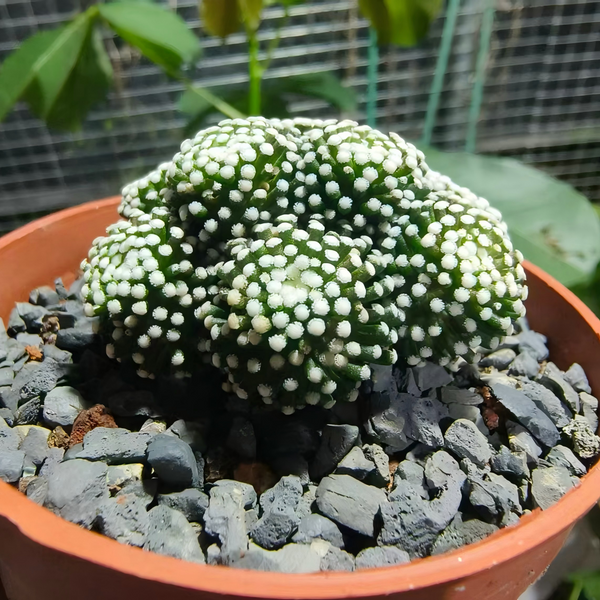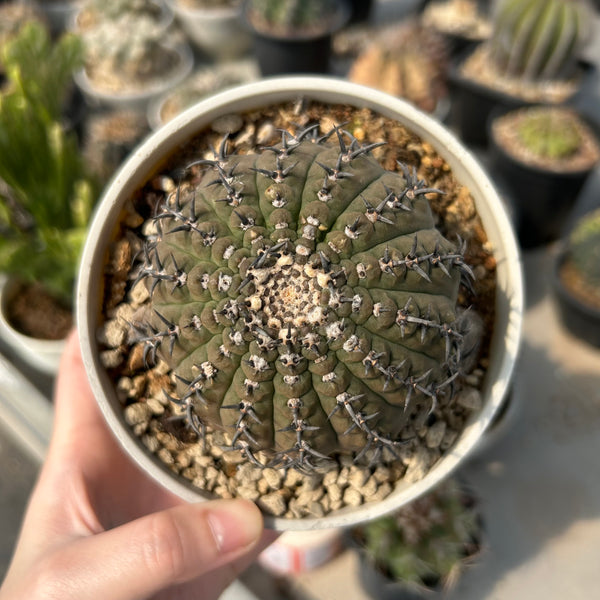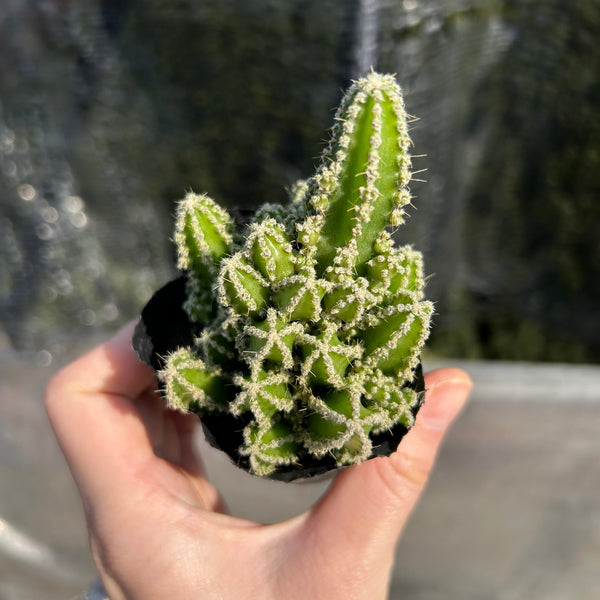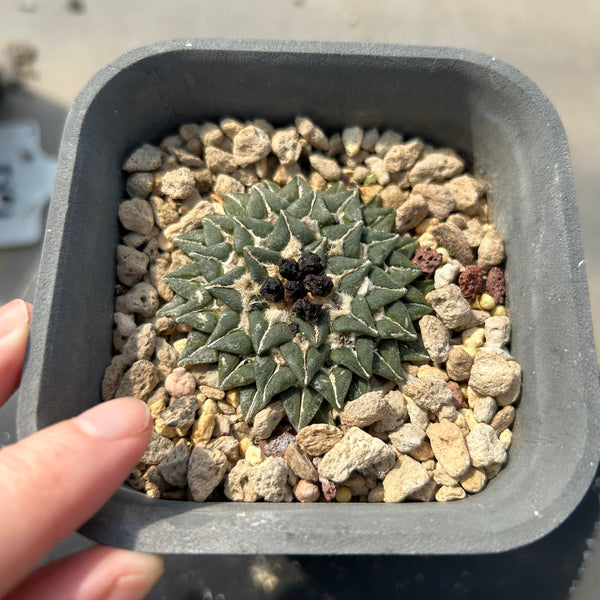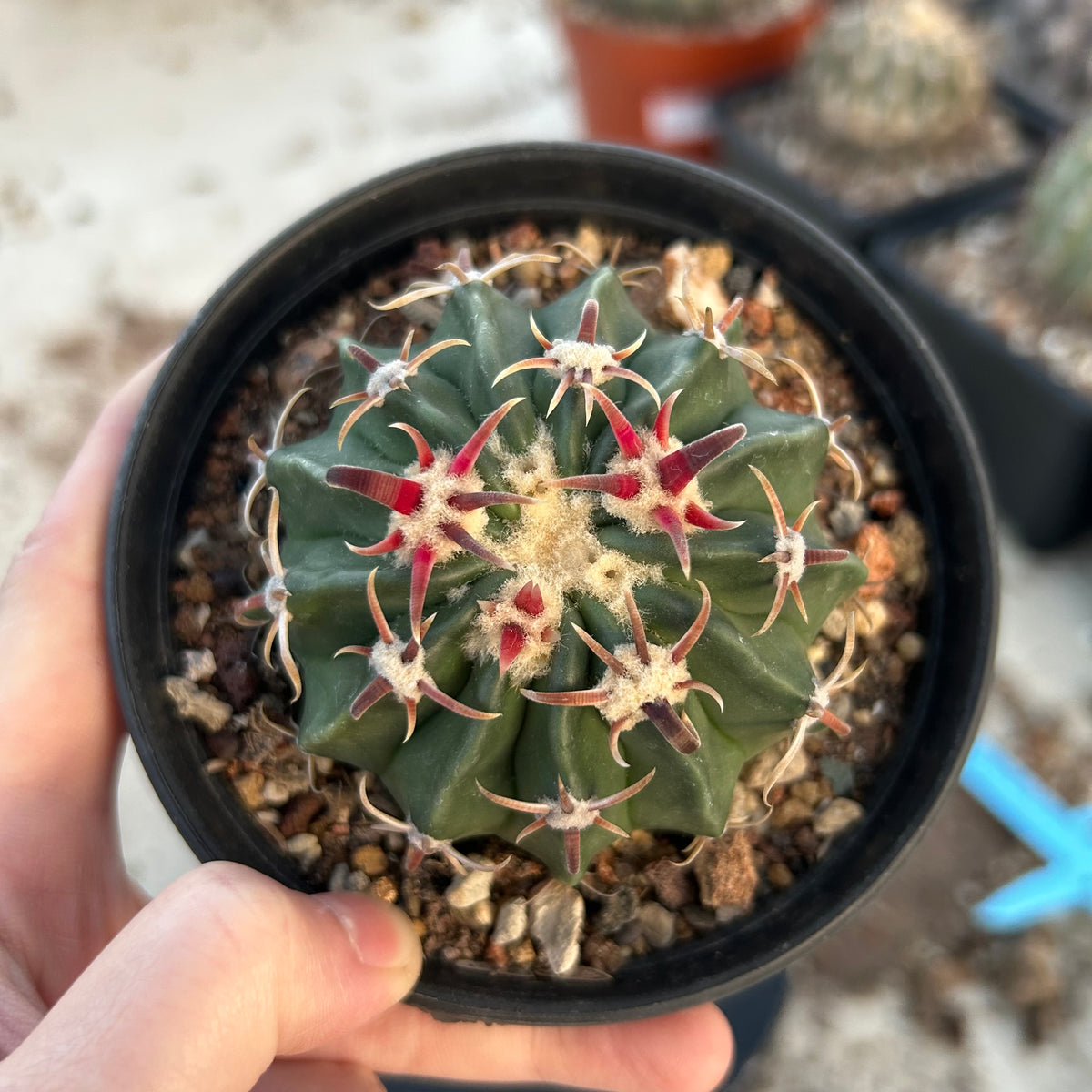
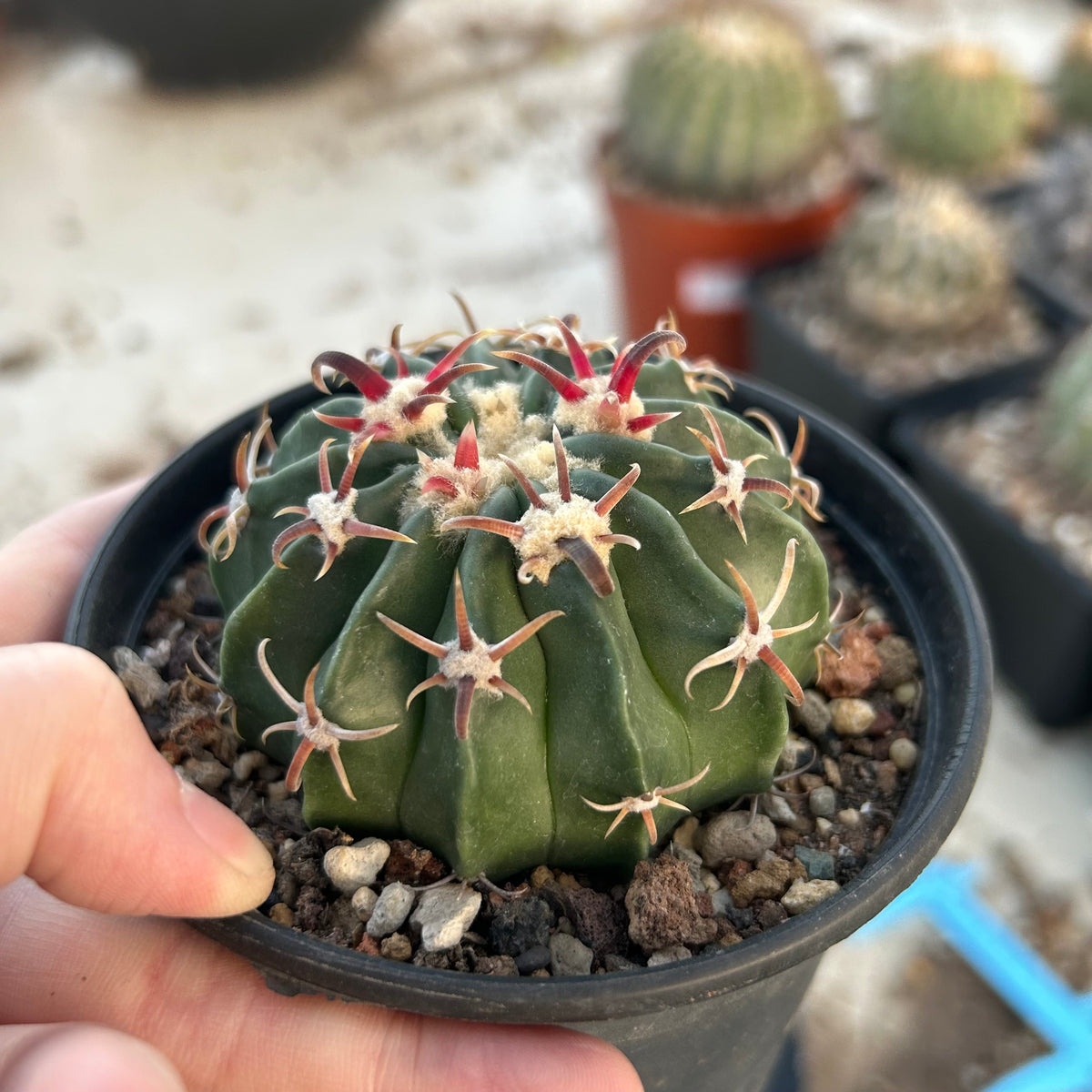
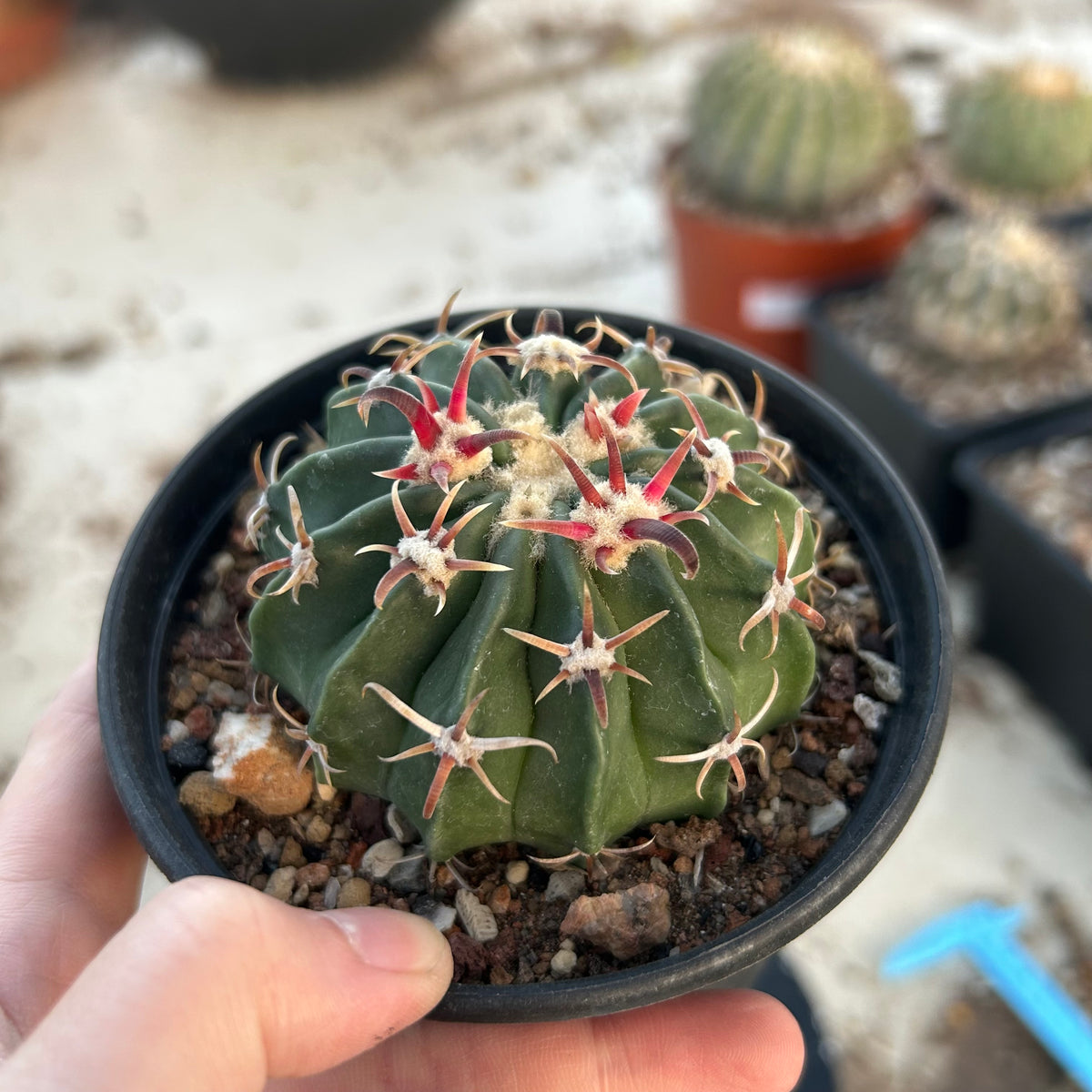
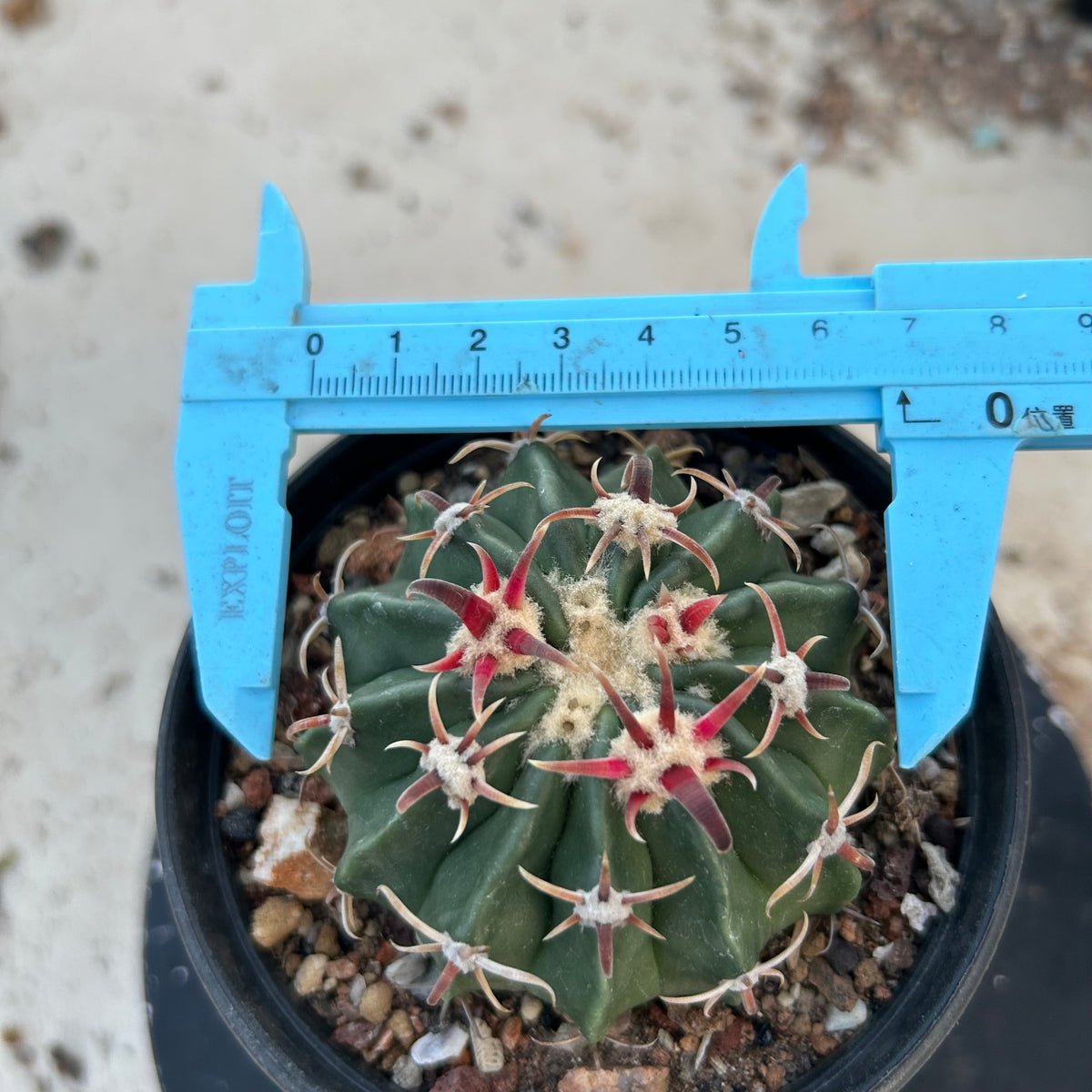
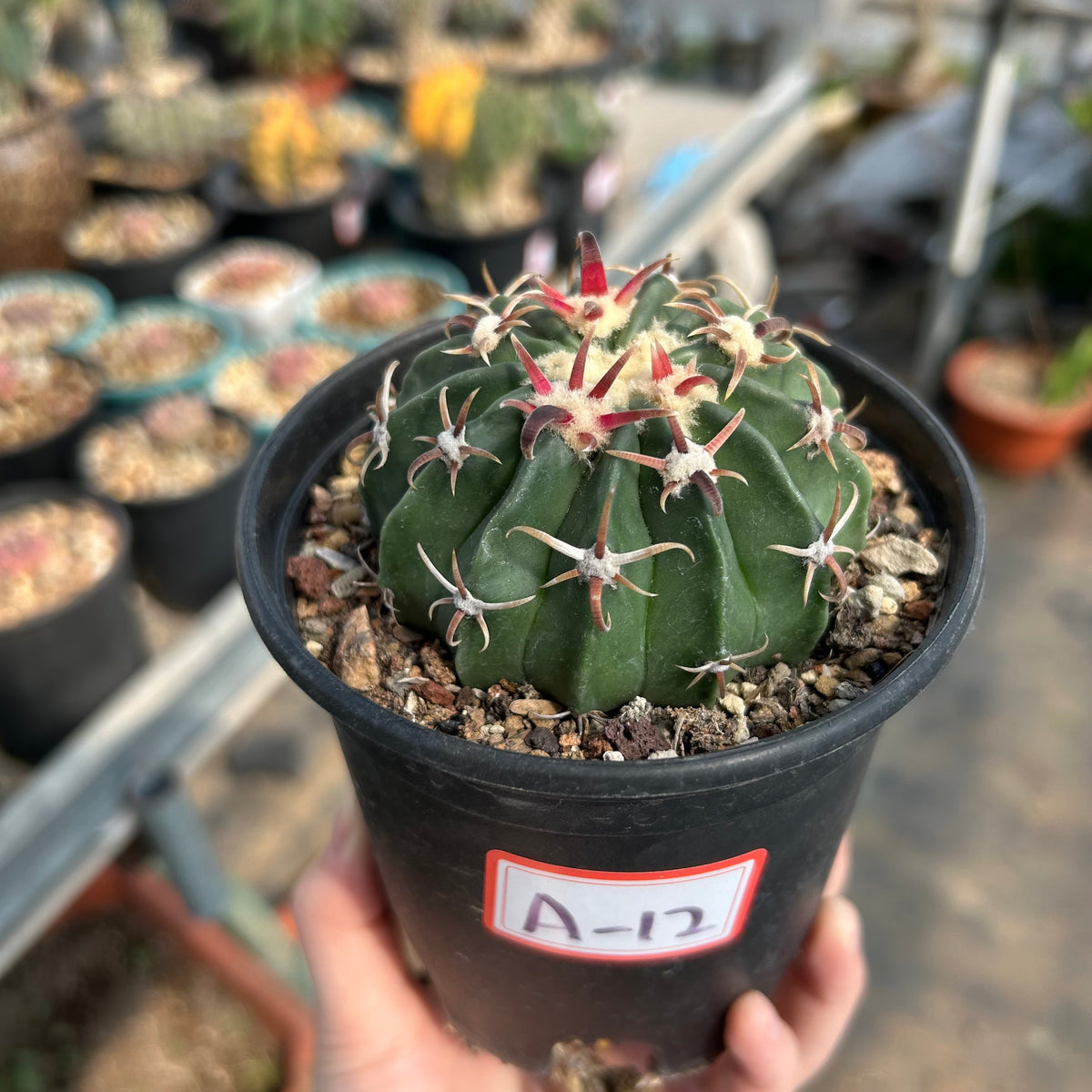
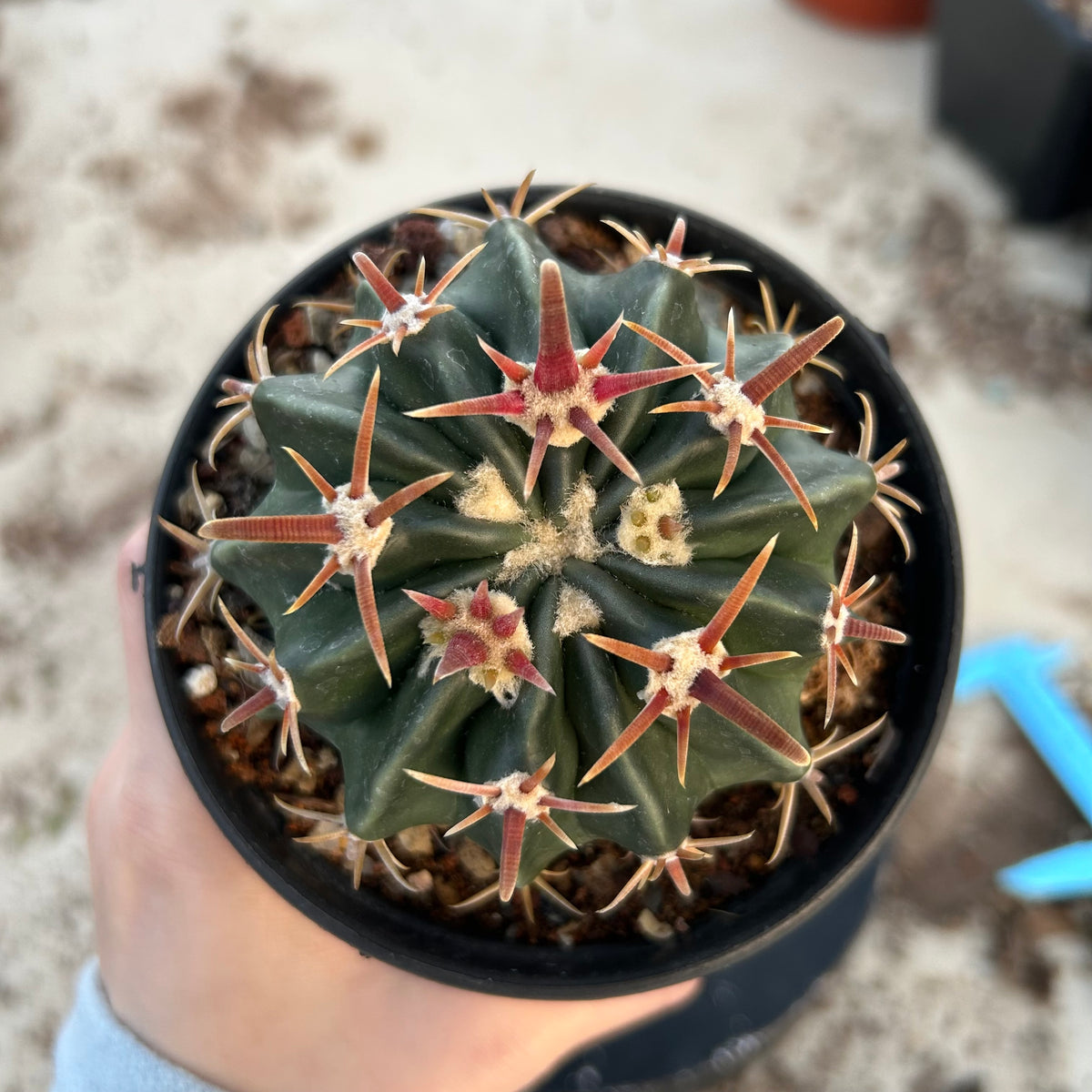
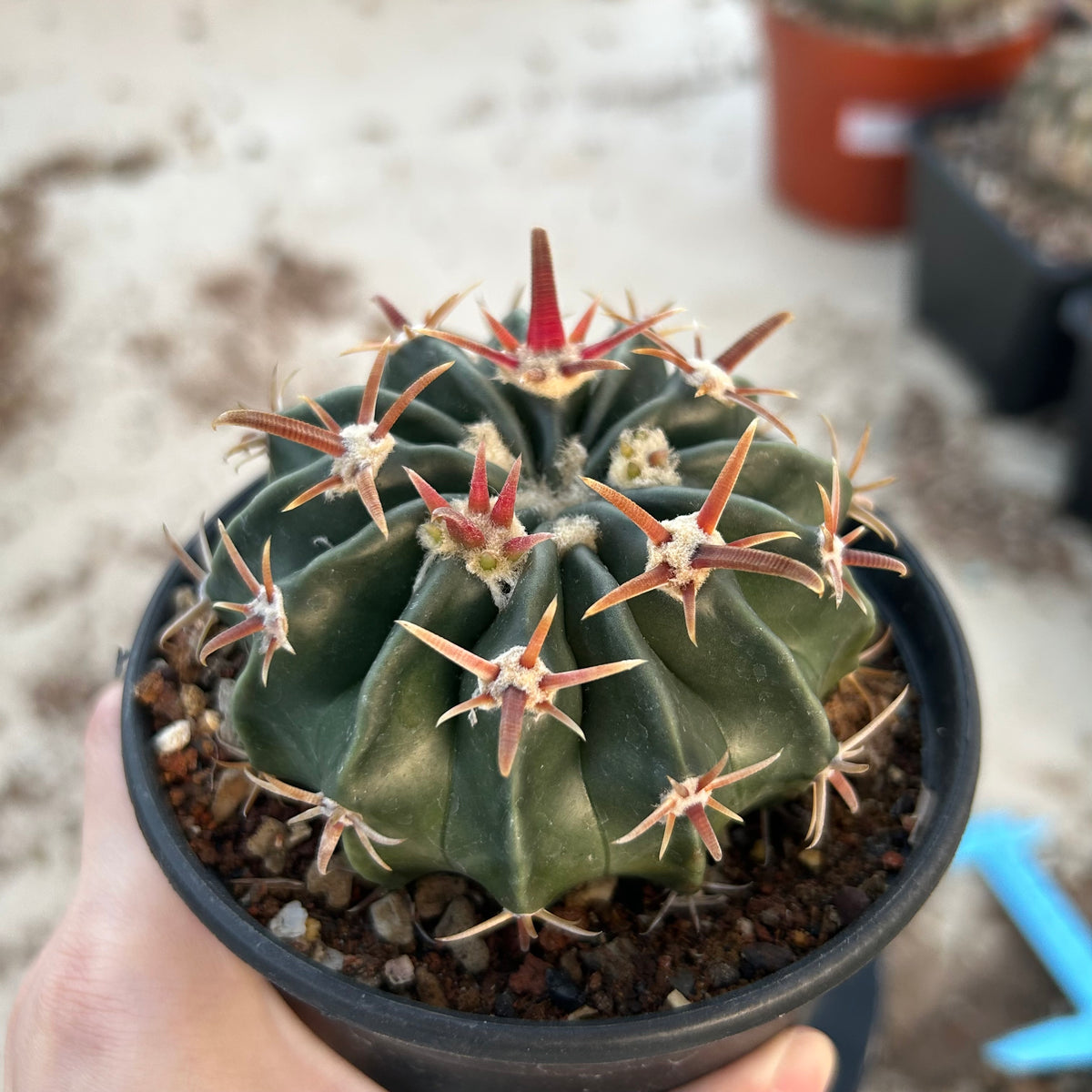
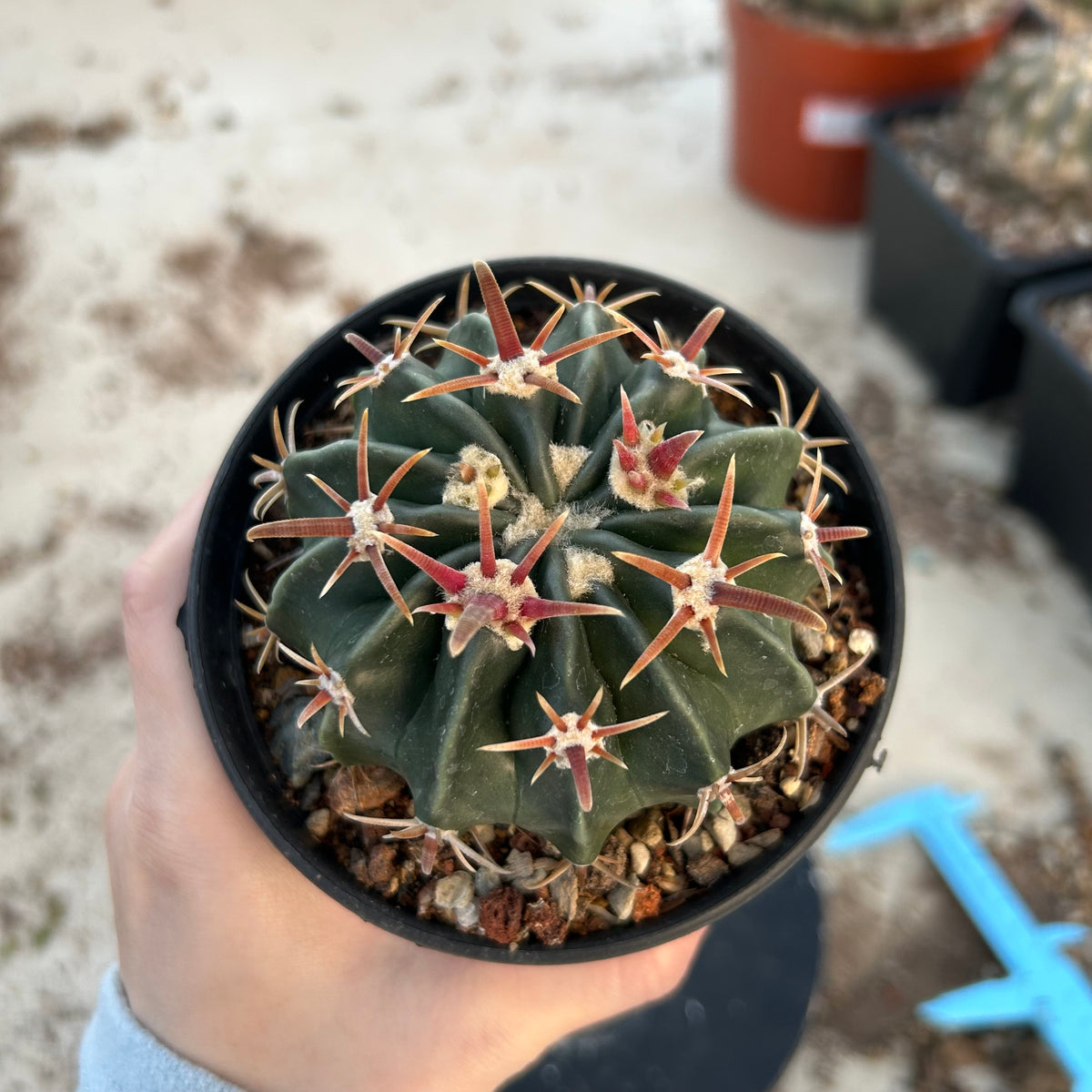
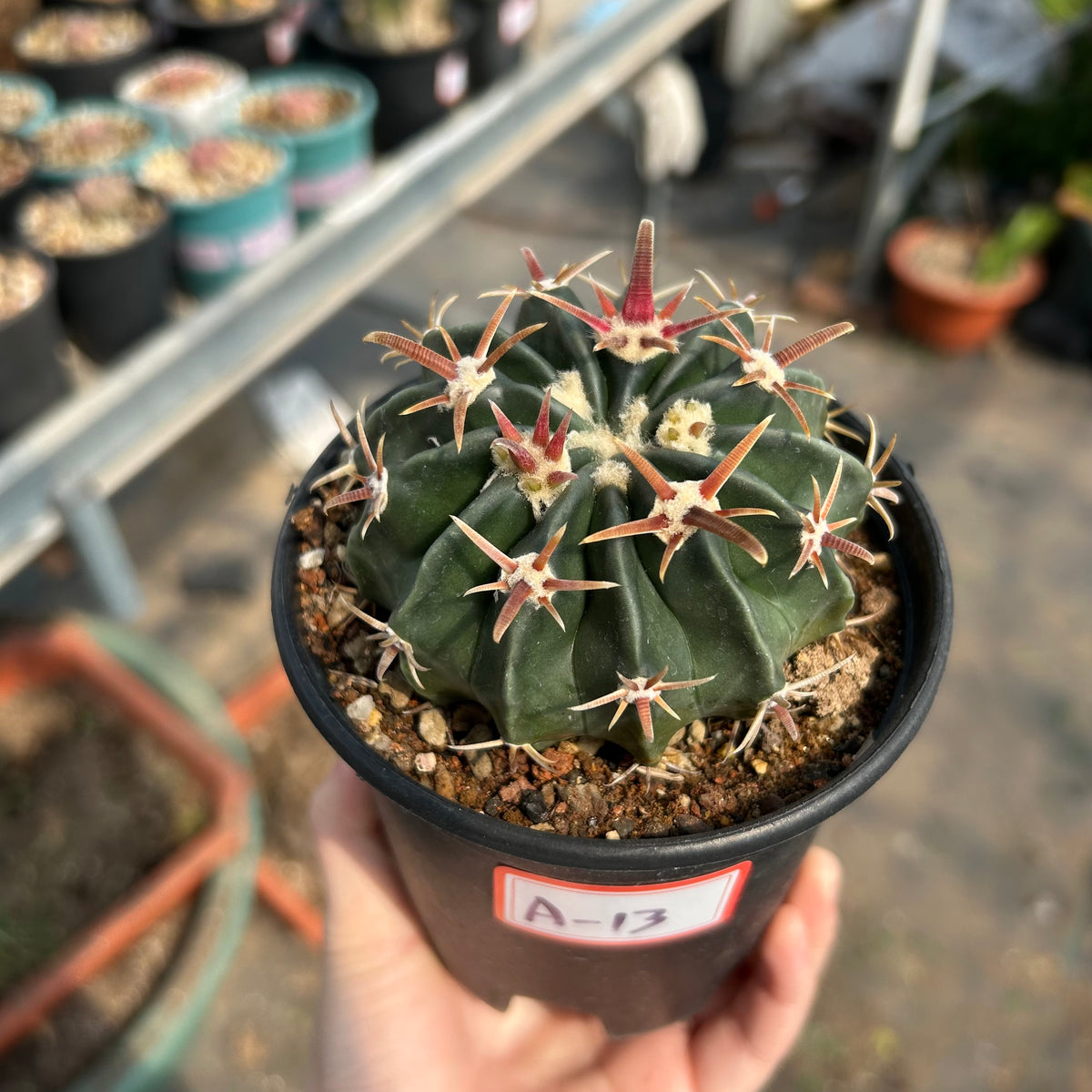
Echinocactus texensis | WYSIWYG

BotanicalCollector

4.9 · Premium
In Stock · Ships in 48h
$ 120.00 / plant
Attribute Option
Quantity Qty
1
International Logistics
Unbeatable Quality
All The Help You Need
Sales Type Retail, WYSIWYG
Product Size W6-8cm
Weight 0.3 kg
Propagation Method Offset
Genus Echinocactus

Description

Origin

Echinocactus texensis Hopffer is native to the southern Great Plains and Chihuahuan borderlands, ranging across central and western Texas, southeastern New Mexico, and northern Mexico from Coahuila through to Tamaulipas (North America). Long known to early settlers as the "horse crippler" because its low, half-buried form would gore the hooves of livestock, it was formally described in 1842 and remains one of the most iconic flat-globose cacti of the region.

Habitat

In its natural environment, this species is a specialist of arid Tamaulipan thornscrub and shortgrass prairie at altitudes around 200–1500 meters above sea level. It grows on calcareous gravelly clays and limestone-derived caliche soils that crust over hard, drought-baked subsoils, where rainfall is concentrated in summer thunderstorms. The plant typically sits flush with the ground and during the dry season contracts deeper into its substrate, leaving little more than a tough, spiny disc visible above the gravel.

Description

Echinocactus texensis is a robust, ground-hugging barrel cactus regarded as one of the most distinctive North American Echinocactus species.

Size & Stem: Solitary, depressed-globose to almost flat, typically 10–15 cm tall and 15–30 cm wide, with a tough blue-green to grey-green epidermis and 13–27 broad, pronounced ribs.

Roots: A short, very thickened taproot anchoring the heavy stem firmly into stony ground, supporting its half-buried life form.

Ribs & Spines: Areoles widely spaced along sharp ribs, each bearing 6–7 stout radial spines and a single, conspicuously flattened, downward-curving central spine 4–6 cm long, banded reddish-brown to grey — the diagnostic feature that distinguishes it from all other North American Echinocactus.

Flowers: Late spring to early summer; broadly funnelform blooms 5–6 cm across, with silky pink petals fringed in red and a deeper magenta throat, opening from the wool-filled crown.

Fruit: Bright scarlet, fleshy, persistent berries that ripen in summer and remain conspicuous on the crown, a key field character of the species.

Cultivation: Slow-growing but hardy; thrives in a sharply drained mineral substrate over deep pots that accommodate the heavy taproot. Provide full sun, sparse summer watering, and a completely dry, cold winter rest tolerating brief frosts to mature into flowering size.

Care Guide

Essential Care Tips for Thriving Plants

Light

Provide partial to full sun. Most plants thrive on direct UV exposure. Avoid placing behind window glass, as it filters out the essential UV rays needed for healthy growth.

Water

Follow the "Soak and Dry" principle. Ensure the top 2–3 cm of soil is bone dry before watering (use the finger test). Reduce frequency in winter, but do not stop watering entirely.

Temperature

The ideal range is 18–35 °C. Maintain temperatures above 5 °C during winter. Please note that temperatures below 0 °C pose a significant risk of plant death.

Humidity

Best kept at 30–50% humidity. Note: High air humidity is not a substitute for root watering. Avoid overly damp areas to prevent root rot or leggy side shoots.

Soil

A loose, well-draining medium is ideal. A mix containing 50–70% grit or mineral soil is recommended for aeration. Outdoor ground planting is also a viable option.

Fertilizer

Fertilize during repotting using Osmocote A2 slow-release fertilizer. Apply sparingly twice a year, or adjust the fertilizer type based on your specific home environment.

Planting Guide

Start Your Green Journey in 4 Steps

01

Unbox & Inspect

Carefully unpack and inspect the plant’s body and roots. We recommend taking photos or videos immediately for your records. Place it in a shaded, well-ventilated spot for 1–2 days to acclimate to its new environment.

02

Potting & Placement

After 24 hours of rest, pot the plant using slightly moistened soil. Place it in a bright, airy location to encourage recovery. Keep away from AC vents or heaters to prevent damage from temperature fluctuations.

03

First Watering

Use water that has sat for at least 24 hours. If using the damp-potting method, wait 2–3 days before the first watering. Ensure a thorough soak until water drains freely from the bottom.

04

Daily Care

Monitor leaf condition and soil moisture daily. If the soil remains damp, increase ventilation rather than watering. Proper airflow is essential to prevent root rot and ensure lasting health.