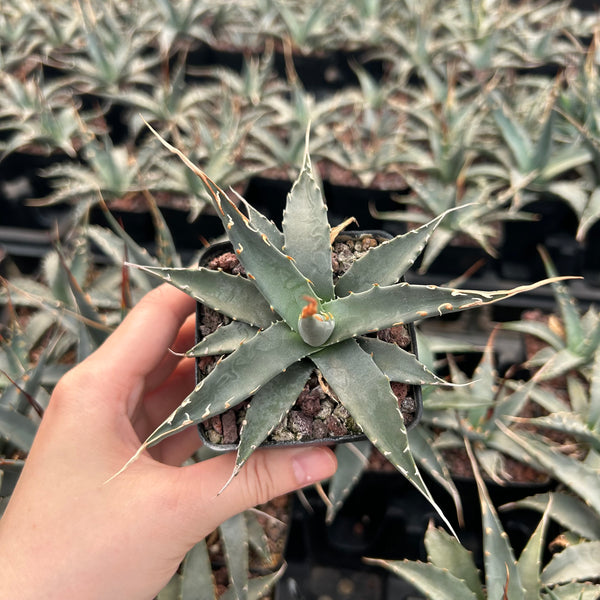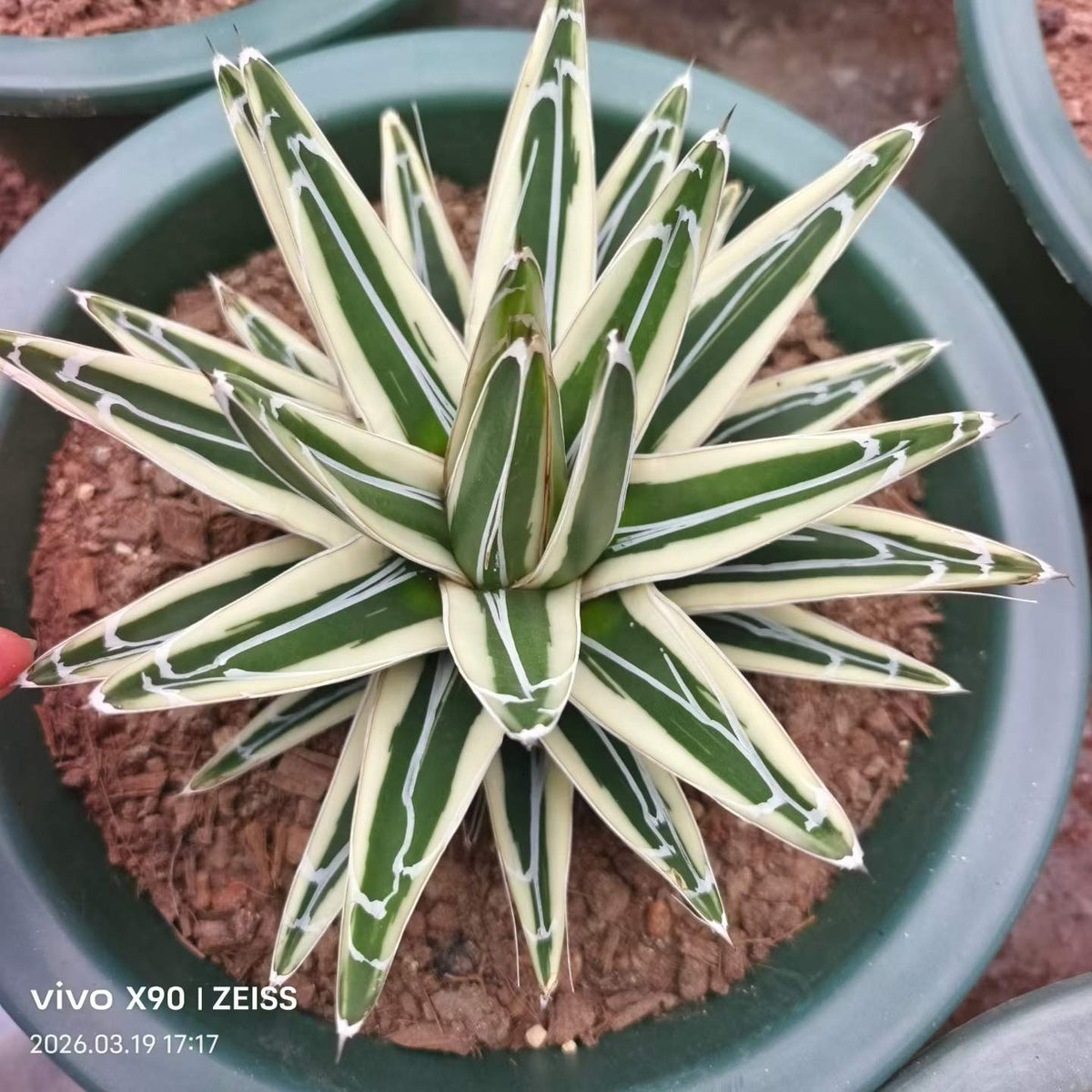
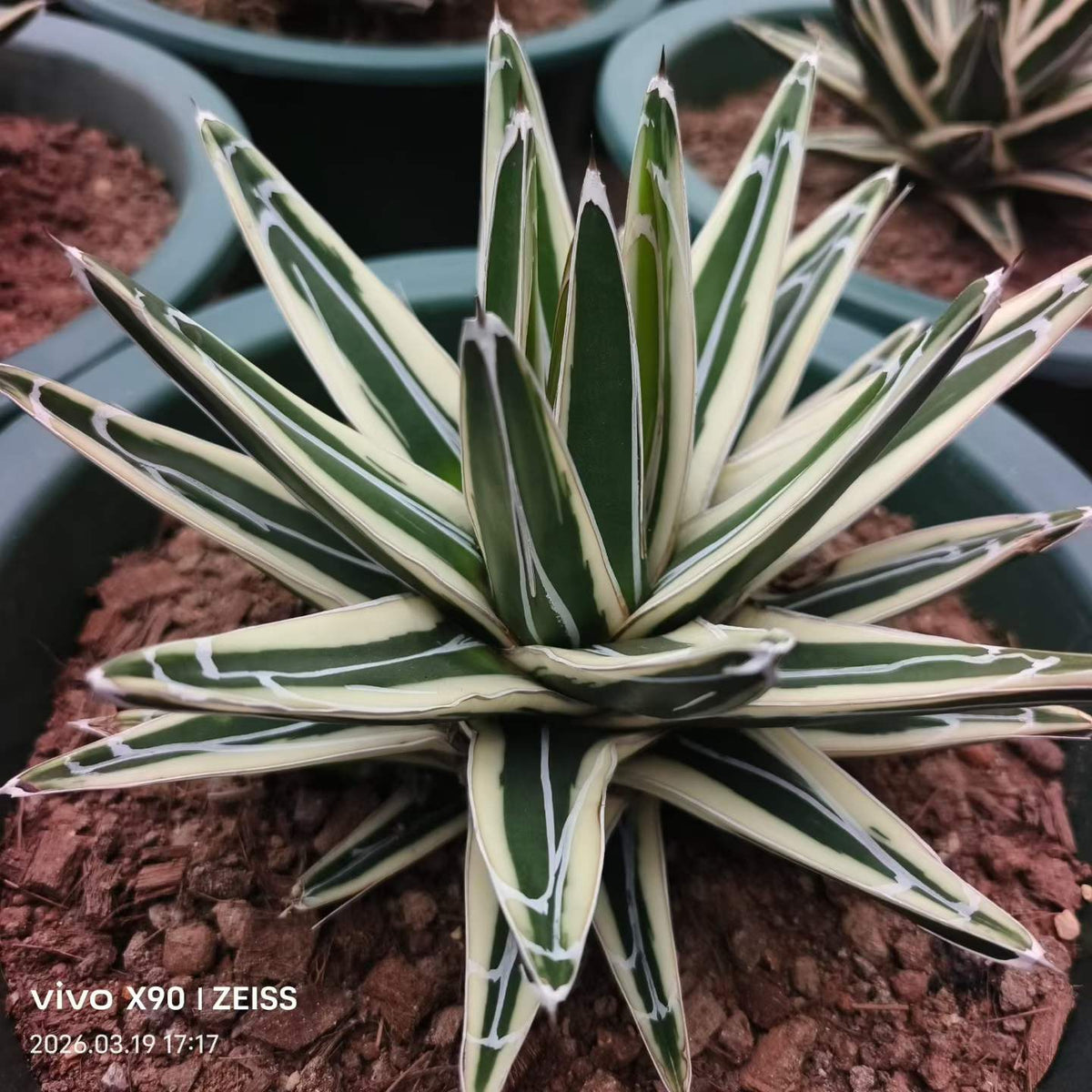
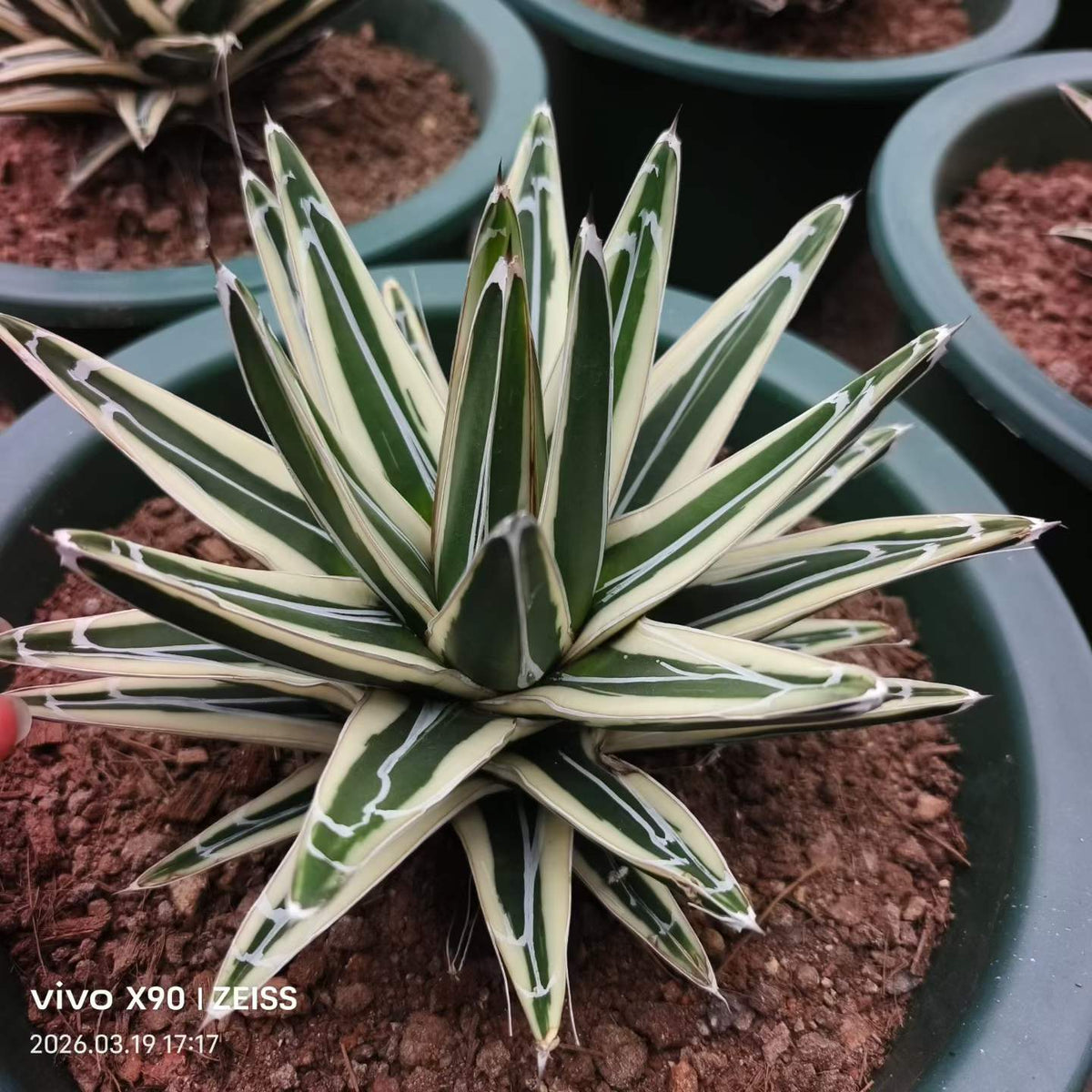
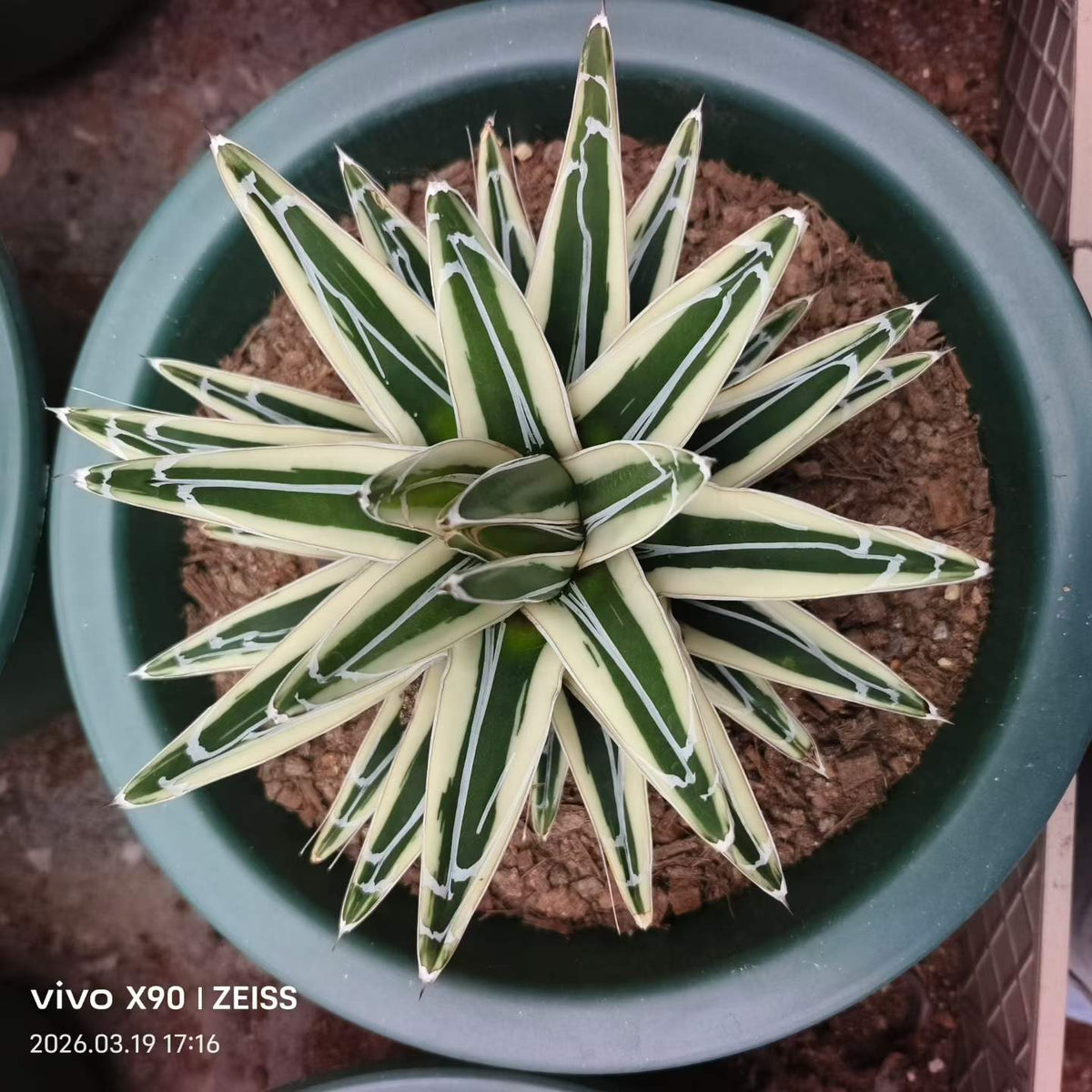
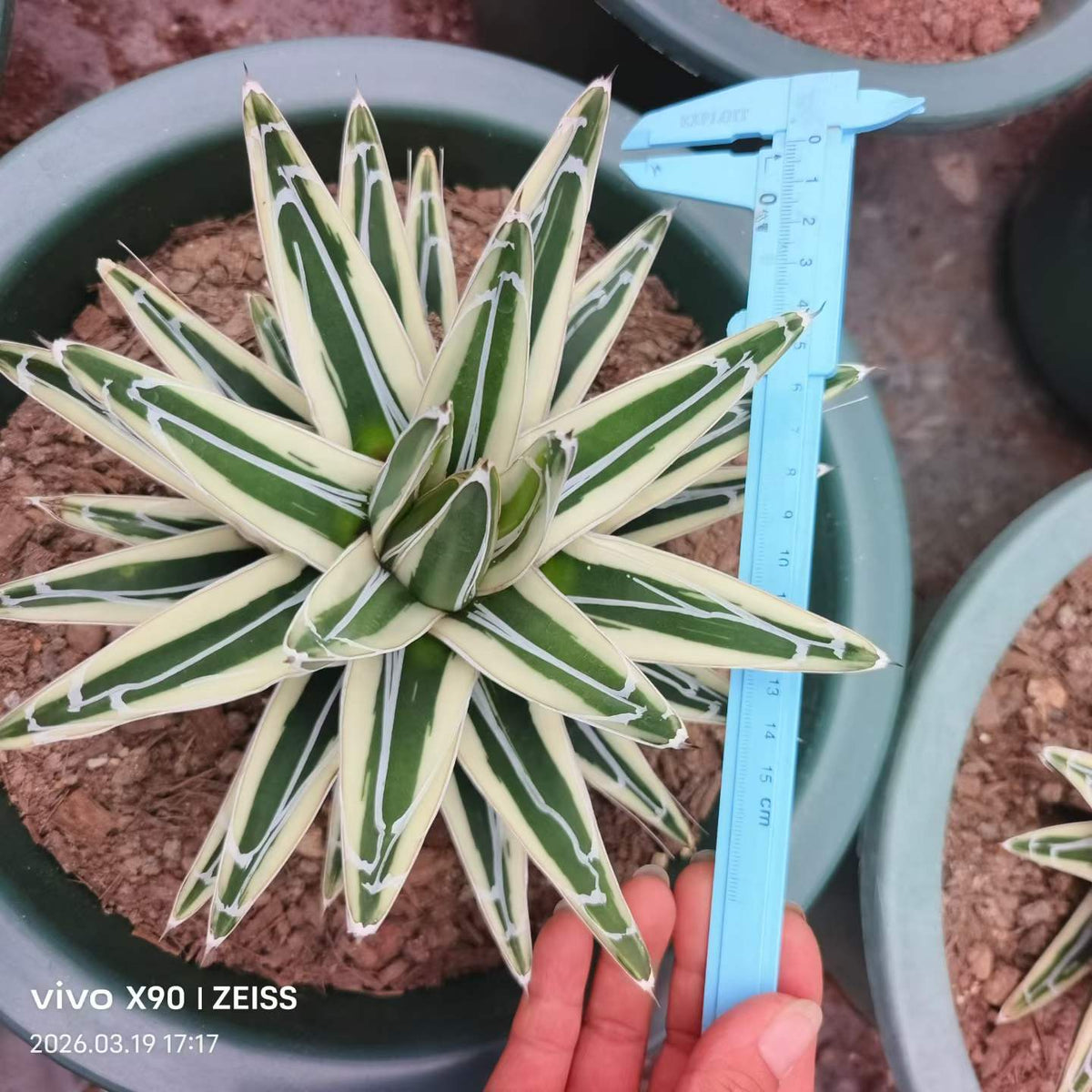
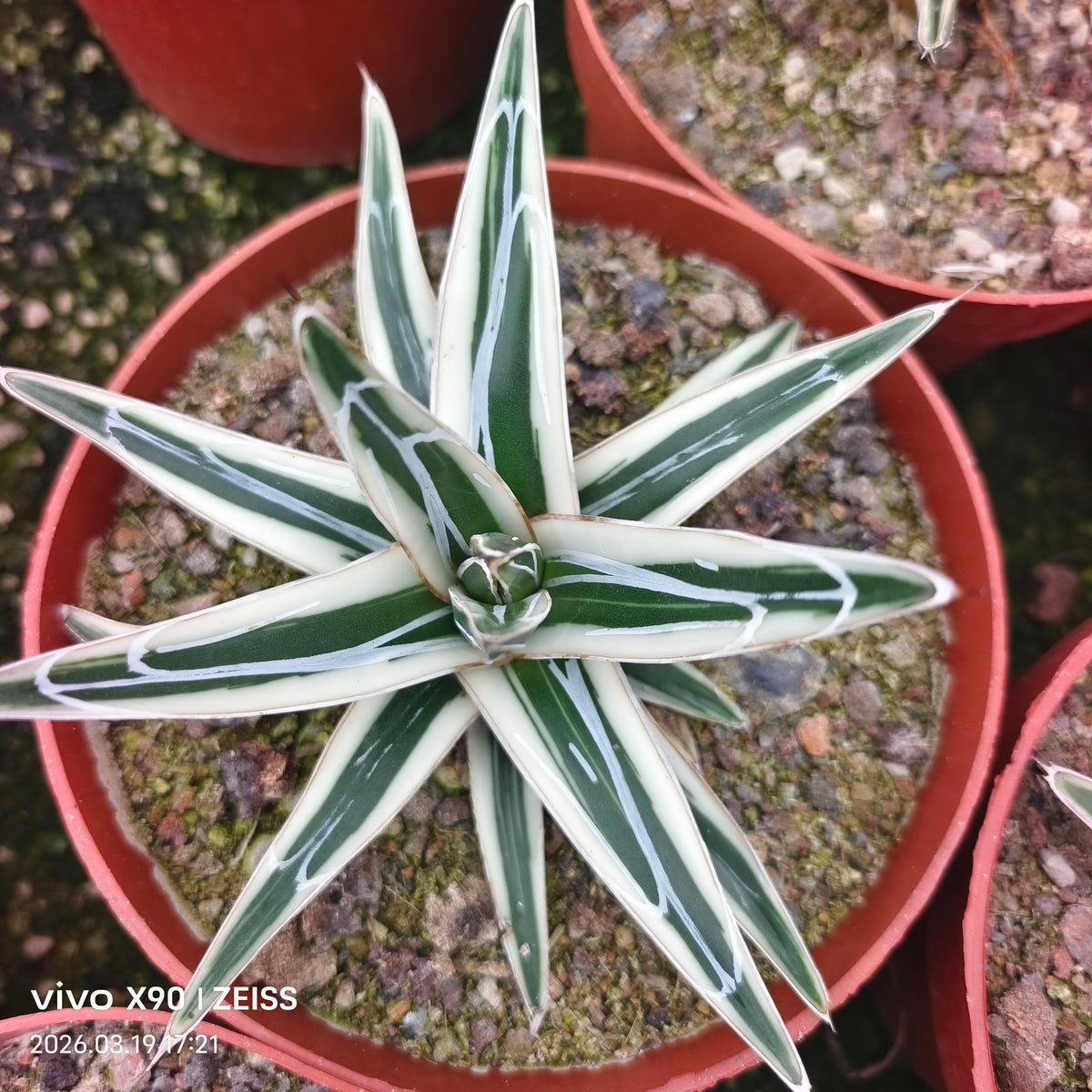
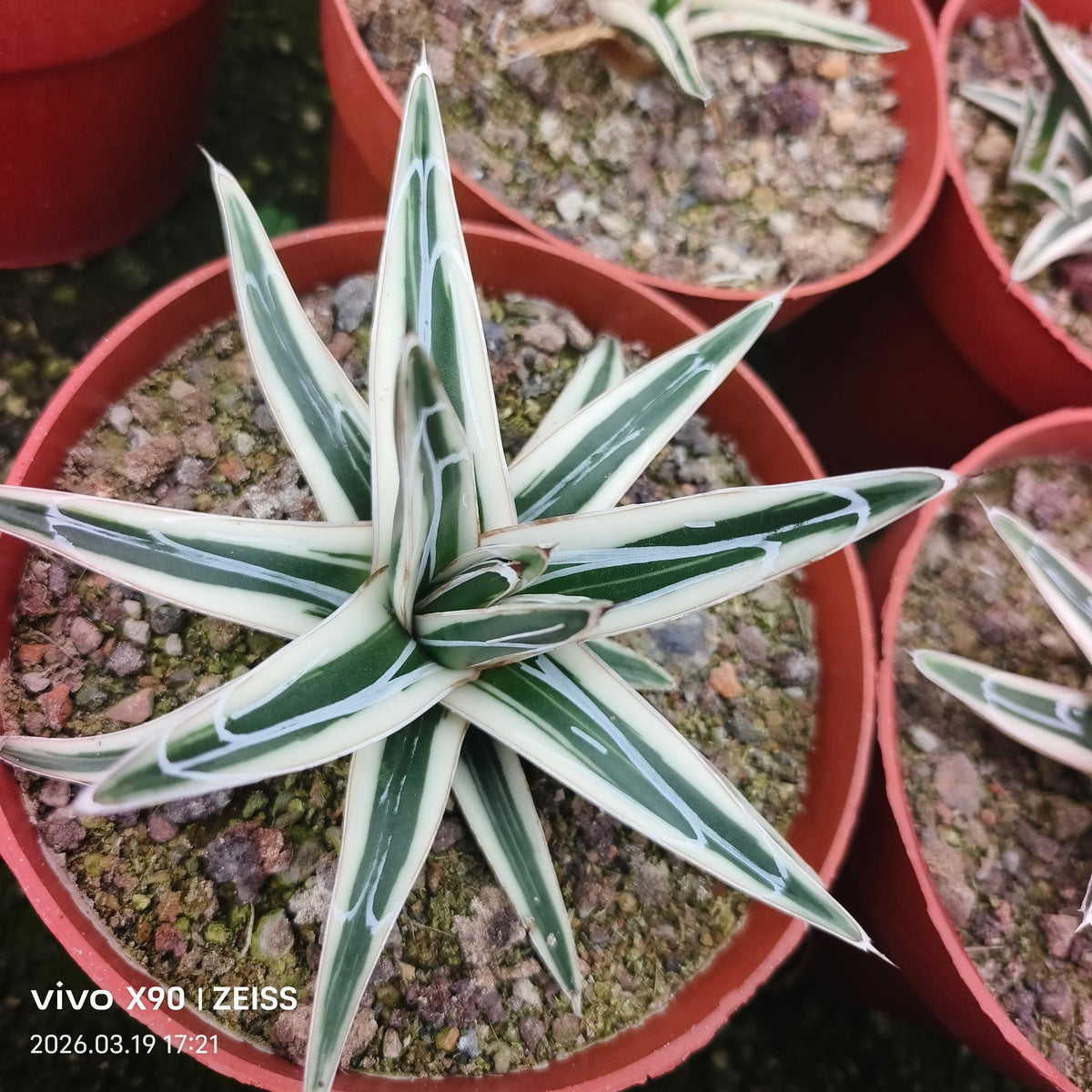
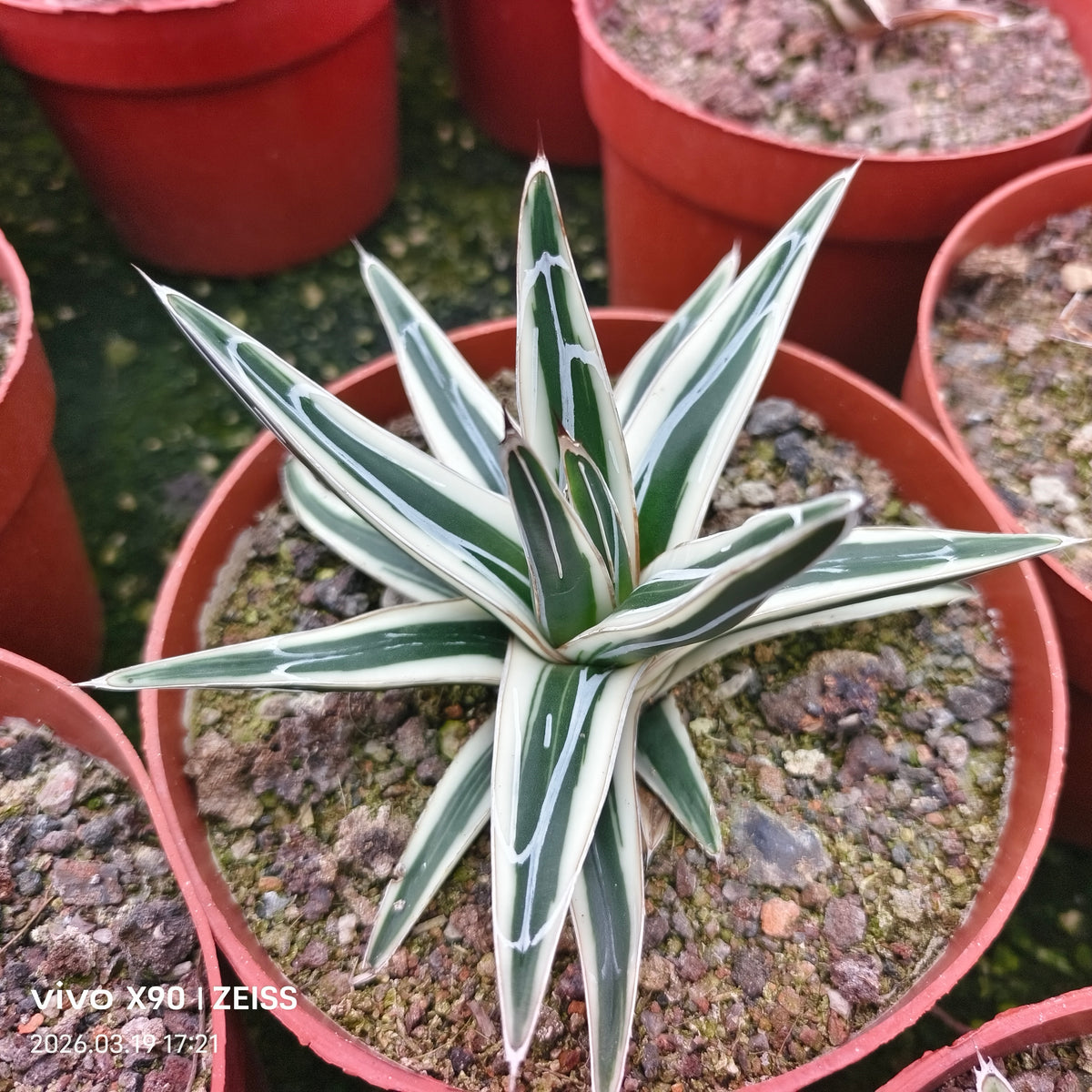
Agave victoriae-reginae 'White Rhino'

BotanicalCollector

4.9 · Premium
In Stock · Ships in 48h
$ 75.00 / plant
Attribute Option
Quantity Qty
1
Sales Type Retail, Same Batch
Product Size W15cm
Weight 0.3 kg
Propagation Method Seed-grown
Genus Agave

Description

Origin

Agave victoriae-reginae 'White Rhino' is a horticultural cultivar of the species, which is native to a small area of the Chihuahuan Desert in northeastern Mexico, primarily the limestone canyons of Coahuila, Nuevo León, and a sliver of San Luis Potosí (Northern America). The cultivar was selected in Japanese and Southeast Asian tissue-culture programmes for its broader, brighter cream-white leaf margins and is propagated only vegetatively. The species itself was named in the nineteenth century in honour of Queen Victoria of the United Kingdom.

Habitat

In its natural environment, the parent species is a specialist of semi-arid limestone canyons and rocky north-facing cliffs of the Chihuahuan Desert, where it grows in narrow crevices in calcareous rock at altitudes around 500–1500 meters above sea level. Rainfall is low and erratic, concentrated in a brief summer monsoon, and the air stays dry for most of the year. The cultivar retains these tolerances but in cultivation is grown almost exclusively as a container specimen rather than a landscape plant.

Description

Agave victoriae-reginae 'White Rhino' is a compact, architectural rosette agave prized for the strong white striping that runs along the leaf margins, the most contrast-heavy form of the species currently in horticultural trade.

Size & Rosette: The rosette is solitary and tightly symmetrical, reaching 30–45 cm across and slightly less tall at maturity, with leaves arranged in a near-perfect geometric spiral.

Leaves: Leaves are short, stiff, broadly triangular, and very dark green, edged with conspicuous broad, smooth, chalky-white marginal bands that meet at the leaf tip to form a clean black terminal spine. The white margins are the diagnostic feature of this cultivar and are wider and brighter than in the standard form.

Spines & Margins: The leaf margins are smooth, lacking the small teeth of many other agaves, and end in a stout, sharp black terminal spine. The combination of smooth edges, hard tip, and bold white striping gives the plant its sculptural, carved-marble look.

Flowers: Like all agaves, the rosette is monocarpic and flowers only once, after many years, sending up a tall stalk of greenish-yellow tubular flowers. Cultivated specimens are usually kept for their foliage rather than flowers.

Cultivation: Grow in a sharply drained, mineral-rich mix under bright light to full sun. Water moderately in the warm growing months and keep the plant nearly dry in cool weather. It is hardy to light frost when kept dry, and propagation is by offsets or tissue-cultured plantlets since the cultivar does not come true from seed.

Care Guide

Essential Care Tips for Thriving Plants

Light

Provide partial to full sun. Most plants thrive on direct UV exposure. Avoid placing behind window glass, as it filters out the essential UV rays needed for healthy growth.

Water

Follow the "Soak and Dry" principle. Ensure the top 2–3 cm of soil is bone dry before watering (use the finger test). Reduce frequency in winter, but do not stop watering entirely.

Temperature

The ideal range is 18–35 °C. Maintain temperatures above 5 °C during winter. Please note that temperatures below 0 °C pose a significant risk of plant death.

Humidity

Best kept at 30–50% humidity. Note: High air humidity is not a substitute for root watering. Avoid overly damp areas to prevent root rot or leggy side shoots.

Soil

A loose, well-draining medium is ideal. A mix containing 50–70% grit or mineral soil is recommended for aeration. Outdoor ground planting is also a viable option.

Fertilizer

Fertilize during repotting using Osmocote A2 slow-release fertilizer. Apply sparingly twice a year, or adjust the fertilizer type based on your specific home environment.

Planting Guide

Start Your Green Journey in 4 Steps

01

Unbox & Inspect

Carefully unpack and inspect the plant’s body and roots. We recommend taking photos or videos immediately for your records. Place it in a shaded, well-ventilated spot for 1–2 days to acclimate to its new environment.

02

Potting & Placement

After 24 hours of rest, pot the plant using slightly moistened soil. Place it in a bright, airy location to encourage recovery. Keep away from AC vents or heaters to prevent damage from temperature fluctuations.

03

First Watering

Use water that has sat for at least 24 hours. If using the damp-potting method, wait 2–3 days before the first watering. Ensure a thorough soak until water drains freely from the bottom.

04

Daily Care

Monitor leaf condition and soil moisture daily. If the soil remains damp, increase ventilation rather than watering. Proper airflow is essential to prevent root rot and ensure lasting health.